


Discover Armenia’s Original Flavours
6 days / 5 nights
availability
March 1 - November 10, 12
days of arrival
Departures for the tour are daily, except Mondays, when arriving on Tuesdays and Wednesdays, the Sevan - Dilijan tour changes to the Sevan - Tsaghkadzor tour
Detailed Descriptions
Arrival to Yerevan. Transfer to the hotel
Meeting at the airport. Transfer to the selected hotel.
Overnight in Yerevan
Sightseeing tour-walk around Yerevan
Breakfast at the hotel.
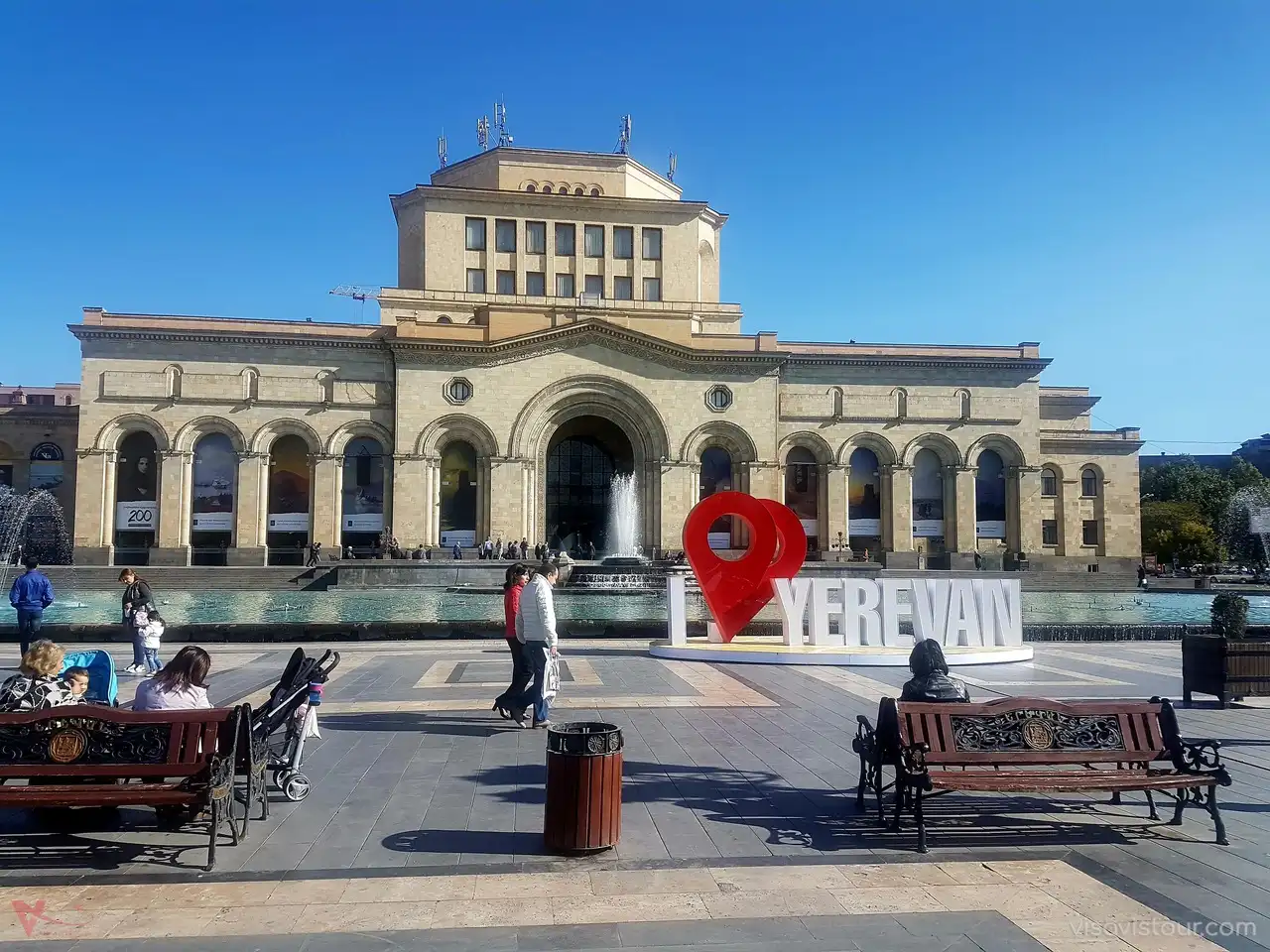
Sightseeing tour of Yerevan, an ancient (29 years older than Rome) and at the same time a modern beautiful city with a unique flavor against the backdrop of the majestic biblical Mount Ararat, sparkling with its snow-capped peaks. The tour includes an introduction to the city center and its attractions: the Opera and Ballet building, Republic Square, Swan Lake, Northern Avenue and much more.
Explore Cascade Complex, the hub of contemporary art in Yerevan with art pieces displayed throughout the whole area: the boulevard and up the stairs. From top of Cascade the marvelous panoramic view on the city and Mountain Ararat is open. Cascade is home to Cafesjian modern art museum. This place becomes even more charming in the evenings, when it is full of people, both locals and tourists from all over the world, enjoying the magic and the warmth of the capital. It is also a popular place for open air concerts at summer season.
Overnight in Yerevan
Yerevan - Lake Sevan - Sevanavank Monastery - Dilijan - Goshavank and Haghartsin Monasteries - Yerevan
Breakfast at the hotel.
Drive to the high-mountain Lake Sevan – one of the wonders of Armenia. This dazzling blue lake is located high in the mountains. Cold and majestic, it conceals an inexplicable beauty. It is not without reason that many artists choose Sevan as the object of their art. Visit to the Sevanavank Monastery (9-th century) .
Trip to the mountain resort of Dilijan. It is located high in the mountains (1200-1500m), covered with virgin pine forests.
Drive to Haghartsin Monastery complex (XII-XIII centuries), nestled in a secluded forest. Appearing unexpectedly, out of the dense forests, in front of the visitors, the Monastery creates a magical impression of a lost world. Haghartsin represents a magnificent piece of history, culture and architecture.
After exploring Haghartsin, visit Goshavank Monastery, a remarkable XII- XIII century complex nestled in the picturesque village of Gosh. Founded by the prominent scholar Mkhitar Gosh, this monastery was a significant cultural and educational center in medieval Armenia. Admire its intricate khachkars (cross-stones), unique architectural details, and serene atmosphere, which reflect the rich spiritual and artistic heritage of Armenia. The ensemble of the monastery buildings includes the Church of St. Astvatsatsin (Our Lady of 1196), the Church of St. Gevork (1231), the Church of St. Grigor the Illuminator (1241), a book depository with a bell tower (1291), a school building, a chapel and a gallery (13th century).
Return to Yerevan.
Overnight in Yerevan
Yerevan - Echmiadzin ( St Hripsime Monastery,St Gayane Monastery, Cathedral) – Zvartnots Temple – Yerevan
Breakfast at the hotel. Drive to Etchmiadzin City, which used to be an ancient capital of Armenia. Since 4th century, it has been considered the largest religious center, the residency of Catholics of all Armenians. Etchmiadzin cathedral is one of the ancient churches in the Christian world, included in the UNESCO World Heritage List (2000). It is the center of Armenian Apostolic Church, founded in 301 A.D by St. Gregory the Illuminator. The museum of the Cathedral, located behind the Altar, has collection of religious artifacts about Holy Mass, subjects made of gold, silver, precious stones, decorations, colossal silver boiler for making the myrrh and legendary Holy spear.
Visits to churches St Hripsime and St Gayane, both included in UNESCO World Heritage List.
One of the most significant landmarks of the Armenian Apostolic Church, St. Hripsime Church was founded in 618 by Catholicos Komitas. It is devoted to St Hripsime, who escape from persecution by the Roman Emperor Diocletian, and sought refuge in Armenia. Despite being a beautiful and devoted follower of Christ, she bravely refused to marry the pagan King Tirdat III when commanded. Choosing martyrdom over compromise, she was killed, and a small chapel was erected over the site of her death.
Built in 630 AD by Catholicos Ezra I, St Gayane church dedicated to Saint Gayane, a Christian martyr who played a crucial role in Armenia’s conversion to Christianity. Saint Gayane’s story of faith and sacrifice adds profound historical and spiritual value to the site. For centuries, it has been a place of pilgrimage for Armenians and Christian visitors from around the world.
A trip to one of the architectural wonders of Armenia – Zvartnots temple (641-661 BC), which got its name from the word “Zvart”, which, translated from Armenian, means “joyful and beautiful”. This former three-tiered structure, supported by massive columns with images of eagles, is decorated with carved grape vines, branches of pomegranate, pametta and acapra. The remaining ruins give an idea of the rare beauty of this temple. The temple is listed as a UNESCO World Heritage Site (2000).
Return to Yerevan.
Overnight in Yerevan
Yerevan – Garni Temple - lavash baking – Geghard Monastery – Yerevan
Breakfast at the hotel.
Excursion to the pagan Temple of the Sun (1st century AD) in the village of Garni.
Built in classical Greco-Roman style with a full colonnade and perched on a cliff overlooking a deep gorge, the temple offers a striking and surreal view. Garni once served as the summer residence of the royal Arsacid dynasty. The temple was destroyed by a powerful earthquake in 1679 and later restored between 1969 and 1974.
Parts of the surrounding fortress wall have survived, along with ruins of the royal palace and ancient bathhouse. Of particular interest is the bathhouse’s mosaic floor, bearing the inscription: “We worked but received nothing.” Inscriptions in Greek confirm that the temple was built in 77 AD by King Trdat I of the Arsacid Dynasty.
Continue to Geghard Monastery, a rare and awe-inspiring 12th–13th century complex partially carved into the mountainside. The name “Geghard” means “Holy Lance”, referring to the spear that pierced Christ’s side during the crucifixion, which was long housed here (now in the museum of Etchmiadzin Cathedral). Nestled in a scenic gorge of the Azat River, Geghard is a masterpiece of Armenian medieval architecture. The complex includes a main church, two cave churches, and a royal mausoleum. In one of the cave chapels, a cold spring flows directly from the rock, believed to have healing properties, to restore youth and beauty. Geghard Monastery was inscribed as a UNESCO World Heritage Site in 2000.
Experience a demonstration of traditional Armenian lavash bread baking in a rural home. Watch this UNESCO-recognized practice as the dough is skillfully prepared and baked inside a clay oven known as a tonir.
Return to Yerevan.
Overnight in Yerevan
Transfer to the airport and departure
Breakfast at the hotel. Check-out before 12:00. Transfer to the airport 2.5 hours before departure.
Tour Package Prices Per Person in Double Room
| Hotel Name | DBL | SNGL | third adult | 6-12 Child |
|---|---|---|---|---|
| Mandarin 3* or similar | ||||
| Ani Central Inn 4* or similar | ||||
| Ani Plaza 4*, Median or similar |
Tour Package Price Includes:
- Accommodation at the hotel (5 nights)
- Breakfasts
- Transfers and transportation services according to the program
- Services of a professional guide
- All entrance tickets
- Demonstration of the process of baking lavash in Garni