


Tsitsernakaberd Memorial Complex
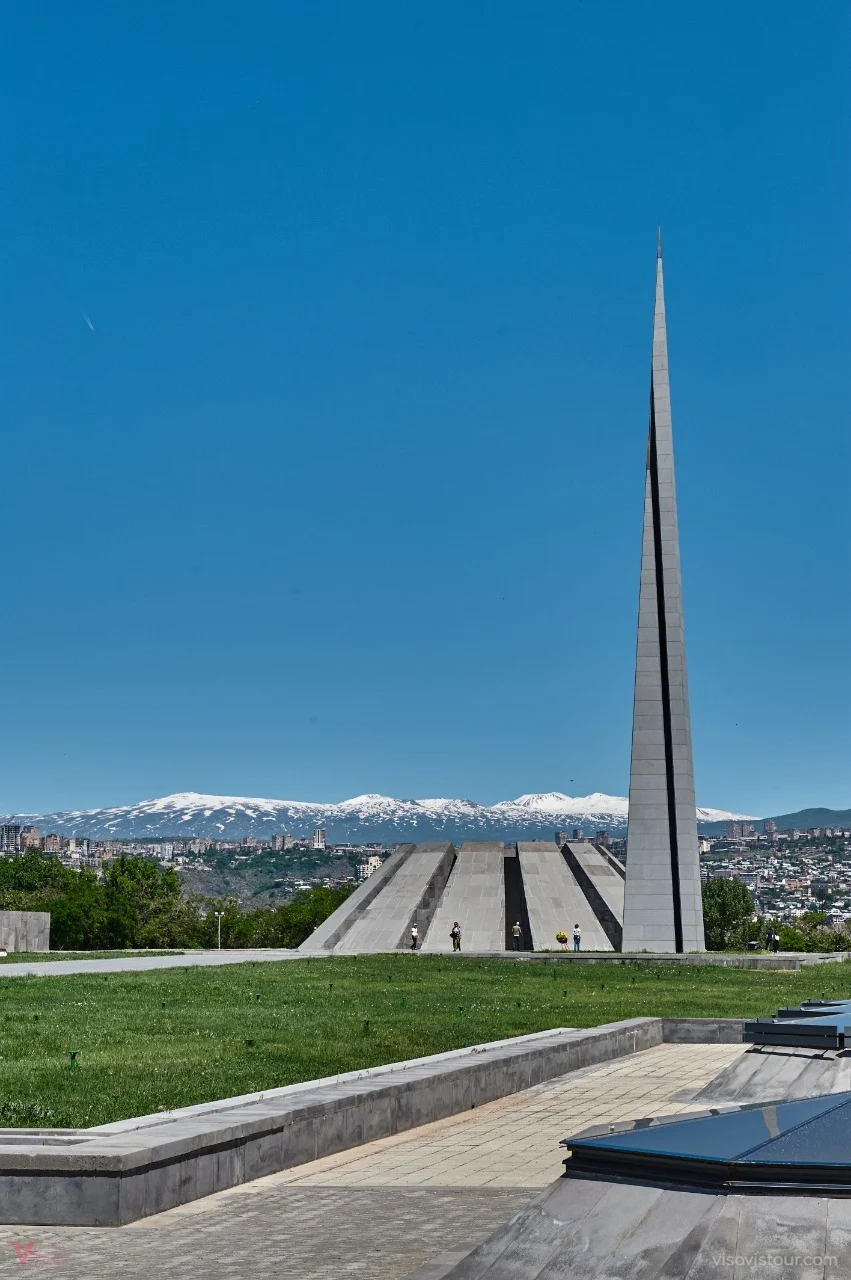
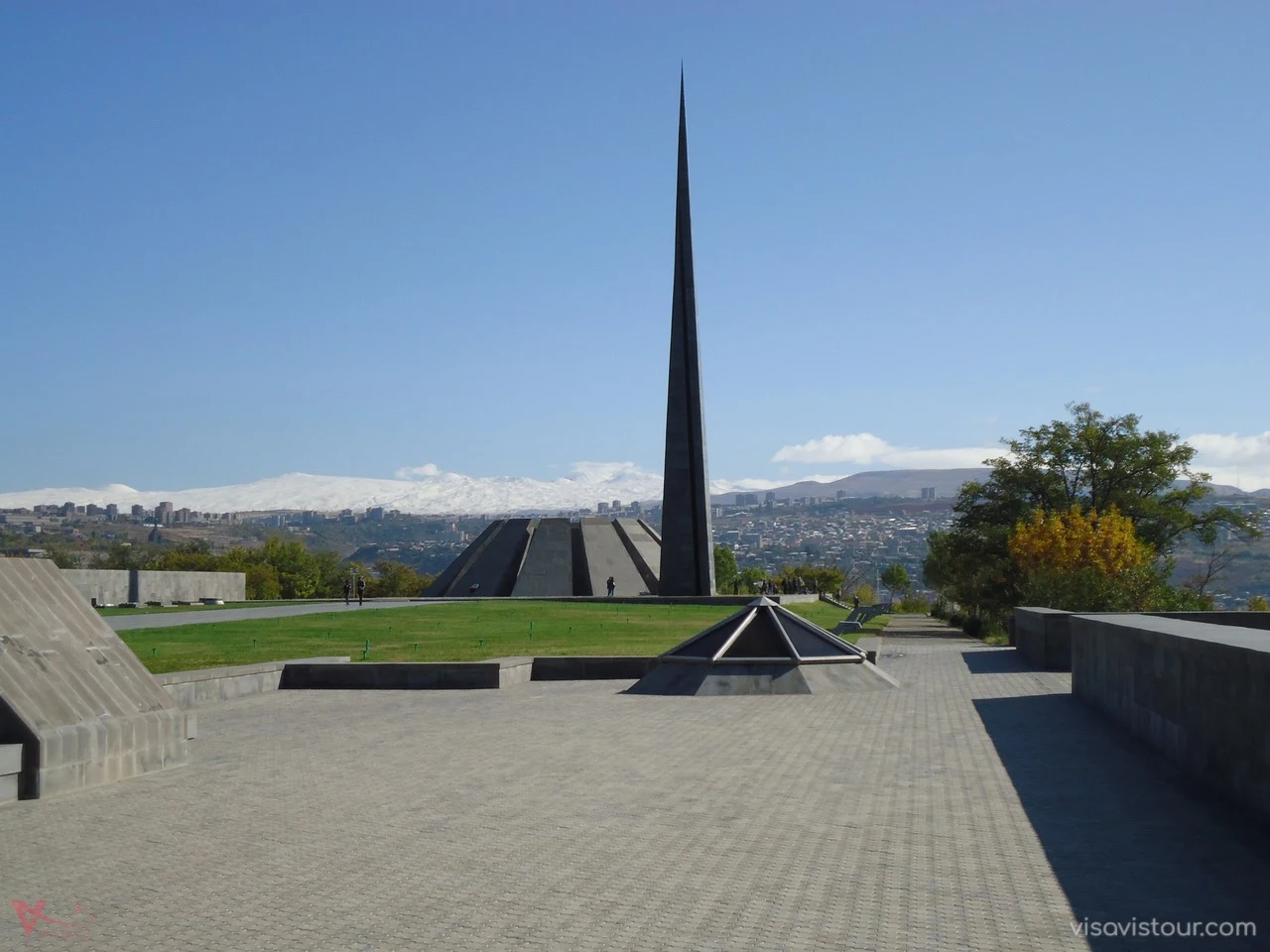
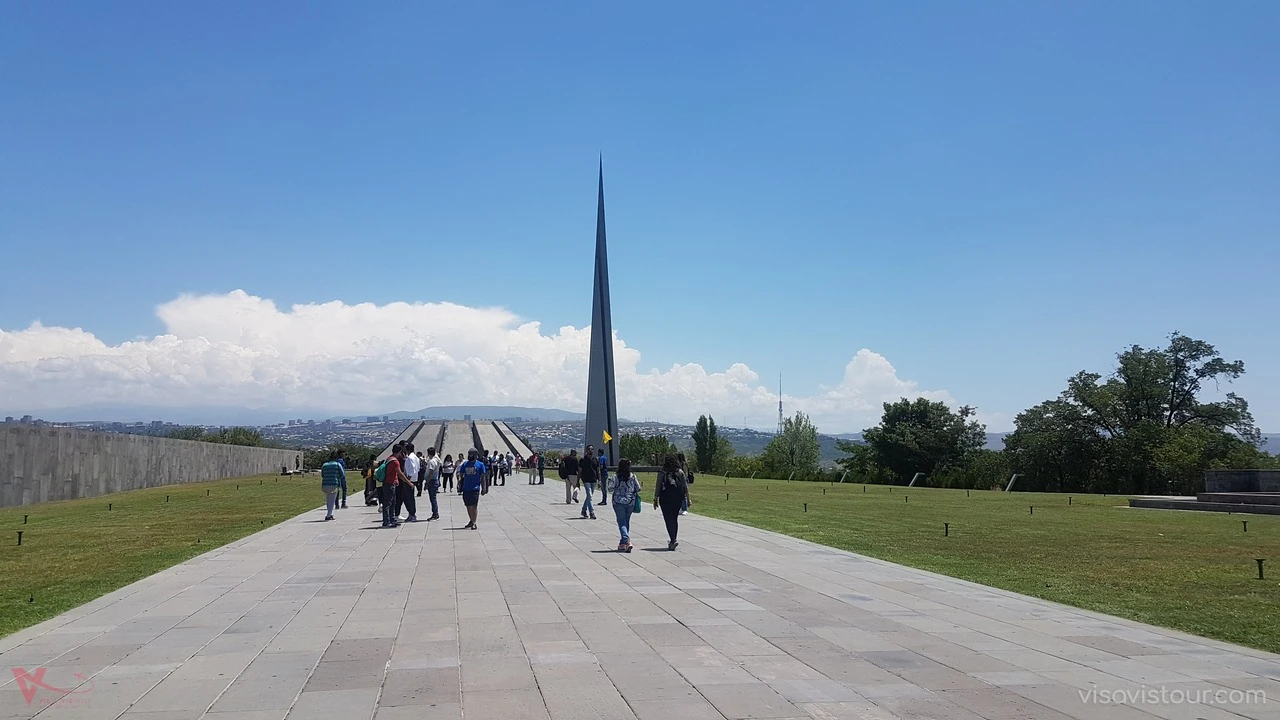
8 Tsitsernakaberd Highway, Yerevan 0028The Tsitsernakaberd Memorial Complex, built in Yerevan in 1967, honors the 1.5 million Armenians who perished during the first genocide of the 20th century, carried out by the Ottoman government. A symbol of remembrance and resilience, it has become a pilgrimage site and an integral part of Yerevan’s architecture.
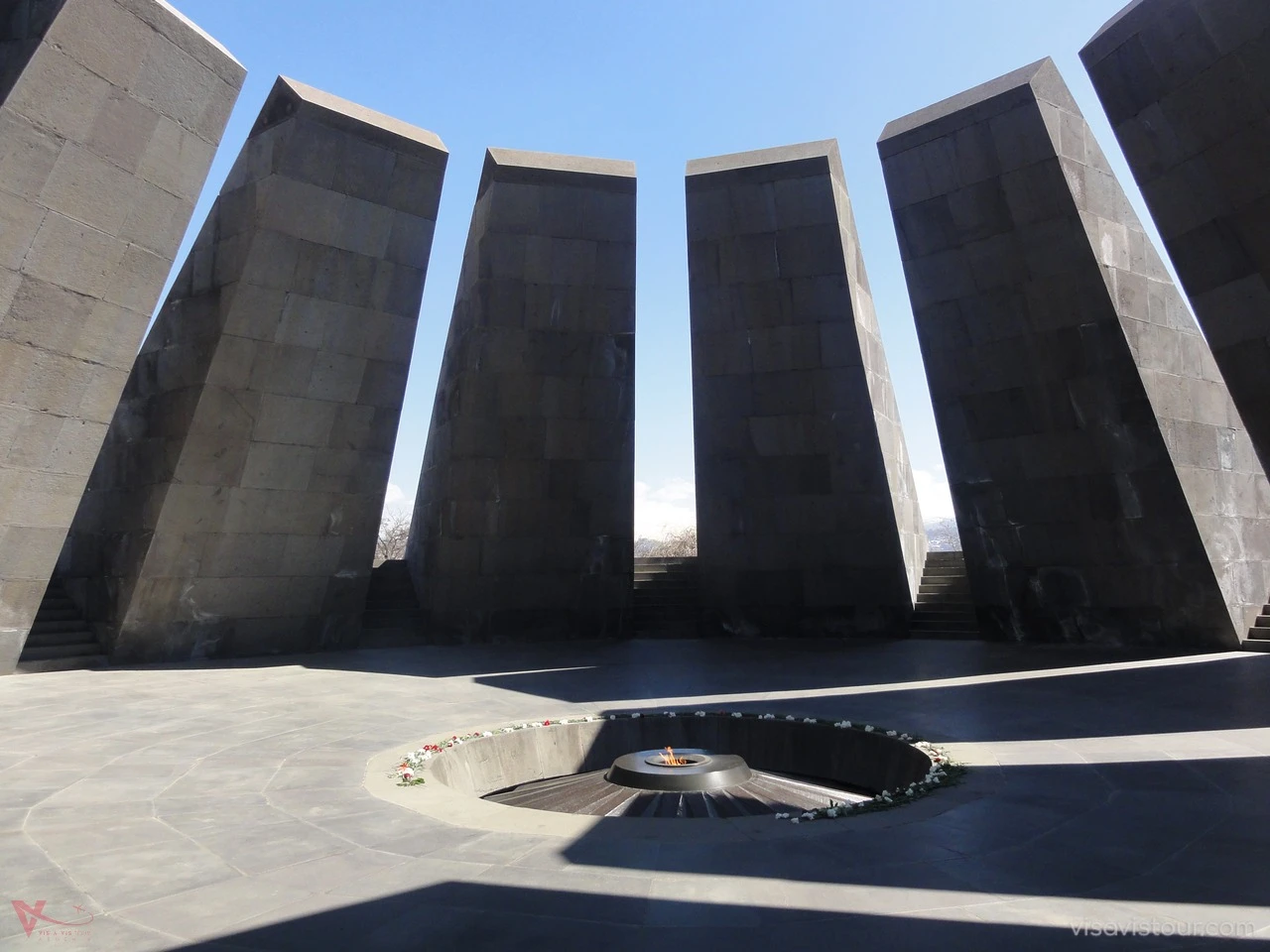
The 4,500-square-meter complex features:
- Memorial Wall
- Sanctuary of Eternity (Memorial Hall and Eternal Flame)
- Memorial Column “Reborn Armenia”
In 1995, to mark the 80th anniversary of the genocide, the Armenian Genocide Museum-Institute was built nearby. This institution serves as a research center under Armenia’s National Academy of Sciences, offering exhibitions and guided tours in multiple languages.
History of the Memorial
During the Soviet era, commemorating the genocide was prohibited. The memorial’s grand opening on November 29, 1967, marked a significant moment, coinciding with Soviet Armenia’s 47th anniversary. Thousands gathered on Tsitsernakaberd Hill in a solemn tribute, a tradition that continues annually on April 24.
Armenian Genocide Museum-Institute
Opened in 1995, the museum features:
- Exhibition Halls: 1,000 sq. m of curated exhibits across four halls (three enclosed, one open).
- Conference Hall: A space for 170 people dedicated to Komitas.
- Library and Archives: Resources for research and preservation.
The museum welcomes visitors from around the world, including dignitaries, students, and researchers, and offers tours in Armenian, Russian, English, and French.
This powerful site serves as a beacon for education and remembrance, ensuring the history of the Armenian Genocide is never forgotten.