




Caucasus Heritage Trail: Azerbaidjan, Georgia and Armenia
Regional Tours
12 Days / 11 nights
availability
Journey through the crossroads of Europe and Asia on this unforgettable 12-day cultural expedition across Azerbaijan, Georgia, and Armenia. Explore ancient capitals, sacred monasteries, Silk Road towns, and breathtaking mountain landscapes. Blending ancient history, spiritual sites, and natural wonders, every day offers a new discovery.
Detailed Descriptions
Arrival in Baku (Azerbaijan) – transfer to the hotel
Free evening to relax or explore the vibrant capital.
Baku City Tour
After breakfast at the hotel, start with a panoramic view of the city from Highland Park, overlooking the Caspian Sea, Flame Towers – Baku’s modern symbol, and the sprawling cityscape.
Next, step into the UNESCO-listed Old City (Icherisheher)—a living museum enclosed within medieval walls. Explore iconic landmarks such as the mysterious Maiden Tower, the 15th-century Palace of the Shirvanshahs, ancient mosques, caravanserais, and narrow cobblestone alleys filled with artisan workshops and charming cafes.
In the afternoon, stroll along Baku Boulevard, the Caspian Sea promenade, and visit Little Venice, a whimsical complex of canals and bridges.
Wrap up the tour with a visit to the Heydar Aliyev Center, modern building with unusual architectural solution. Its fluid, futuristic design has become a symbol of modern Azerbaijan. Explore exhibitions inside or simply enjoy the bold exterior views.
Overnight in Baku.
Gobustan Petroglyphs & Mud Volcanoes
After breakfast at the hotel, depart Baku for a day trip to Gobustan National Park, a UNESCO World Heritage Site, with petroglyphs.
Next, venture into the surreal semi-desert landscapes of Gobustan to witness a natural phenomenon unique to this part of the world—mud volcanoes.
Overnight in Baku.
Baku – Shamakhi – Sheki
After breakfast, leave the Caspian coast behind and head west into the scenic heart of Azerbaijan. First stop is Shamakhi, one of Azerbaijan’s oldest cities and a former capital of the Shirvanshah kingdom. Visit the Juma Mosque, the oldest mosque in the Caucasus.
Continue to the Yeddi Gumbaz Mausoleum, perched on a hill overlooking Shamakhi. This necropolis contains the tombs of royal families and offers panoramic views of the surrounding countryside. Stop at the Diri Baba Mausoleum, a 15th-century monument mysteriously built into a cliffside.
In the afternoon, arrive in Sheki, a charming Silk Road town nestled in the forested foothills of the Caucasus. Once an important trading post, Sheki is famed for its traditional architecture, artisan culture, and sweet halva. City tour in Sheki. Visit Sheki Han Palace and Sheki History Museum.
Check in to hotel.
Overnight in Sheki.
Sheki – Sighnaghi – Tbilisi: Crossing Borders & Embracing Georgia’s Wine Heritage
After breakfast, head toward the Lagodekhi border crossing. After completing customs formalities, enter Georgia heading to Kakheti, the country’s renowned wine region nestled in the fertile Alazani Valley. This area has been cultivating grapes for centuries and is considered the cradle of winemaking.
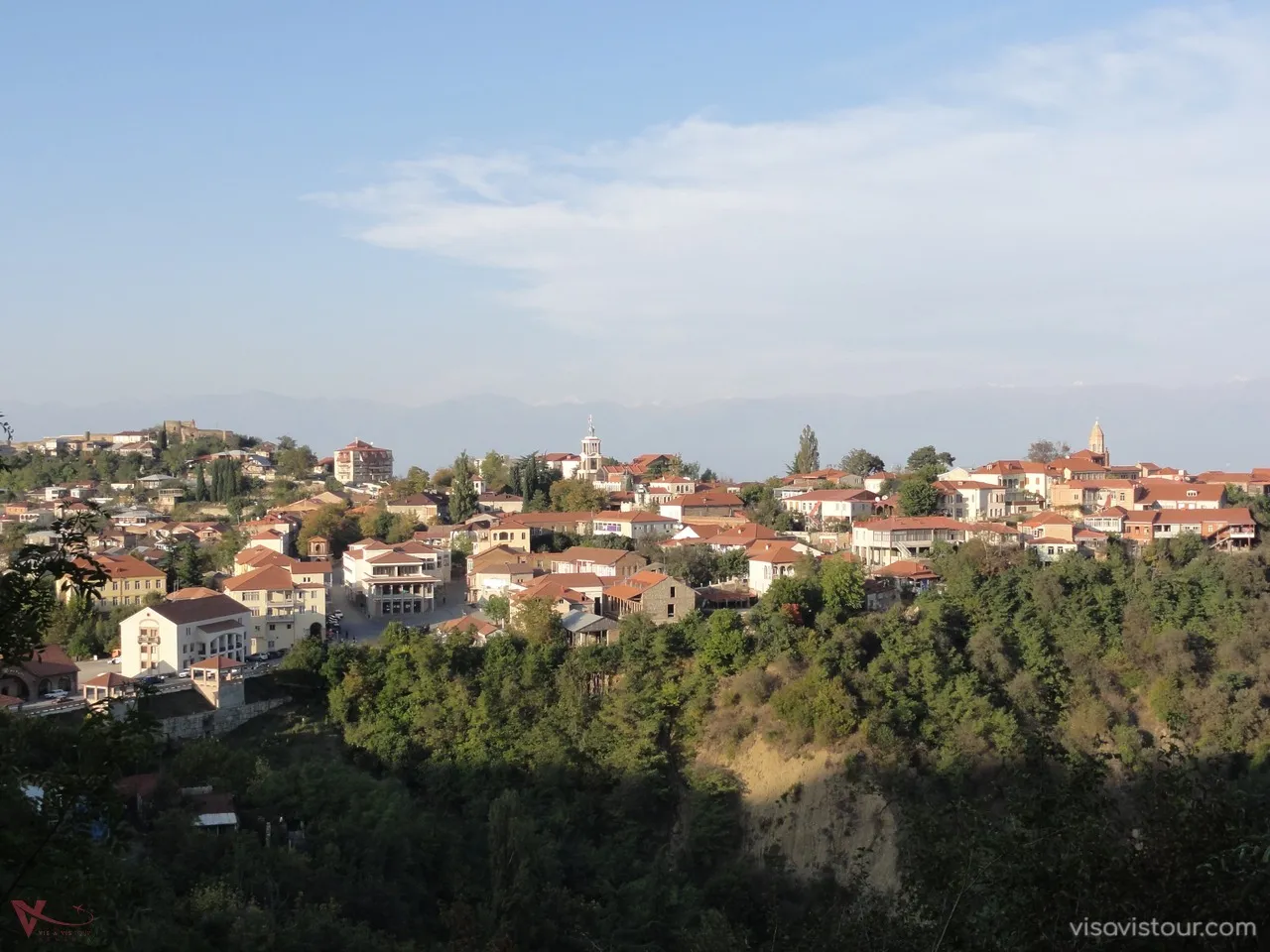
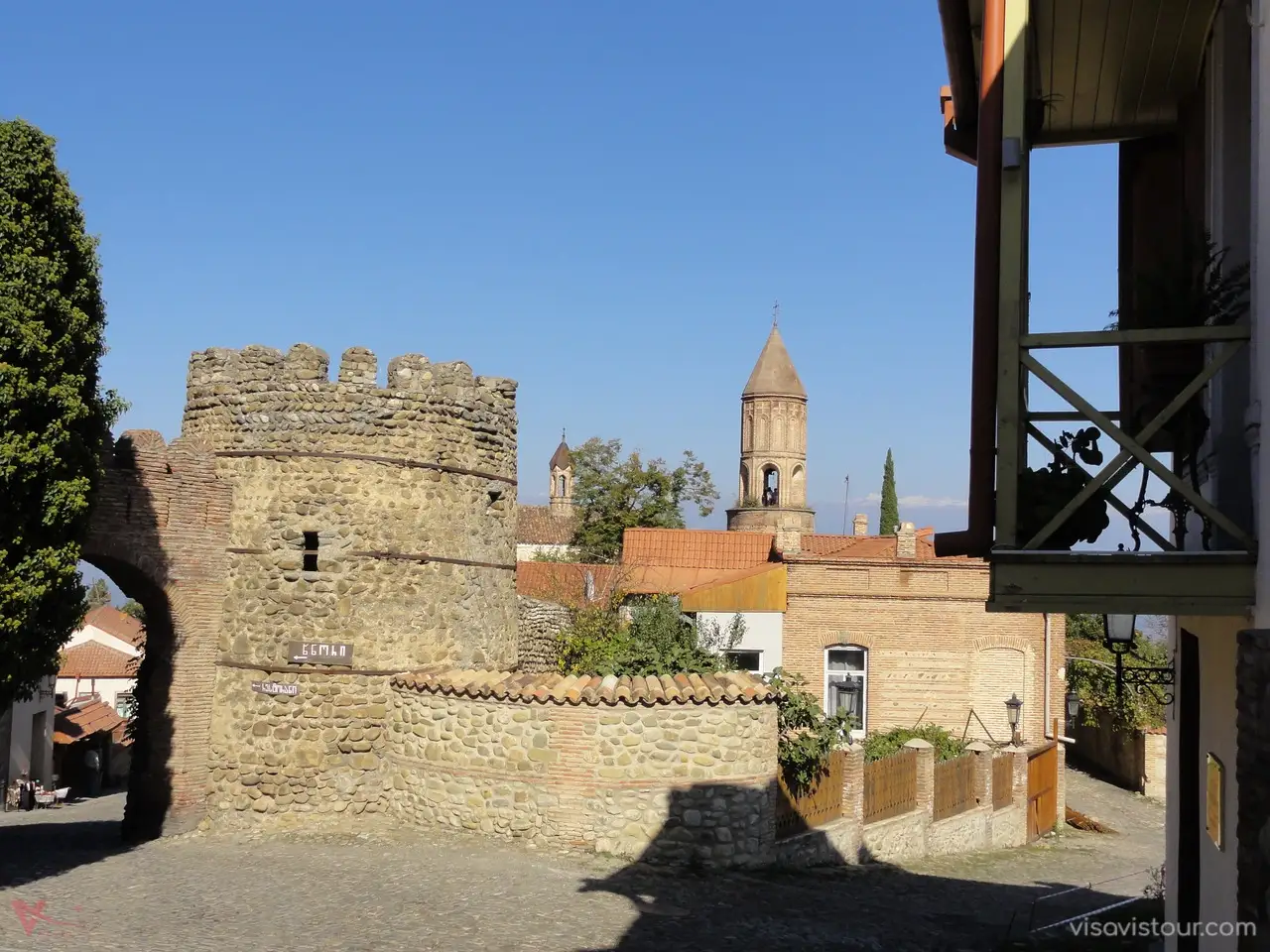
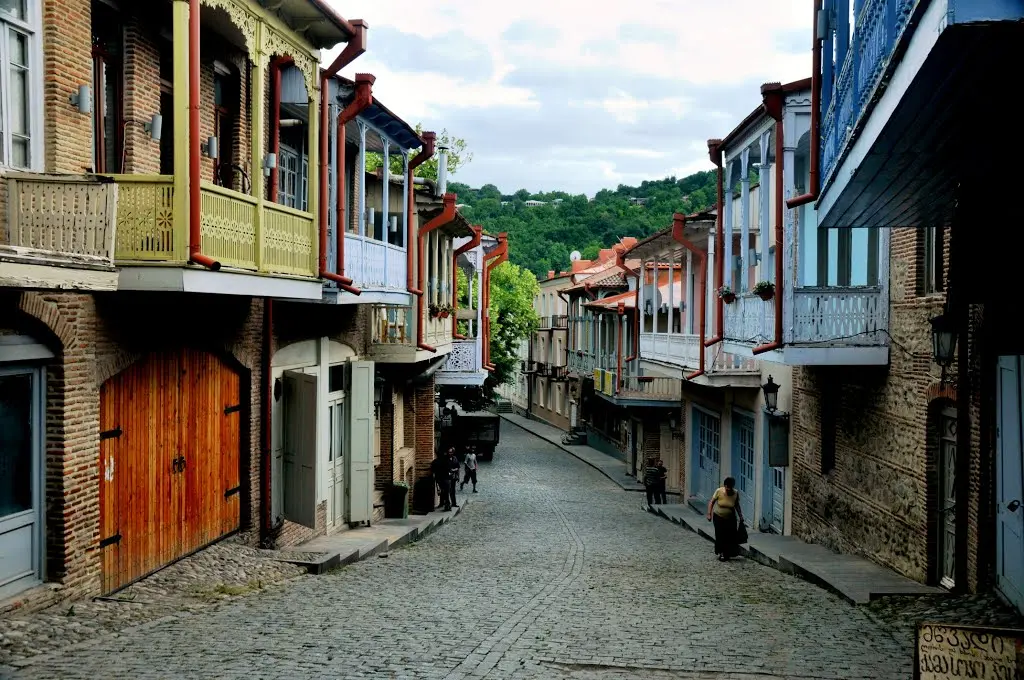
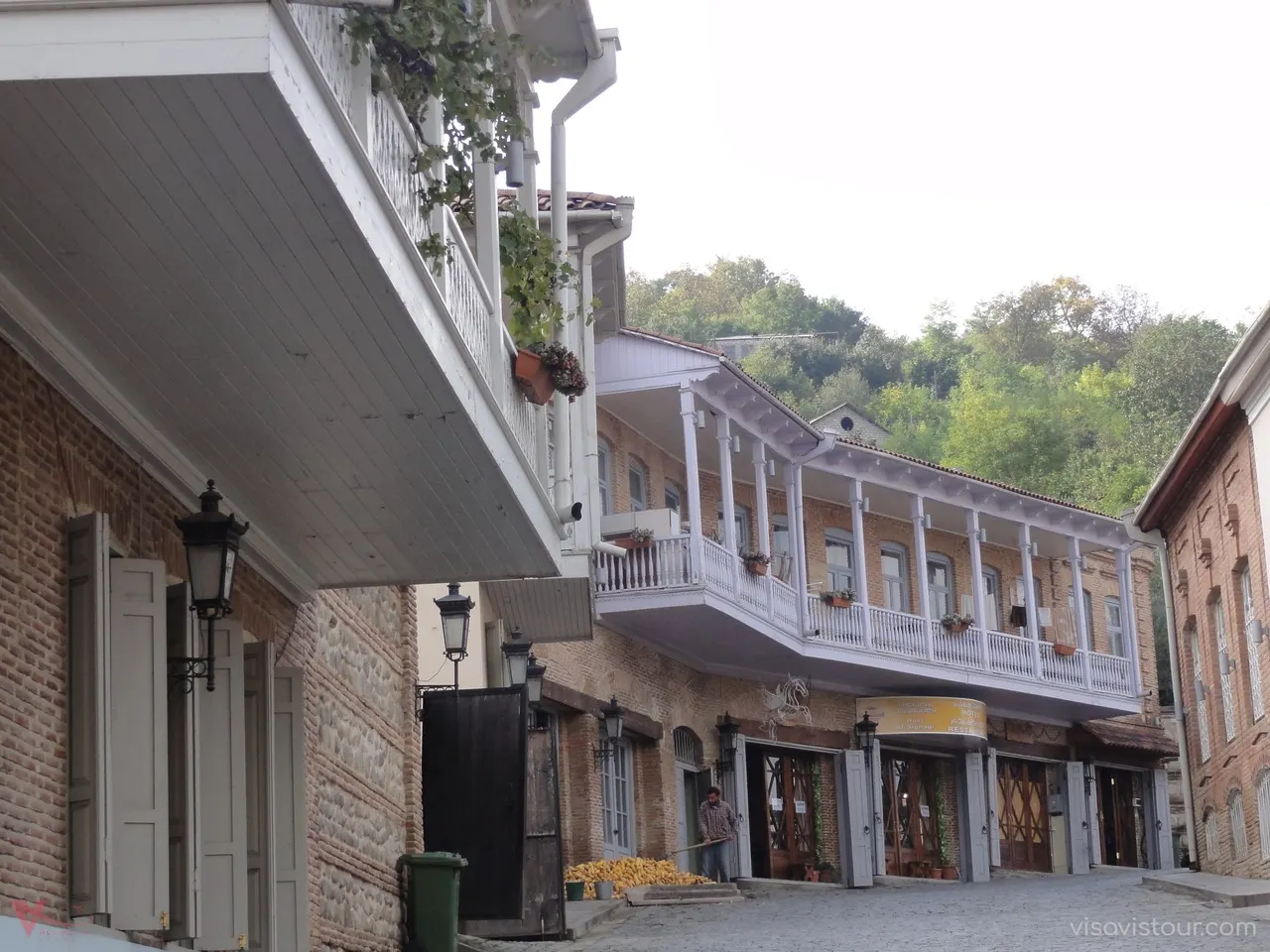
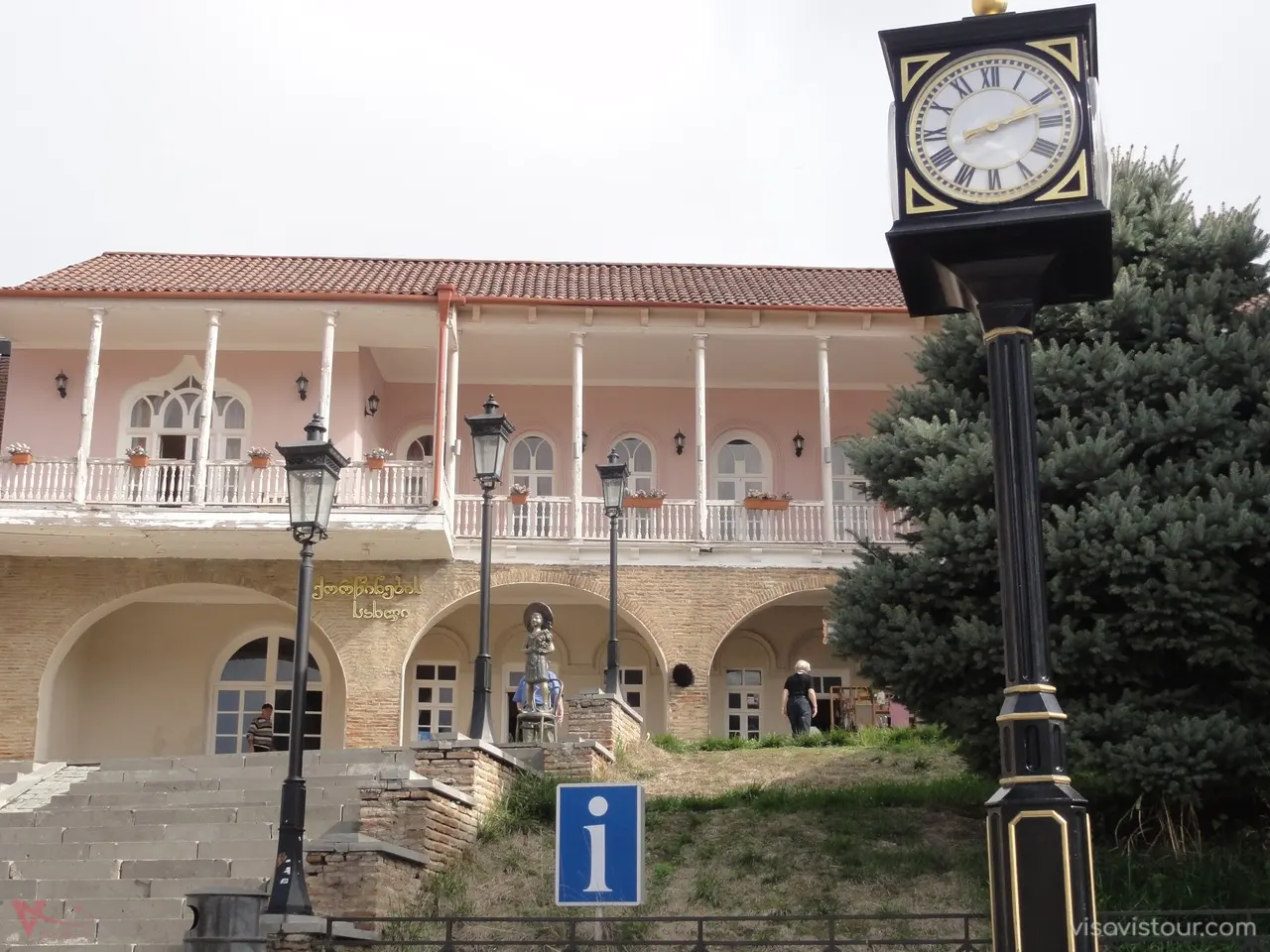
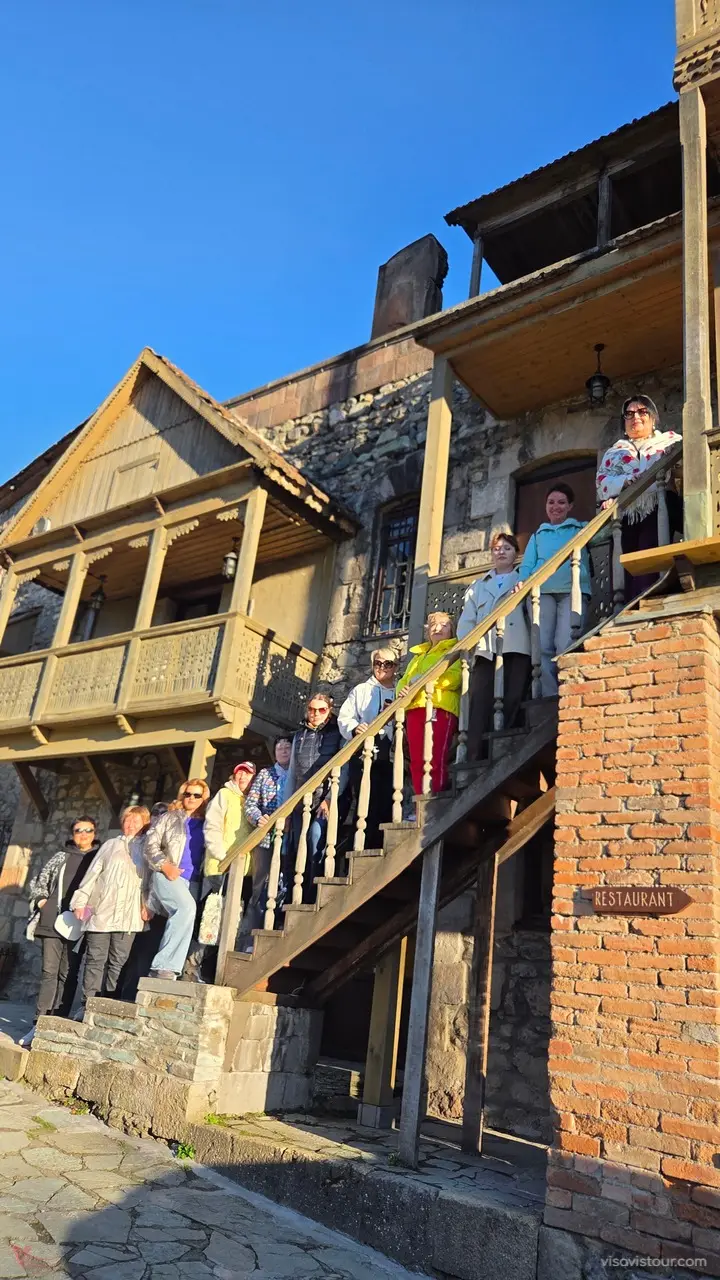
Visit Sighnaghi – one of Georgia’s most charming and romantic towns, perched on a hilltop at 790 meters above sea level. With cobblestone streets, pastel-colored houses, and traditional wooden balconies, this picturesque town is known for its timeless beauty and romantic atmosphere. Sighnaghi is called the “City of Love” because it has a 24/7 wedding house, allowing couples to get married at any time of day or night.
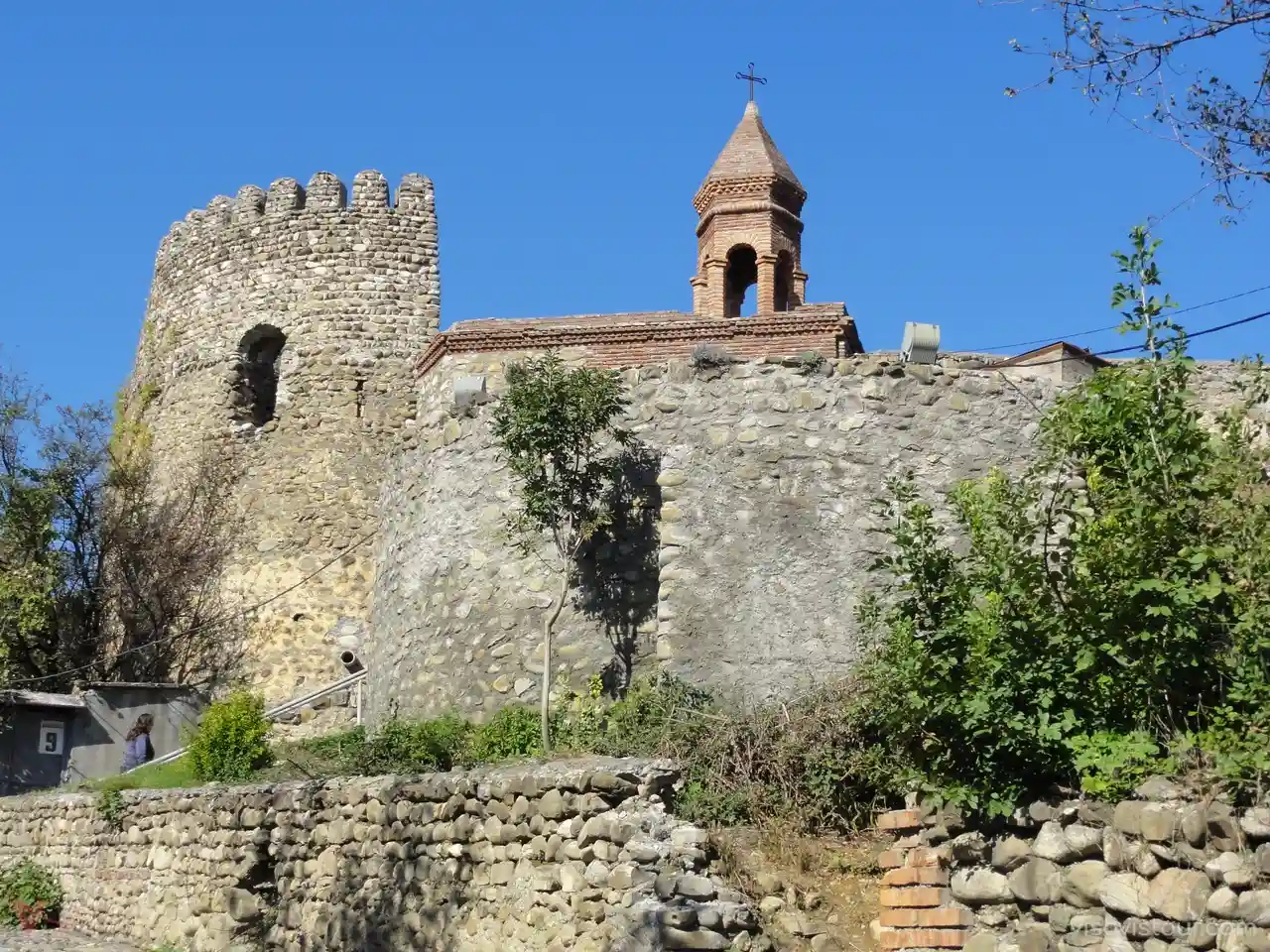
The town is surrounded by a well-preserved 18th-century defensive wall, often referred to as the “Georgian Great Wall”, offering breathtaking panoramic views of the Alazani Valley and the snow-capped Caucasus Mountains.
Stroll through the narrow, atmospheric streets, lined with colorful wooden balconies, cozy cafes, and artisan shops.
Just a short drive from Sighnaghi, we arrive at the Bodbe Monastery, a 9th-century monastic complex and one of the most revered pilgrimage sites in Georgia. The monastery is dedicated to St. Nino, the saint who brought Christianity to Georgia in the 4th century. Visit St. Nino’s Spring, believed to have healing properties, where many pilgrims come to seek blessings and spiritual renewal.
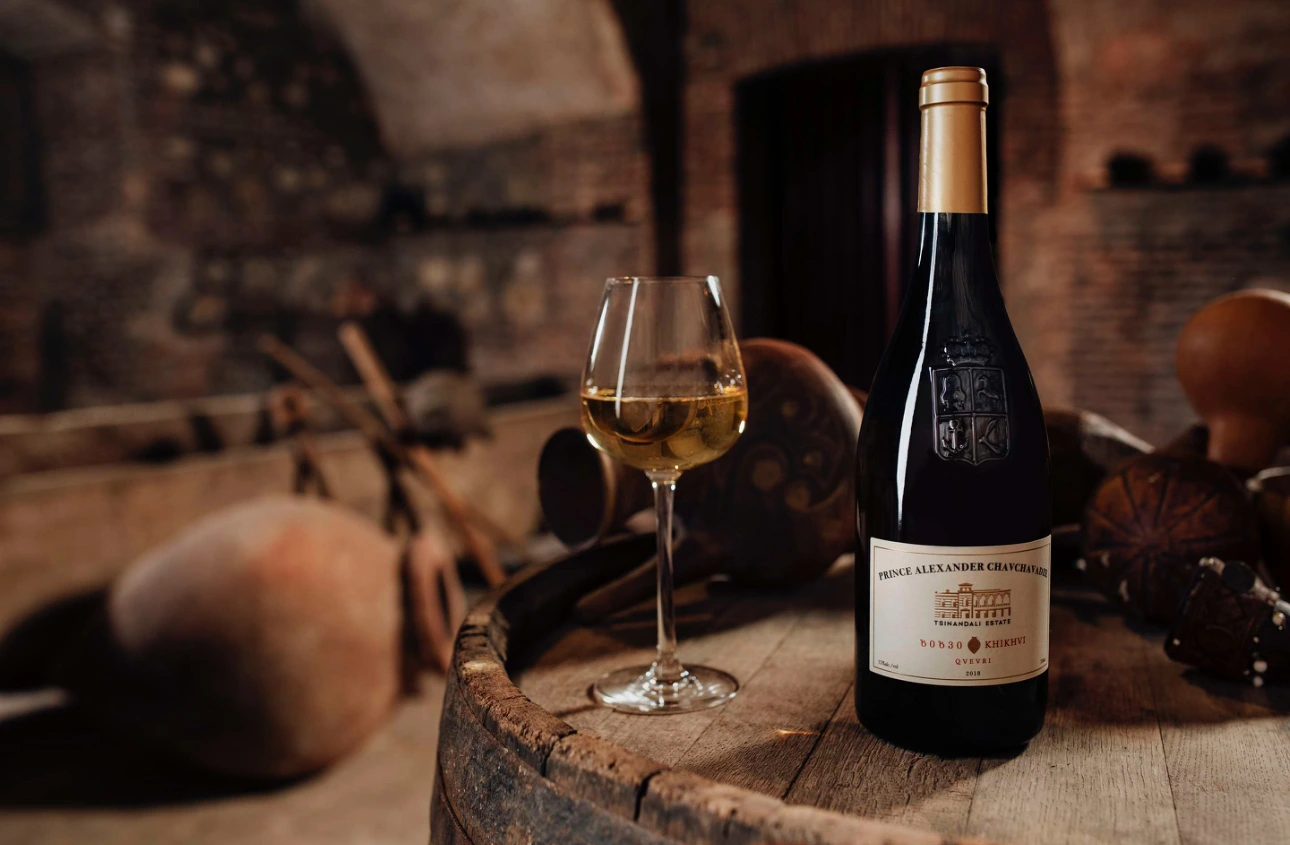
🍷 Optional: Wine Tasting
By evening, we arrive in Tbilisi, Georgia’s vibrant capital. Check in to hotel.
Overnight in Tbilisi.
Tbilisi city tour
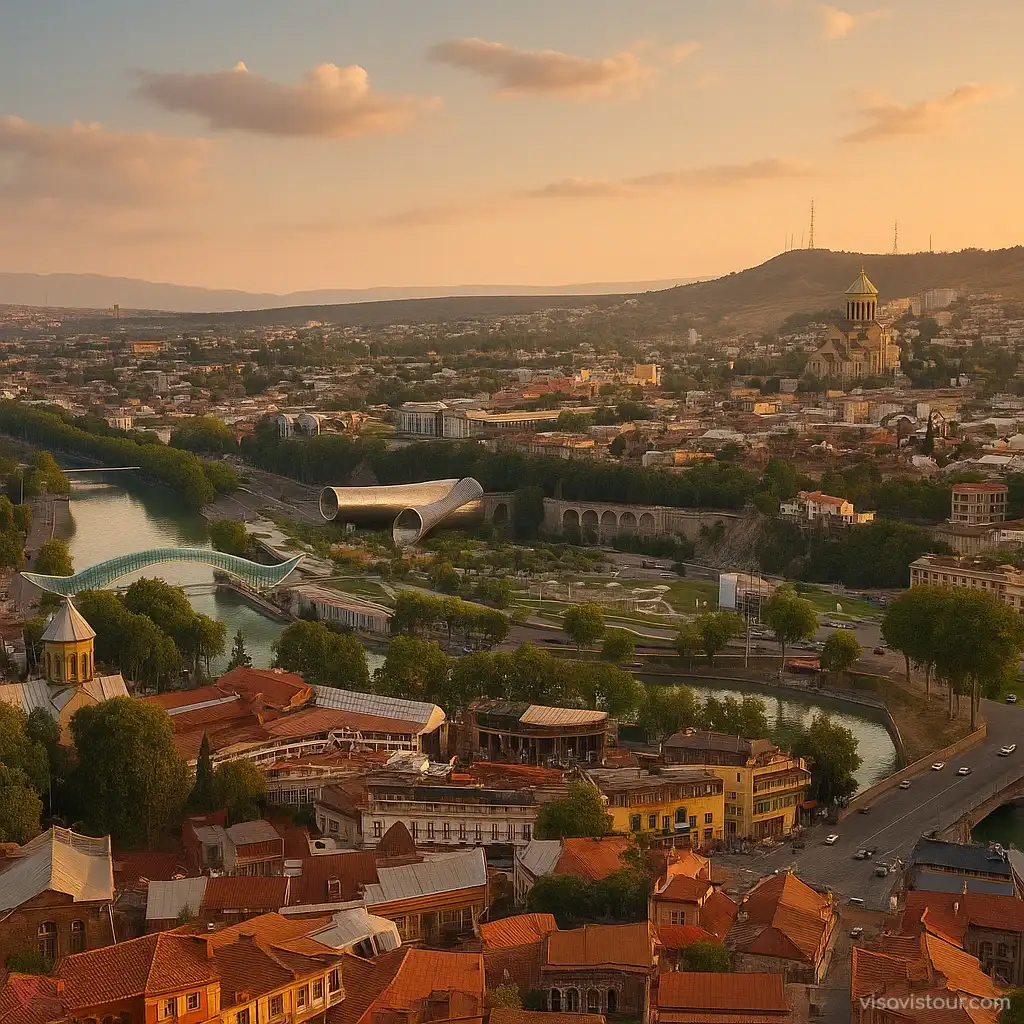
Start the day with breakfast at the hotel before setting out to explore Tbilisi, a city that harmoniously blends its medieval, classical, and modern influences. Founded in the 5th century by King Vakhtang Gorgasali, Tbilisi has grown into a vibrant cultural and historical center, shaped by its strategic location on the ancient Silk Road.
Walk around Old Tbilisi with visits of:
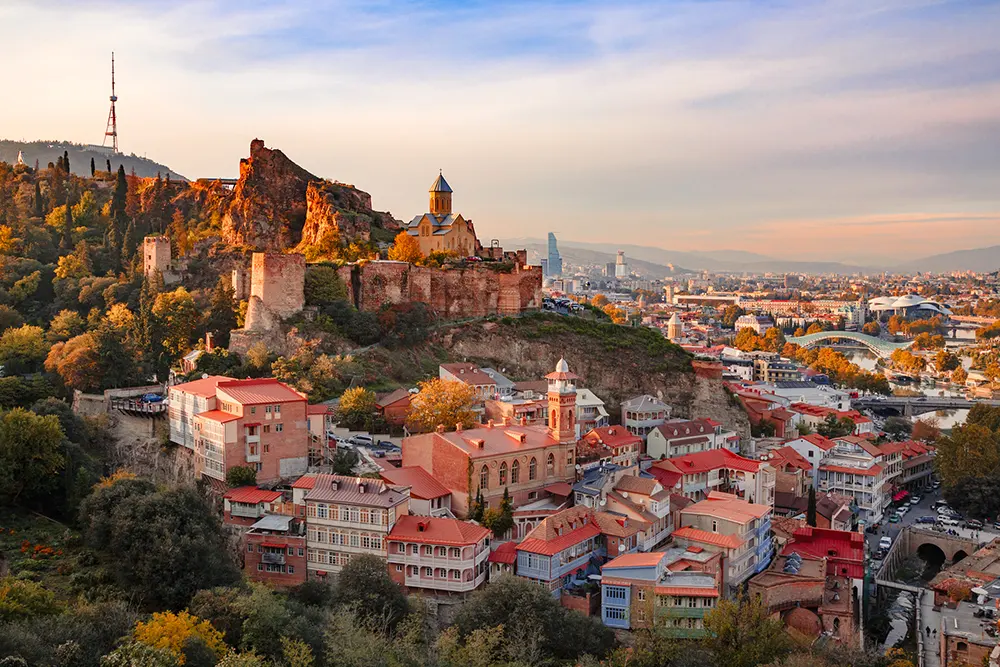
Metekhi Church & Statue of King Vakhtang Gorgasali – Located on a cliff overlooking the Mtkvari River, this church marks one of the earliest inhabited areas of Tbilisi. Enjoy panoramic views of the city while learning about its legendary founding.
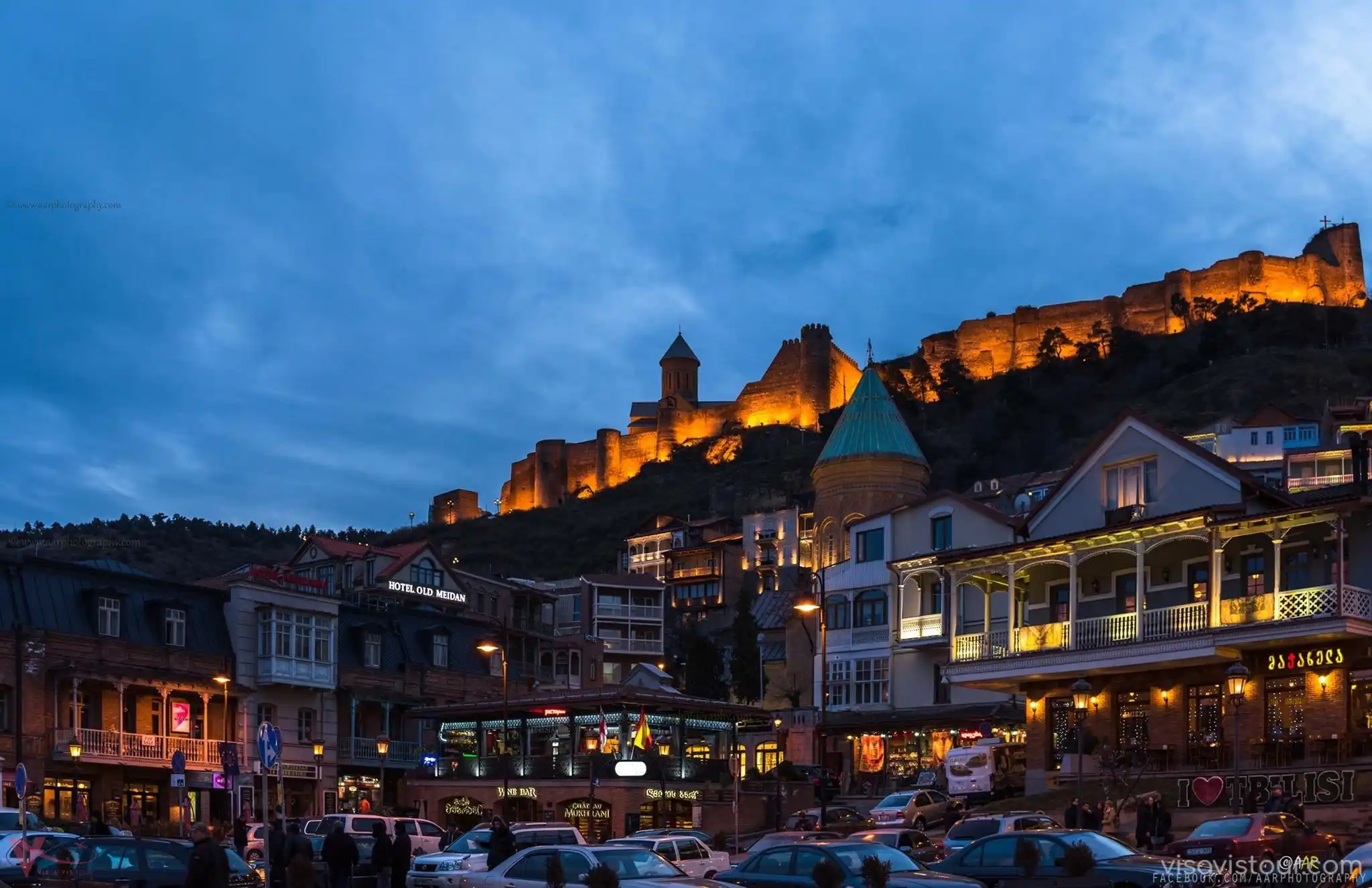
Narikala Fortress – Take a cable car ride from Rike Park to this ancient stronghold that has protected Tbilisi since the 4th century. From here, enjoy breathtaking views of the cityscape.
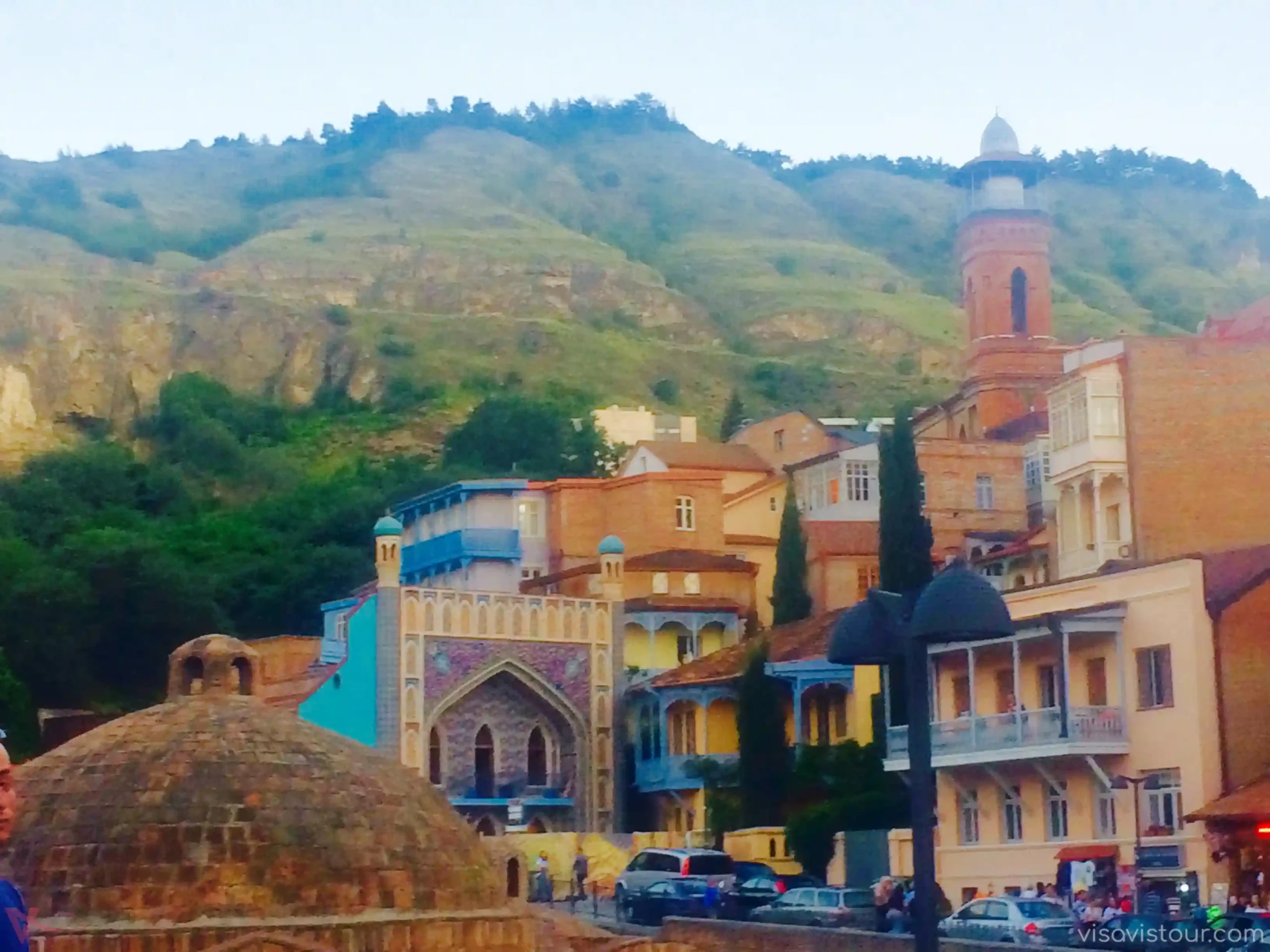
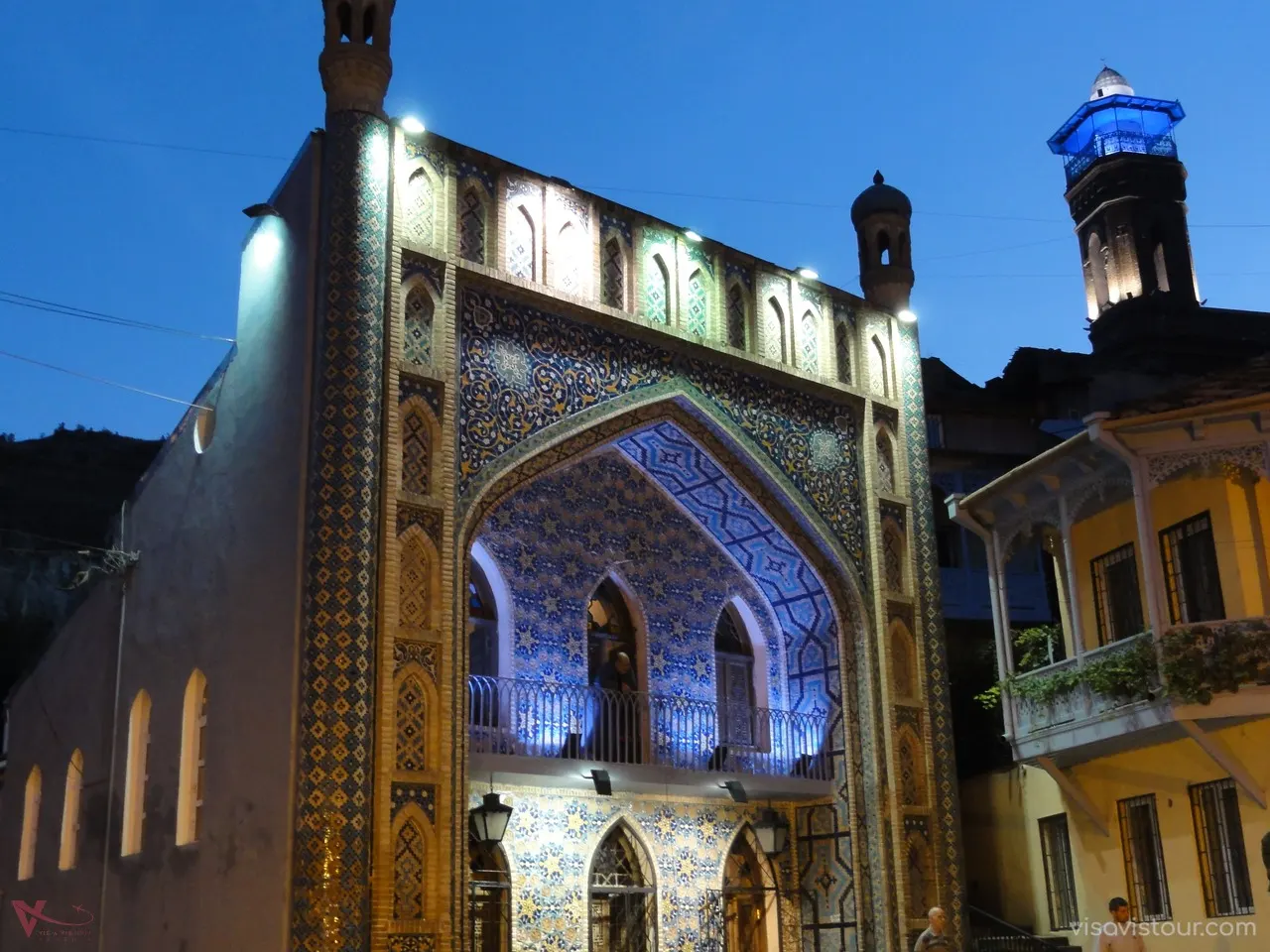
Abanotubani (Sulfur Baths District) – Stroll through this iconic district, famous for its natural hot sulfur springs, which gave Tbilisi its name (“Warm Spring”). These baths have been a center of relaxation and healing for centuries.
Sioni Cathedral – A historic Georgian Orthodox Cathedral, named after Mount Zion in Jerusalem. It once housed St. Nino’s Cross, a sacred relic of Georgia’s Christian heritage.
Sharden Street – A charming, modern street lined with cozy cafes, art galleries, and boutique shops, perfect for a relaxed stroll.
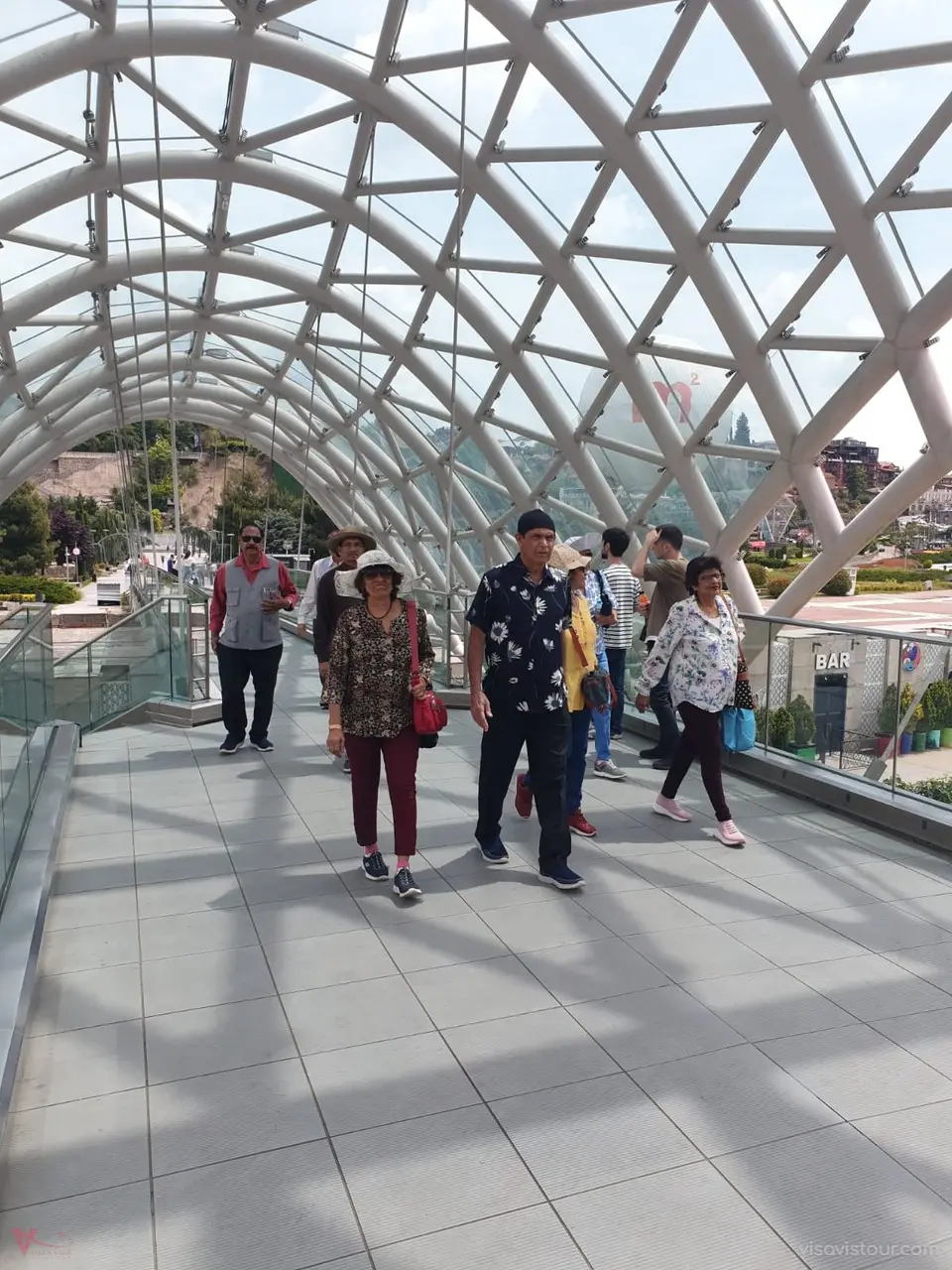
Bridge of Peace – A stunning glass-and-steel pedestrian bridge, designed by Italian architect Michele De Lucchi in 2010. The bridge connects Tbilisi’s historic old town with its modern districts.
Holy Trinity Cathedral (Sameba) – One of the largest Orthodox churches in the world, this architectural masterpiece was completed in 2004 and serves as the spiritual heart of Georgia’s Orthodox faith.
Drive along Rustaveli Avenue, the main boulevard of Tbilisi, home to the Parliament of Georgia, Opera House, and Freedom Square.
Overnight in Tbilisi.
Tbilisi - Jinvali reservoir – Ananuri Fortress – Gudauri – Kazbegi - Tbilisi
Breakfast at the hotel.
Explore Georgia’s Most Breathtaking Landscapes Along the Historic Georgian Military Road, a legendary route that winds through the heart of the Greater Caucasus Mountains.
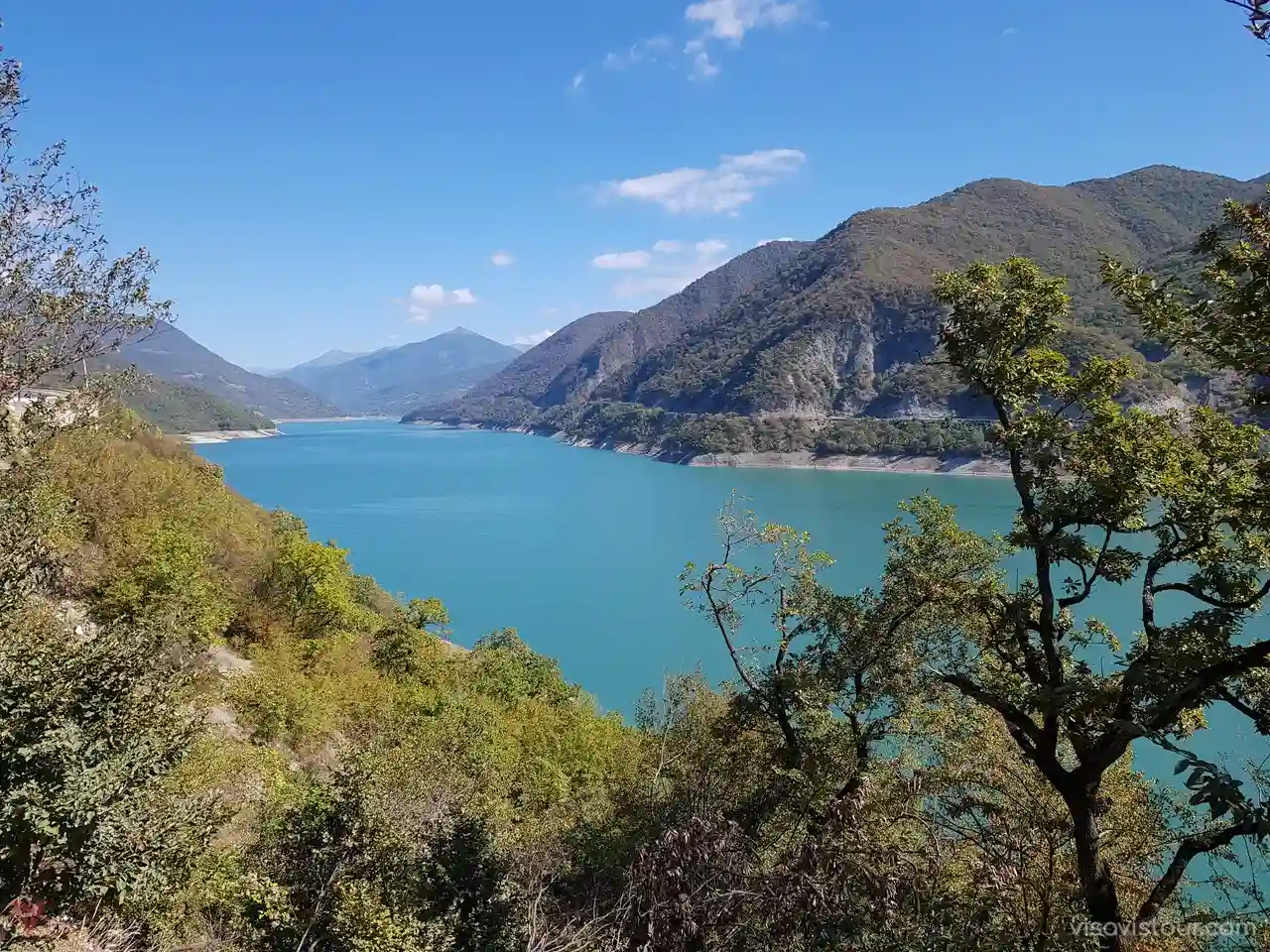
Our first stop is the picturesque Jinvali Reservoir, a stunning тurquoise lake nestled among lush mountains. This man-made reservoir supplies water to Tbilisi and offers unforgettable panoramic views, making it a perfect spot for photography.
Next, visit the 17th-century Ananuri Fortress, a historical castle complex that once served as the residence of the Dukes of Aragvi. Surrounded by defensive walls and watchtowers, the complex includes beautifully preserved churches adorned with intricate stone carvings.
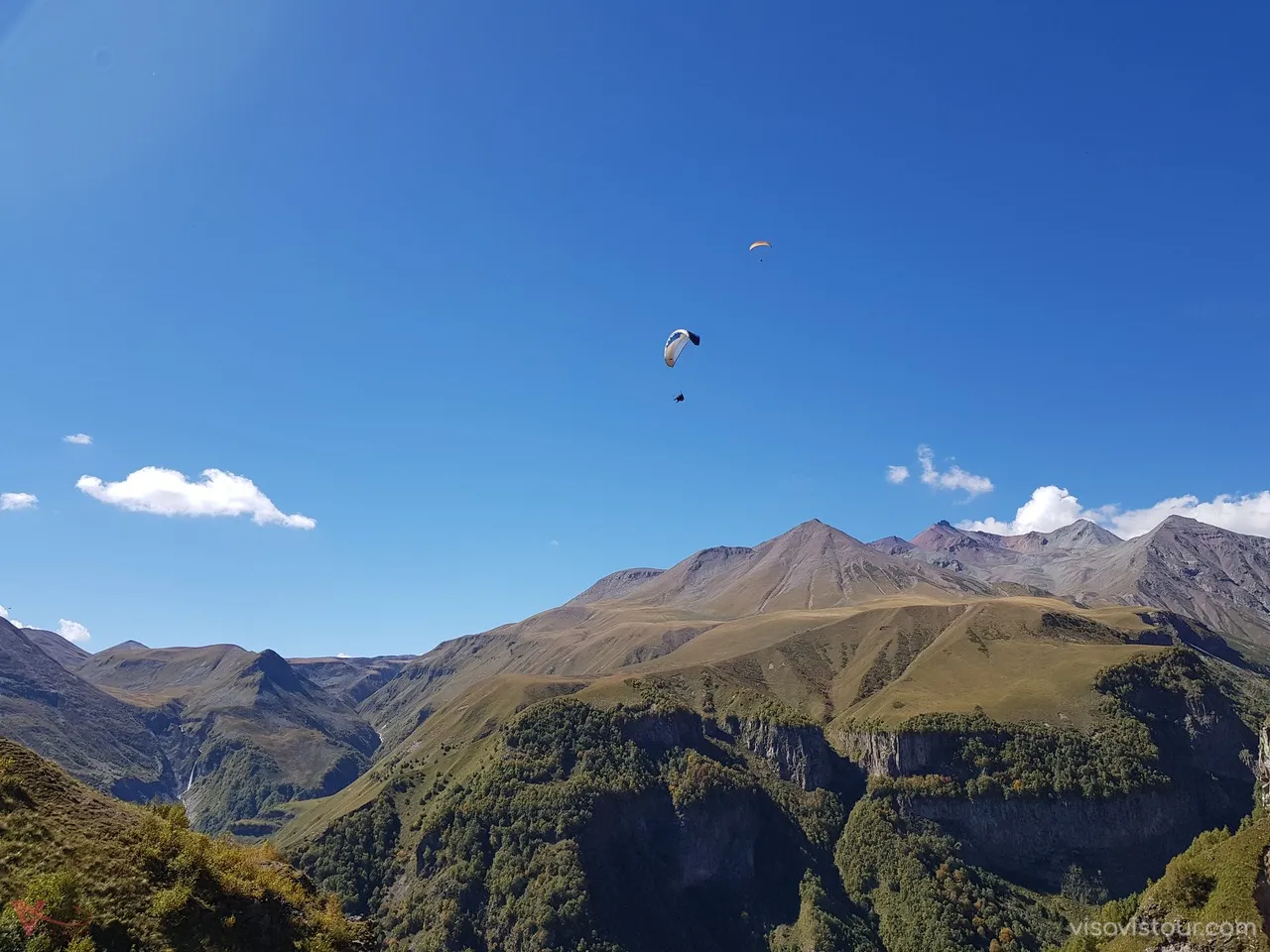
Continuing our journey, we reach Gudauri, a renowned ski resort situated at 2,000 meters above sea level. Located on the southern slopes of the Greater Caucasus, Gudauri is famous for its breathtaking mountain scenery and adventure sports. In summer, the green rolling hills and crisp alpine air provide an invigorating retreat from the city.
Driving further north, we cross the scenic Jvari Pass, reaching an altitude of 2,385 meters. The pass offers dramatic mountain views and is a key point along the ancient trade route connecting Georgia with Russia.
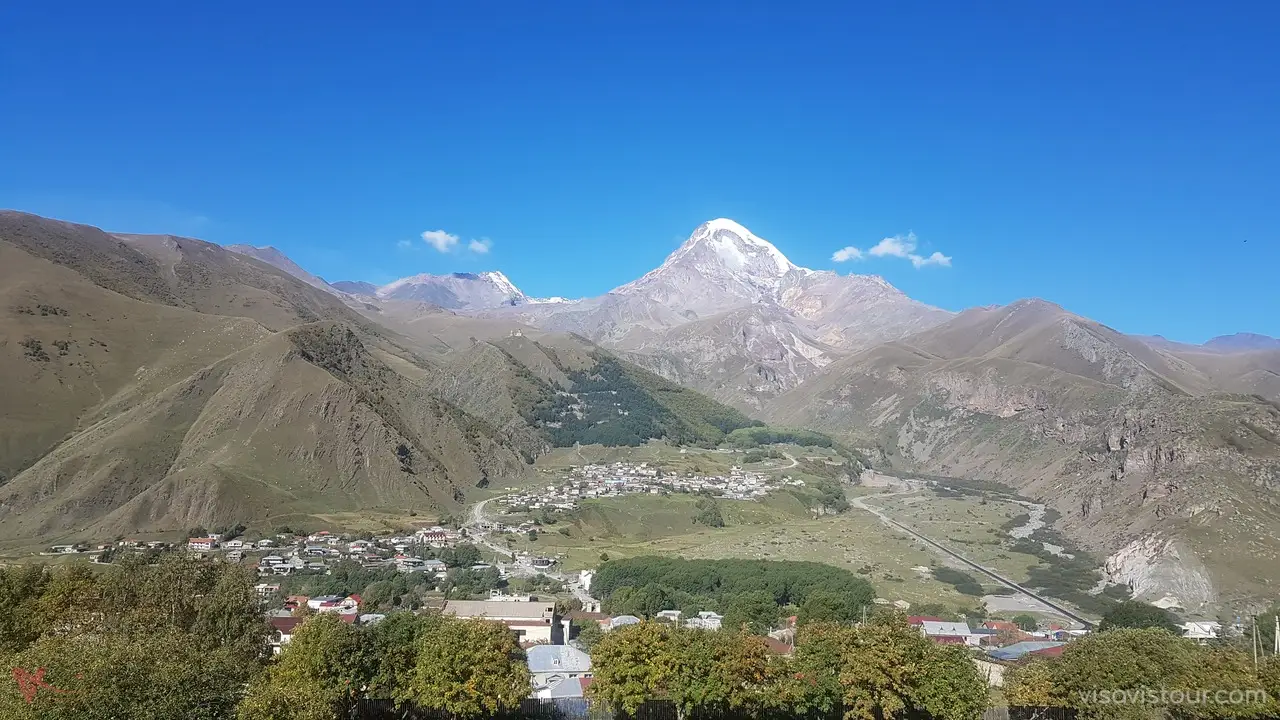
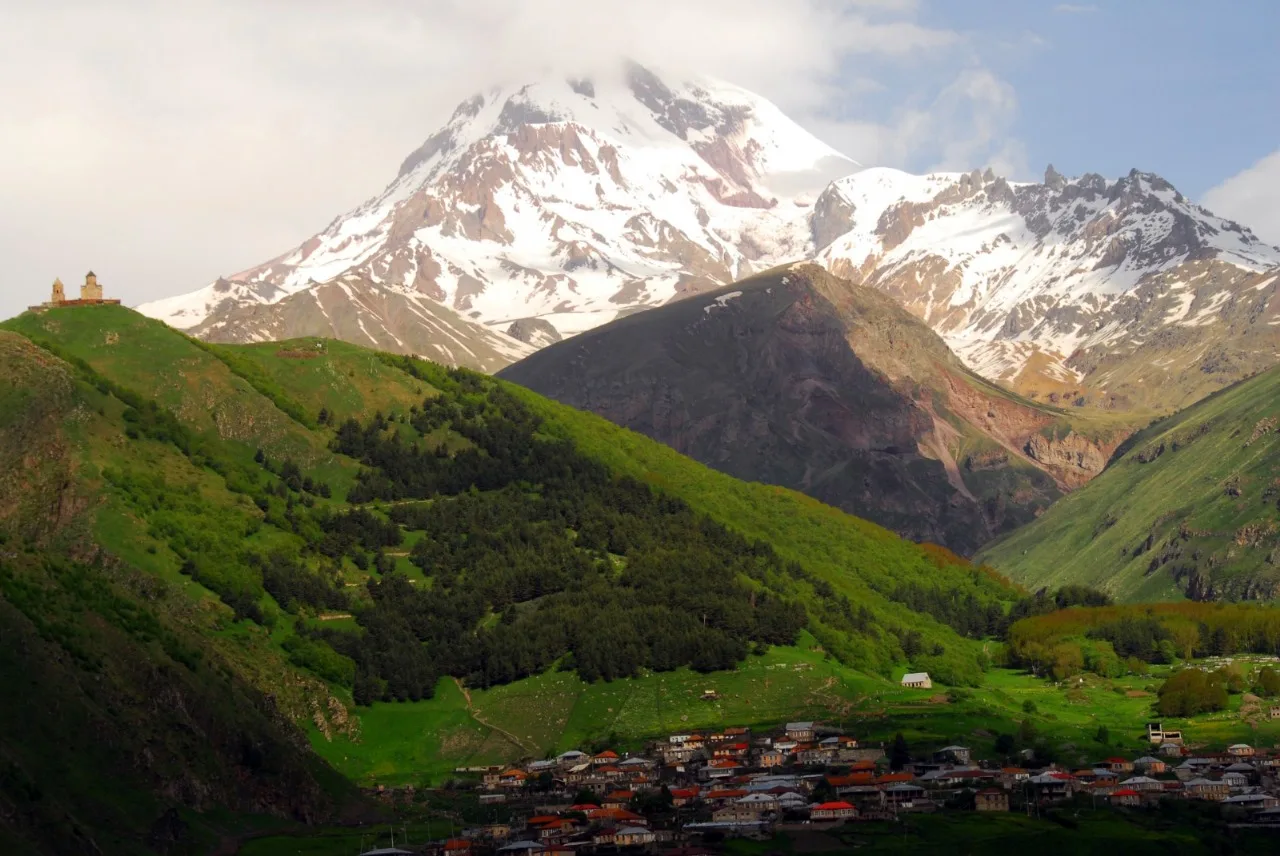
Arriving in Stepantsminda (Kazbegi), we find ourselves in one of the most stunning natural settings in Georgia. The small town is framed by the majestic Mount Kazbek (5,033 meters), one of the highest peaks in the Caucasus.
🚙 4X4 Jeep Adventure – To reach the Gergeti Holy Trinity Church, we take off-road 4X4 vehicles up a rugged mountain path. The breathtaking journey is an adventure in itself, leading us to one of the most famous and picturesque landmarks in Georgia.
Perched at an elevation of 2,170 meters, Gergeti Holy Trinity Church is an architectural masterpiece from the 14th century. Set against the stunning backdrop of Mount Kazbek, this remote monastery offers unparalleled views and a spiritual atmosphere. The combination of medieval stone architecture and dramatic mountain scenery creates a truly breathtaking experience.
Return to Tbilisi
Overnight in Tbilisi.
Tbilisi – Mtskheta – Upliscihe – Tbilisi
Mtskheta: The Ancient Capital & Spiritual Center of Georgia
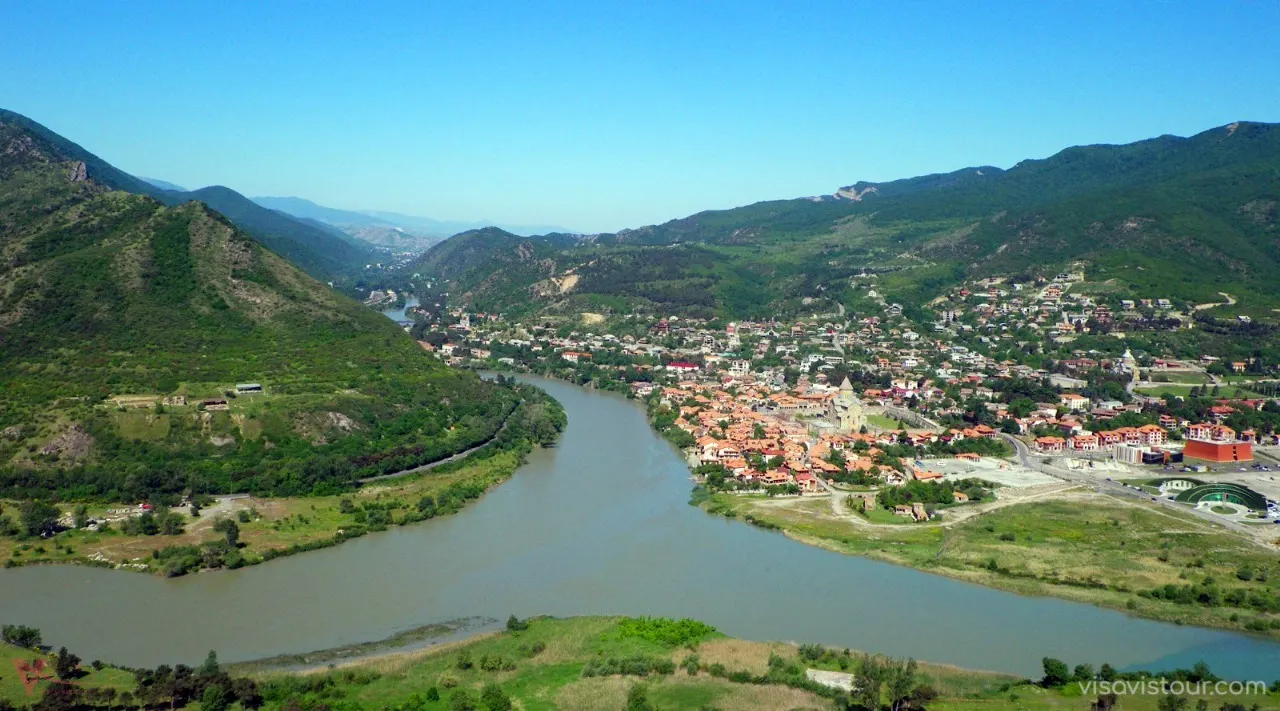
In the afternoon, we drive to Mtskheta, one of the oldest cities in Georgia, located just 20 km from Tbilisi. This UNESCO World Heritage Site was the capital of the early Georgian kingdom of Iberia from the 3rd century BC to the 5th century AD and remains a sacred pilgrimage site for Georgian Orthodox Christians.
Visit the Most Iconic Religious Monuments of Georgia
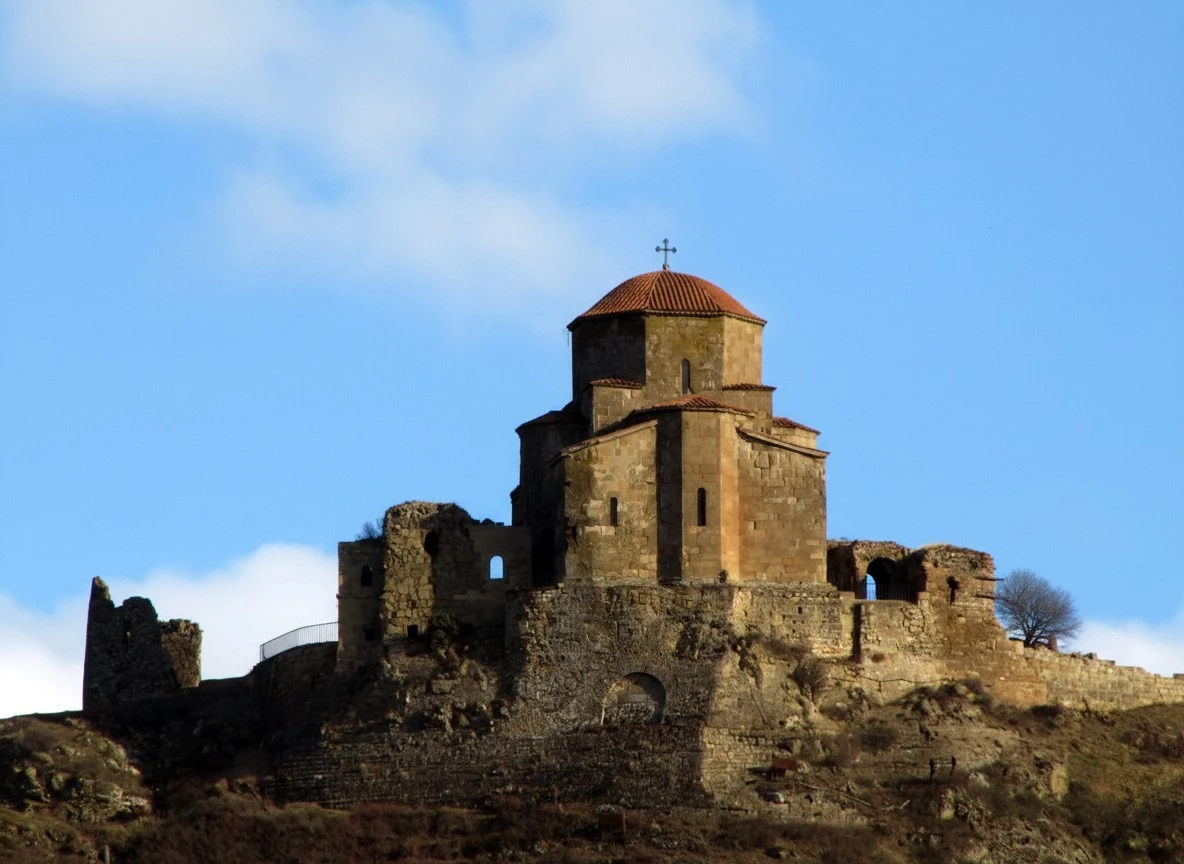
Jvari Monastery (6th century) – Perched on a hill overlooking the confluence of the Aragvi and Mtkvari Rivers, this 6th-century monastery is where St. Nino erected a cross, leading to Georgia’s conversion to Christianity. The panoramic views from this site are simply breathtaking.
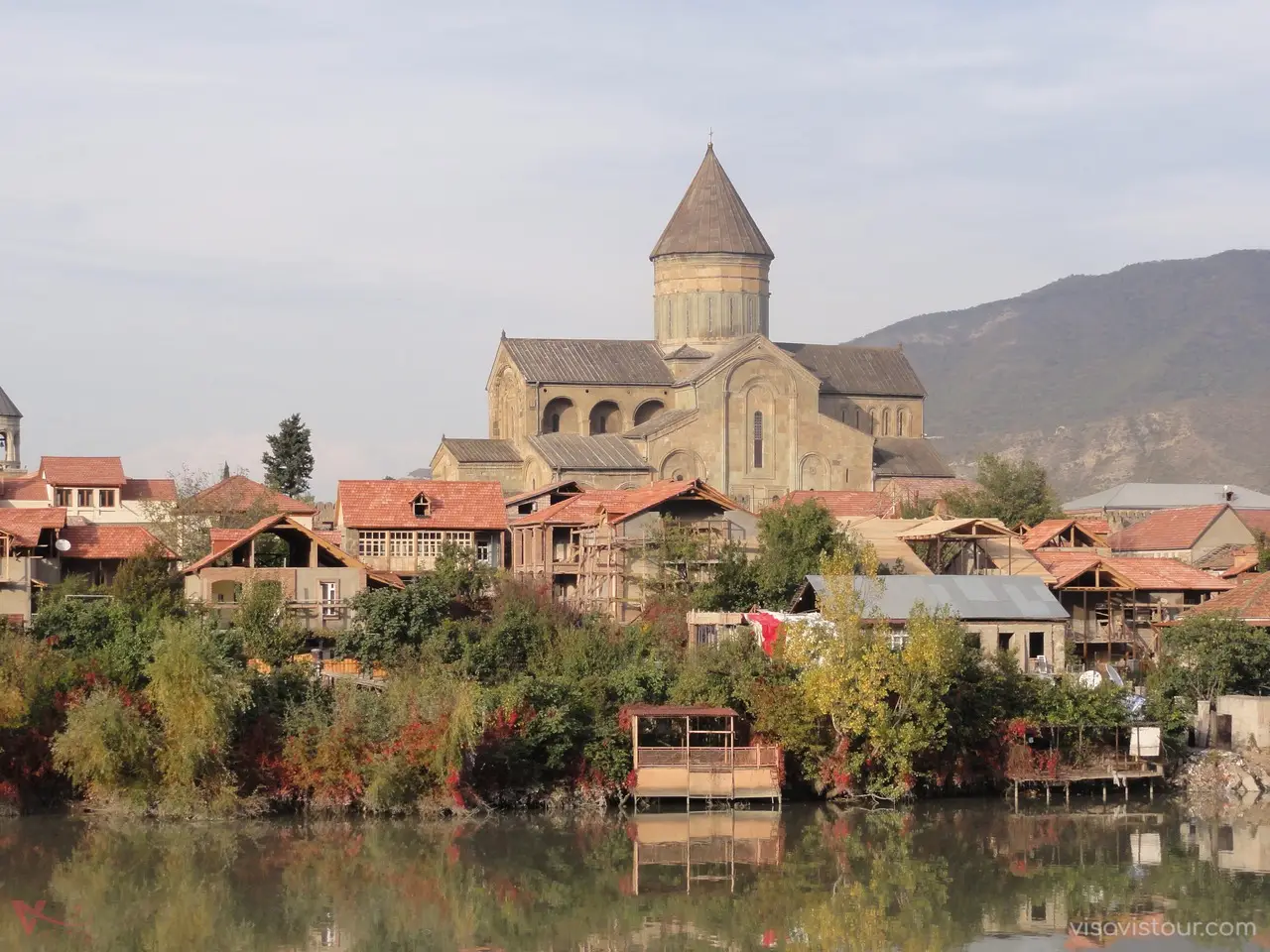
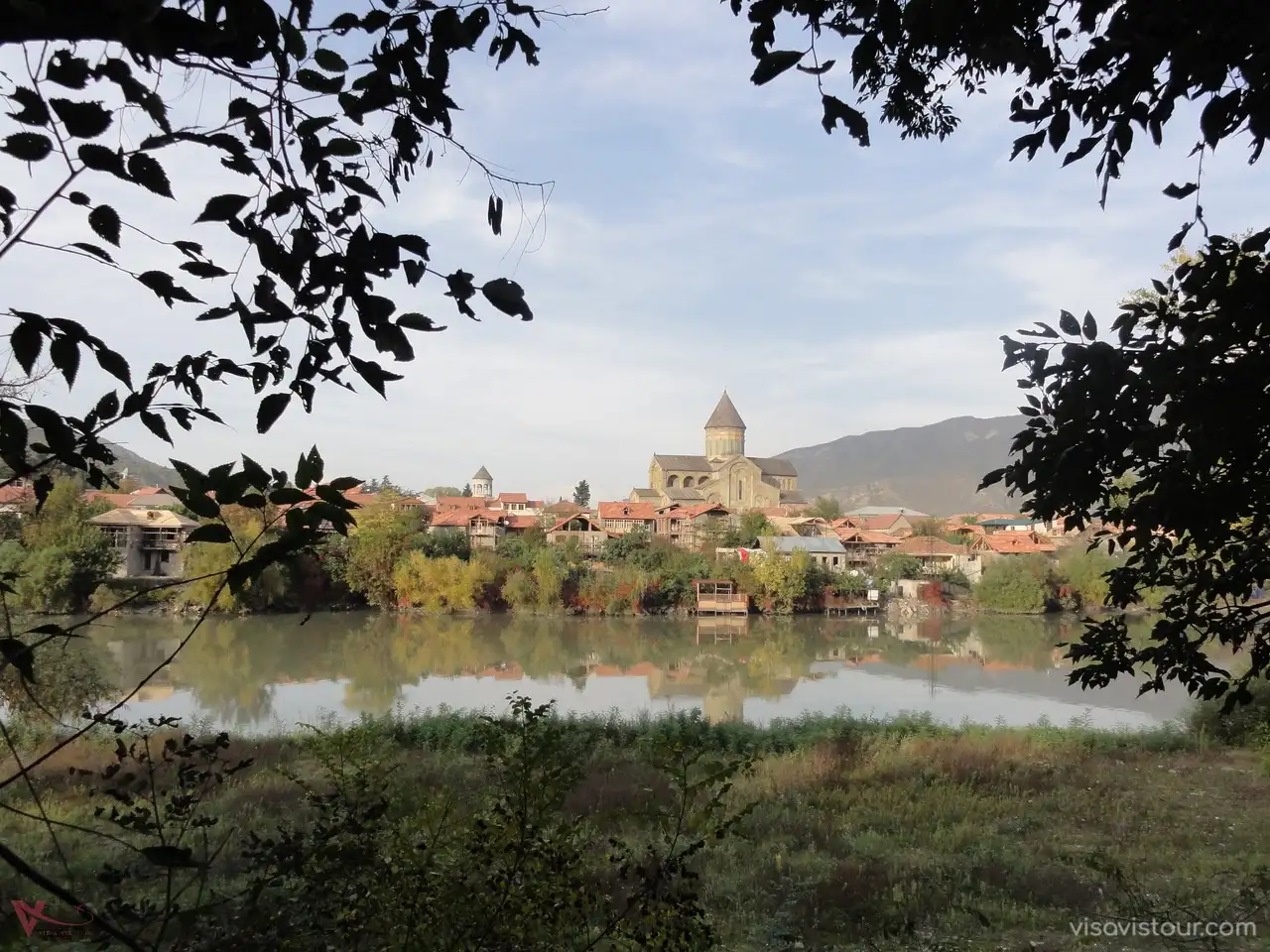
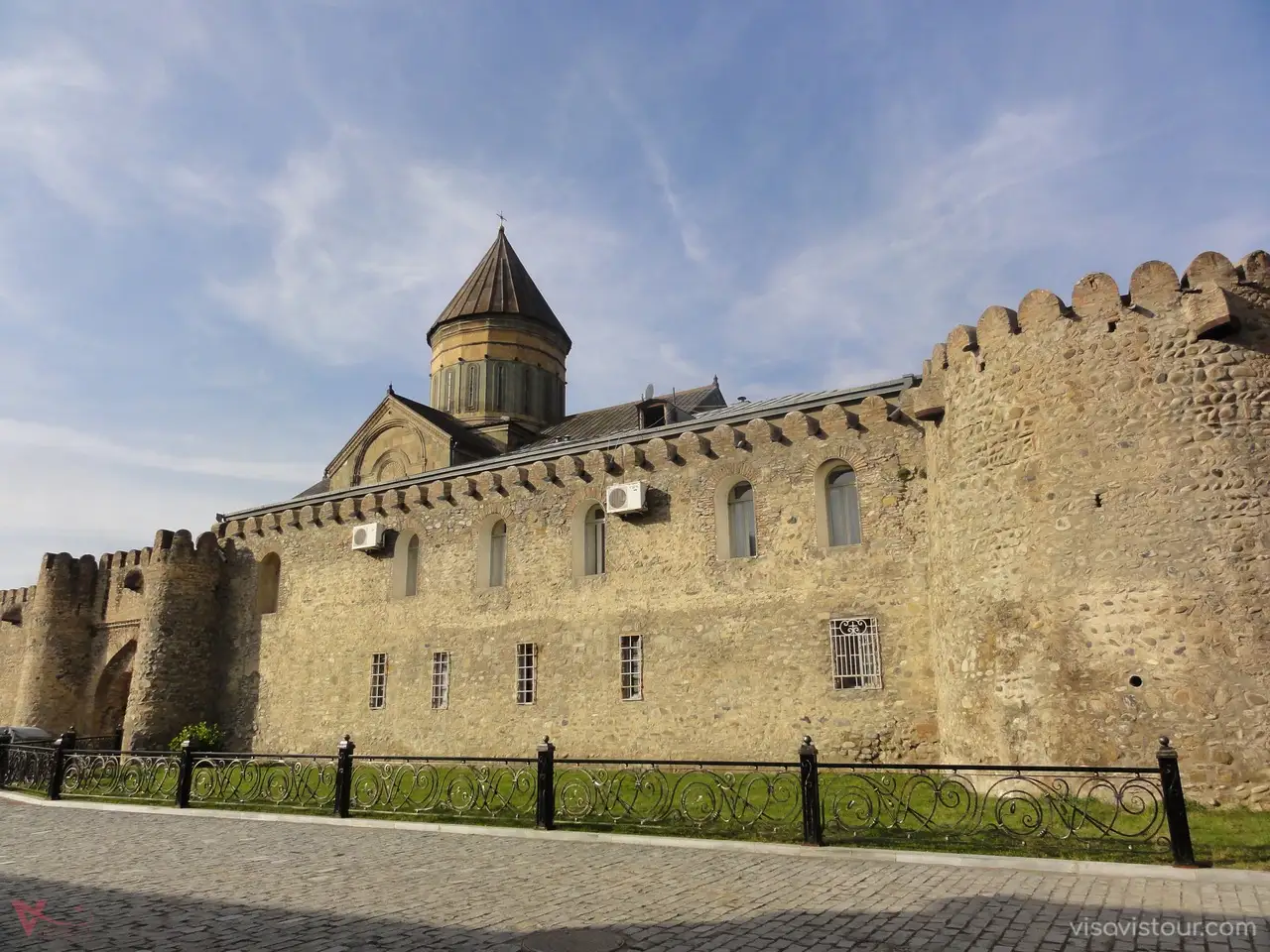
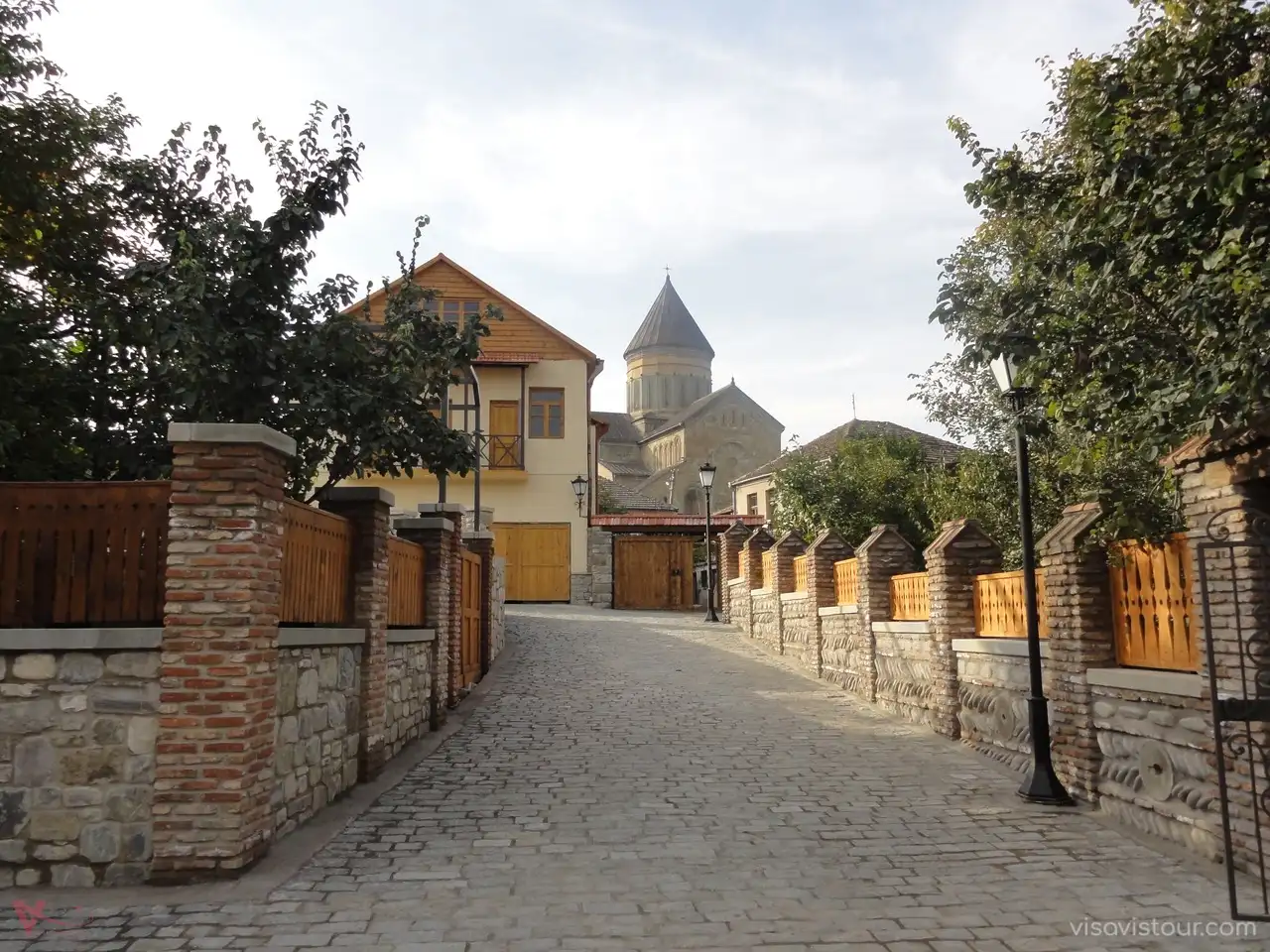
Svetitskhoveli Cathedral (11th century) – Known as the spiritual heart of Georgia, this architectural masterpiece is the legendary burial site of Christ’s robe. The cathedral’s ornate frescoes, intricate carvings, and massive stone walls make it one of the most significant religious sites in the country.
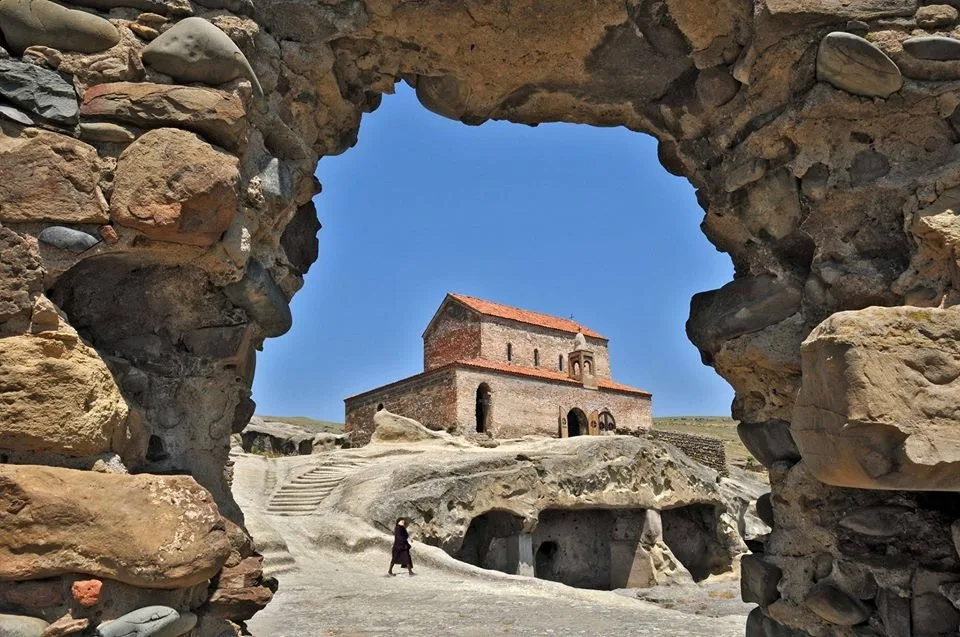
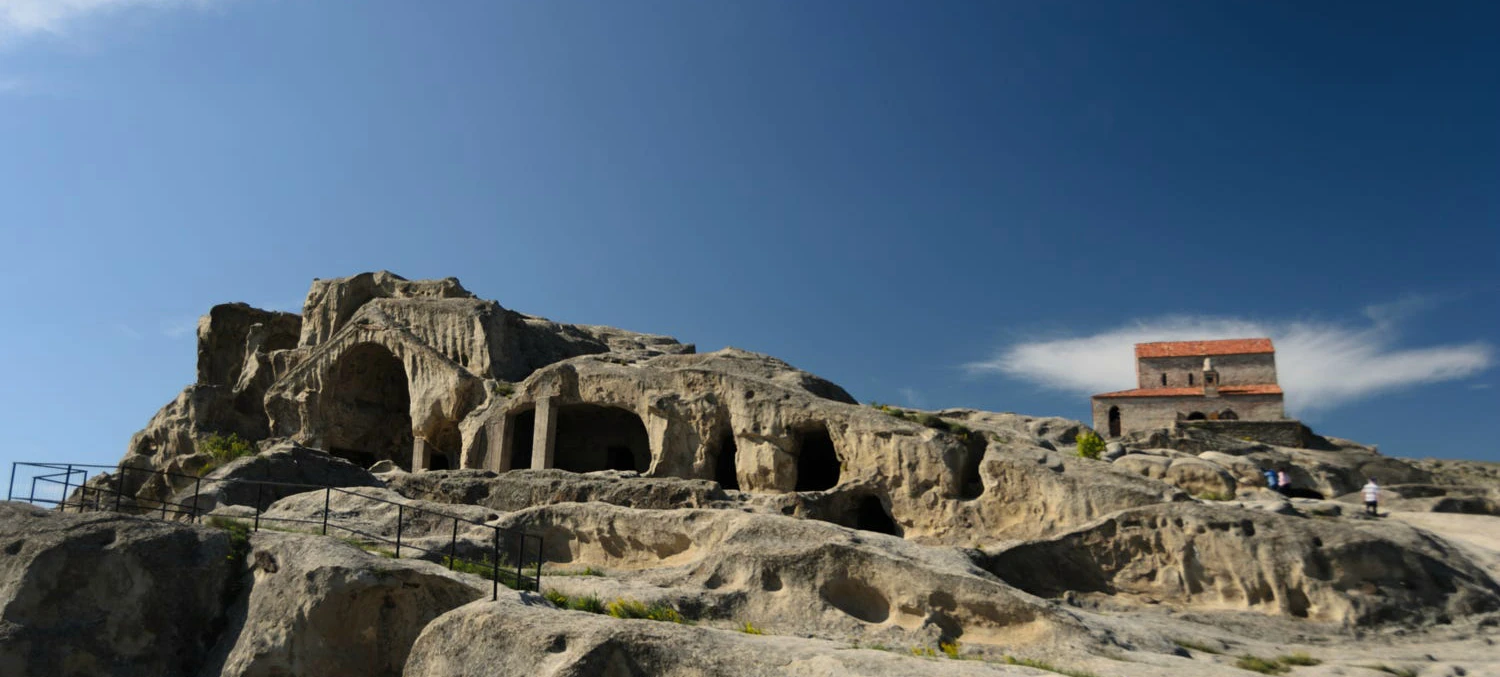
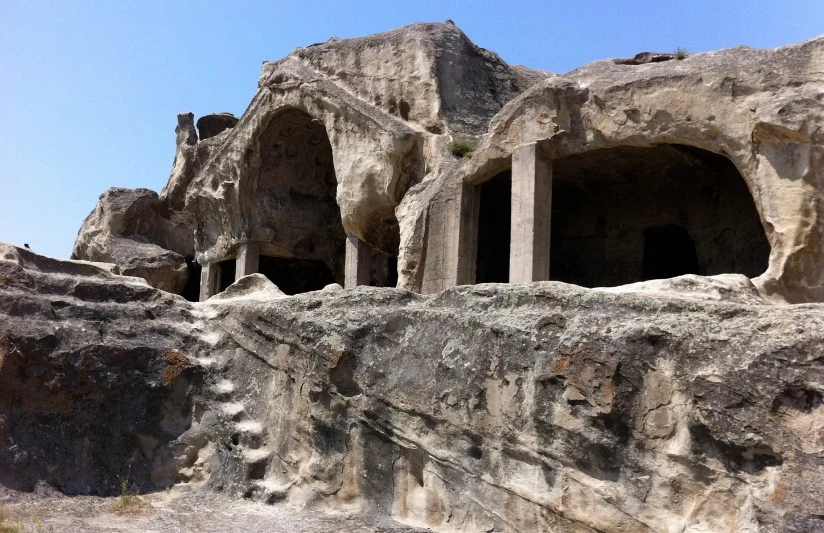
Then, journey to Uplistsikhe (meaning “The Lord’s Fortress”), an ancient rock-hewn city, carved into the cliffs, dates back to the Early Iron Age (1st millennium BC), that remained a major political, religious, and cultural center until the Late Middle Ages. Nestled on the left bank of the Mtkvari River, Uplistsikhe is remarkable for its diverse architectural influences, showcasing styles from Anatolia, Persia, and the Greco-Roman world. The city was a thriving hub of trade, religion, and craftsmanship, integrating both pagan and early Christian elements. Walking through its ancient cave structures, visitors can explore:
The Great Hall (Throne Hall) – the main ceremonial hall, possibly used for royal gatherings.
Pagan Temples – remnants of pre-Christian Georgian religious practices, once dedicated to the sun goddess.
Christian Basilica (9th-10th century) – a testament to the site’s transition from paganism to Christianity.
Royal Halls and Dwellings – once used by noble families and religious leaders.
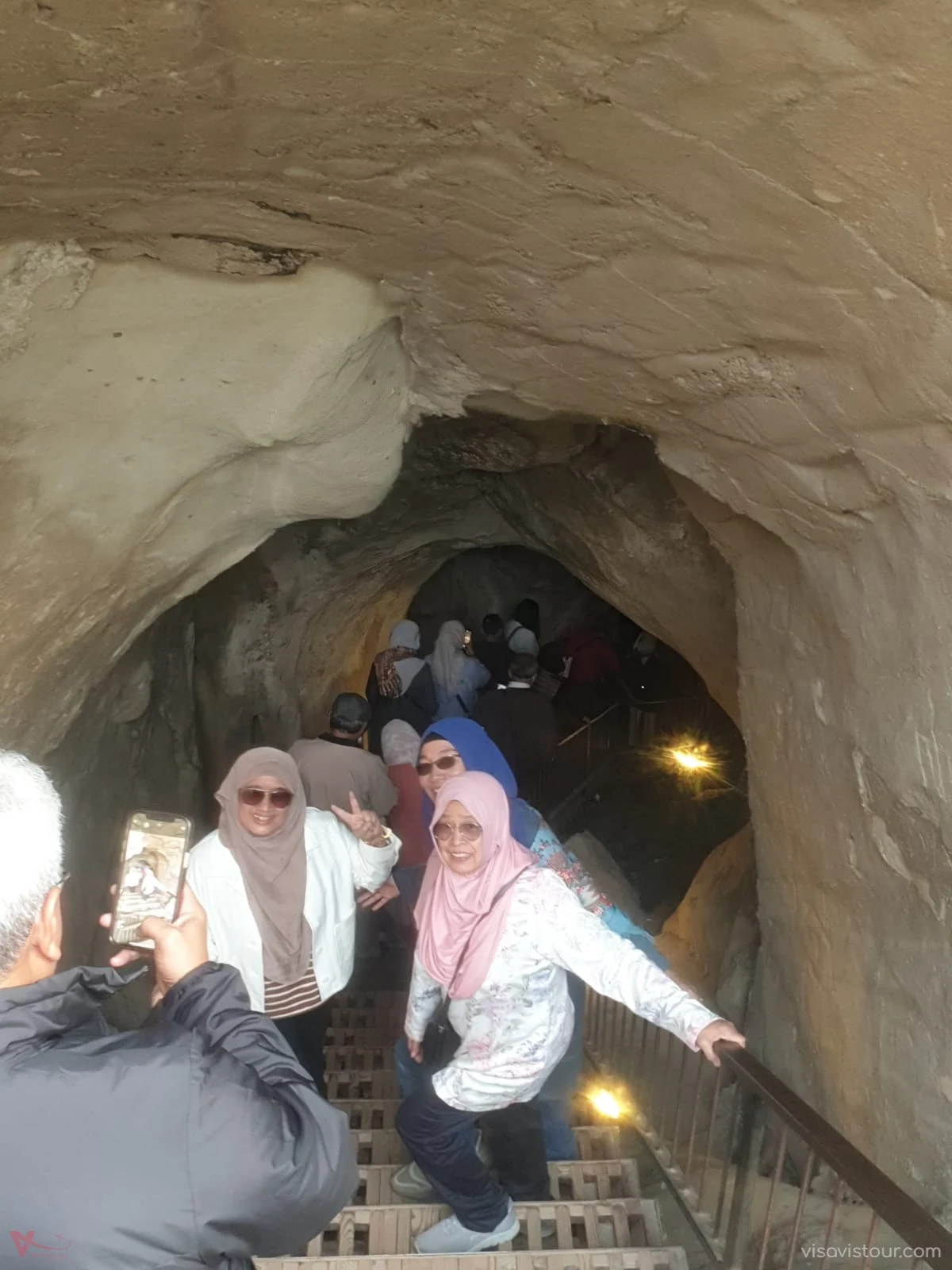
Secret Tunnels – hidden passageways leading to the river, believed to be escape routes in times of siege.
With over 150 caves, halls, and tunnels, Uplistsikhe gives visitors a glimpse into the daily life of ancient Georgians. The city once flourished as a Silk Road trading hub, connecting East and West, before gradually losing its significance after Mongol invasions in the 13th century.
Return to Tbilisi & Overnight Stay
Tbilisi - Haghpat and Sanahin UNESCO Monasteries –Dilijan – Lake Sevan - Yerevan
After breakfast, drive towards Georgia- Armenia boarder at Sadahlo, pass border formalities.
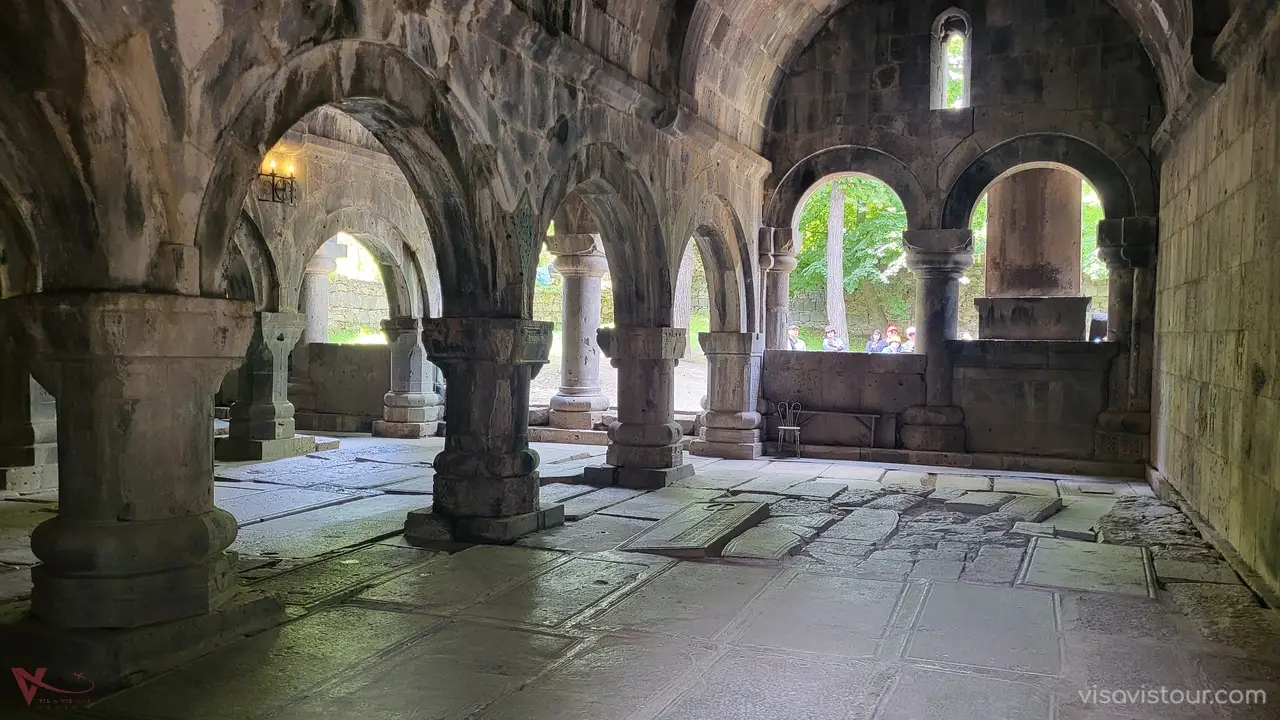
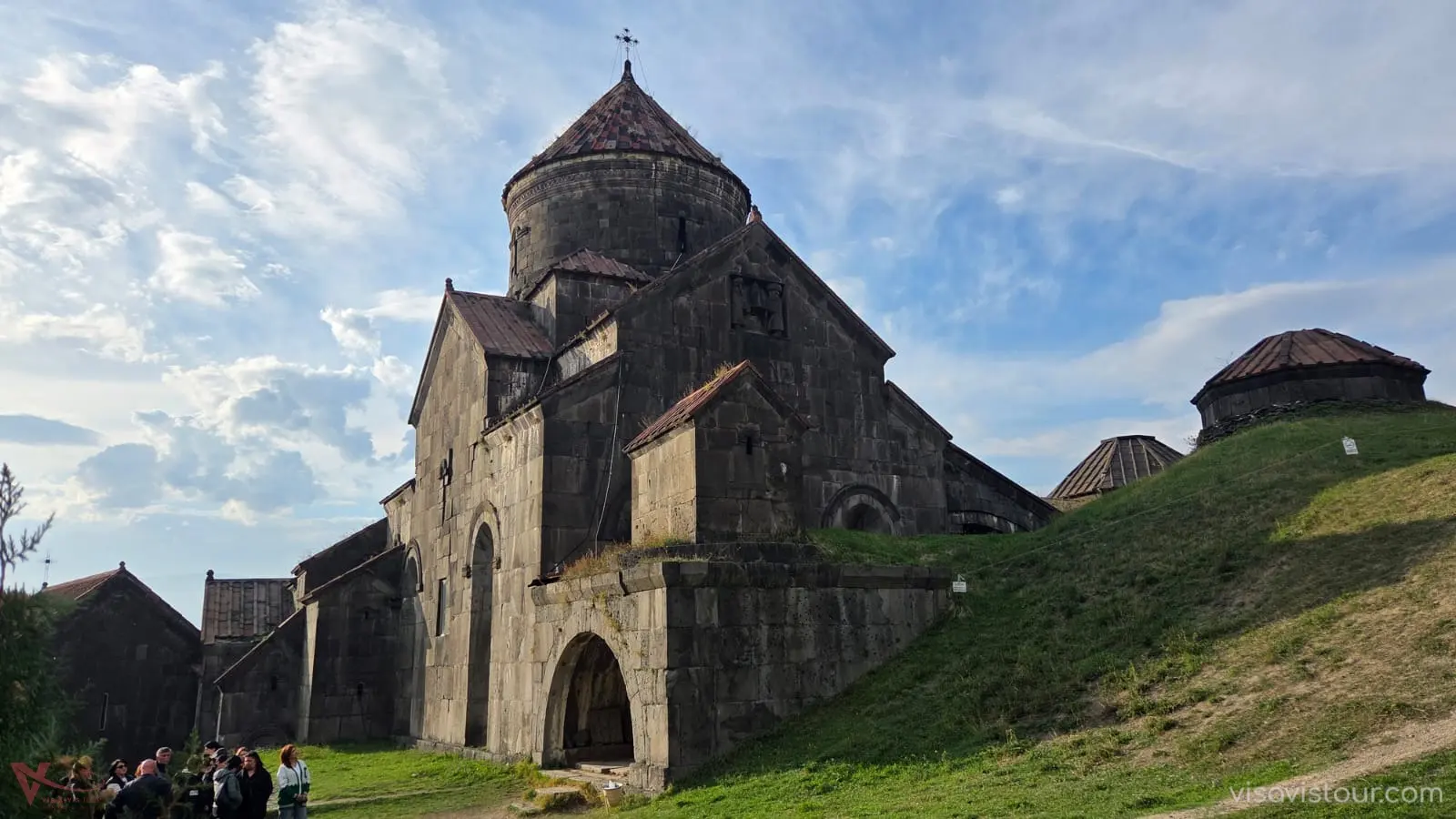
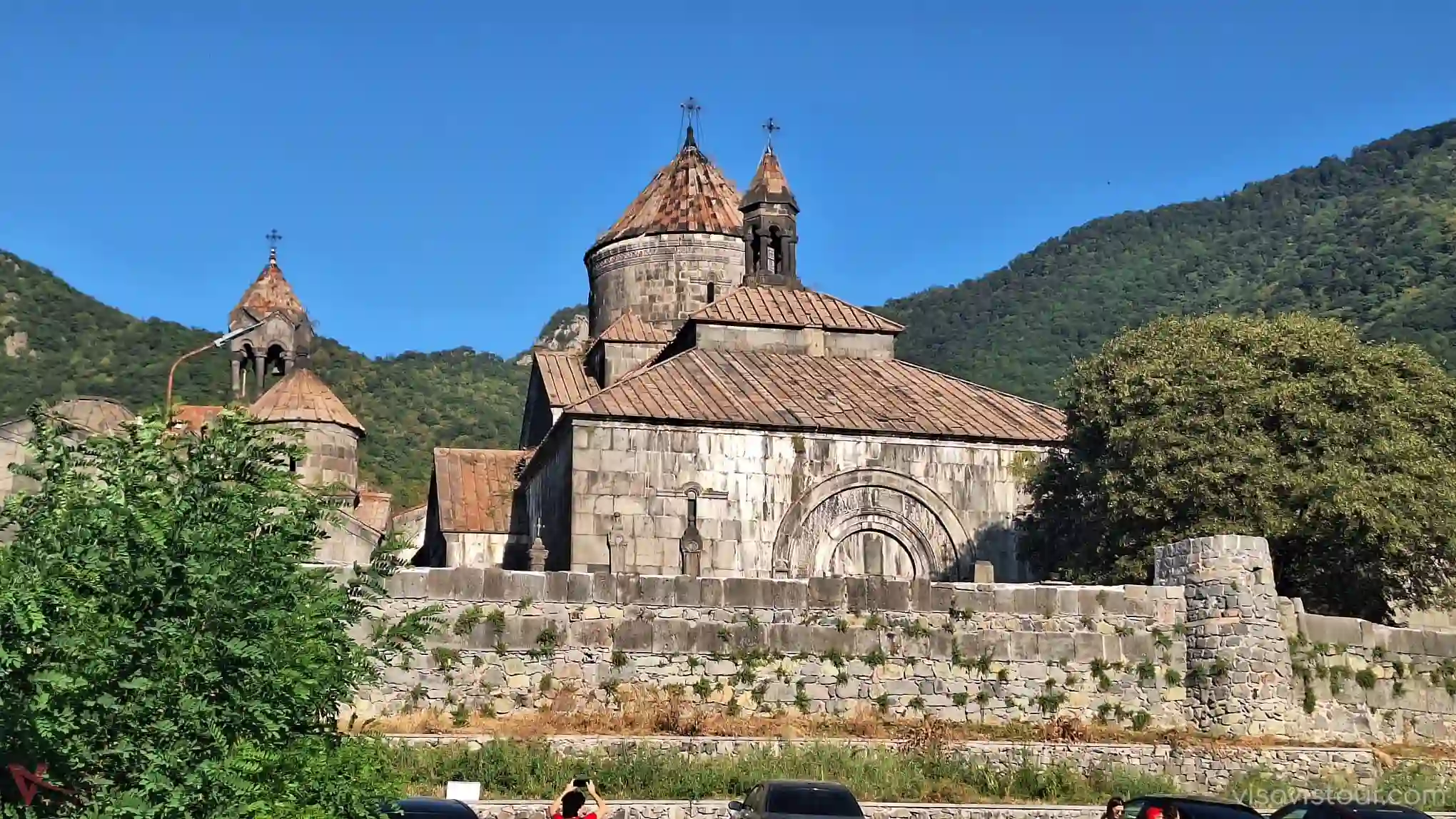
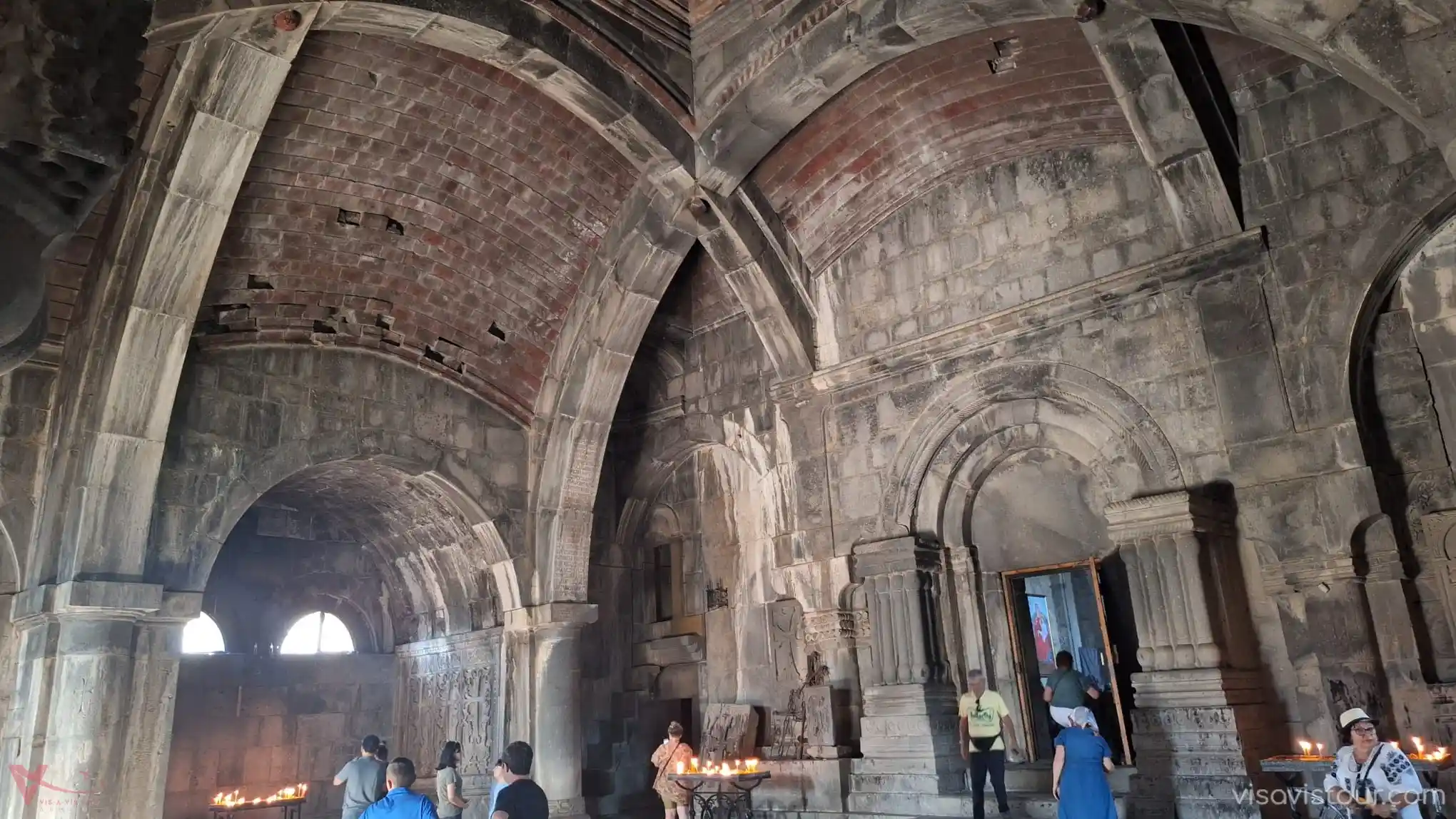
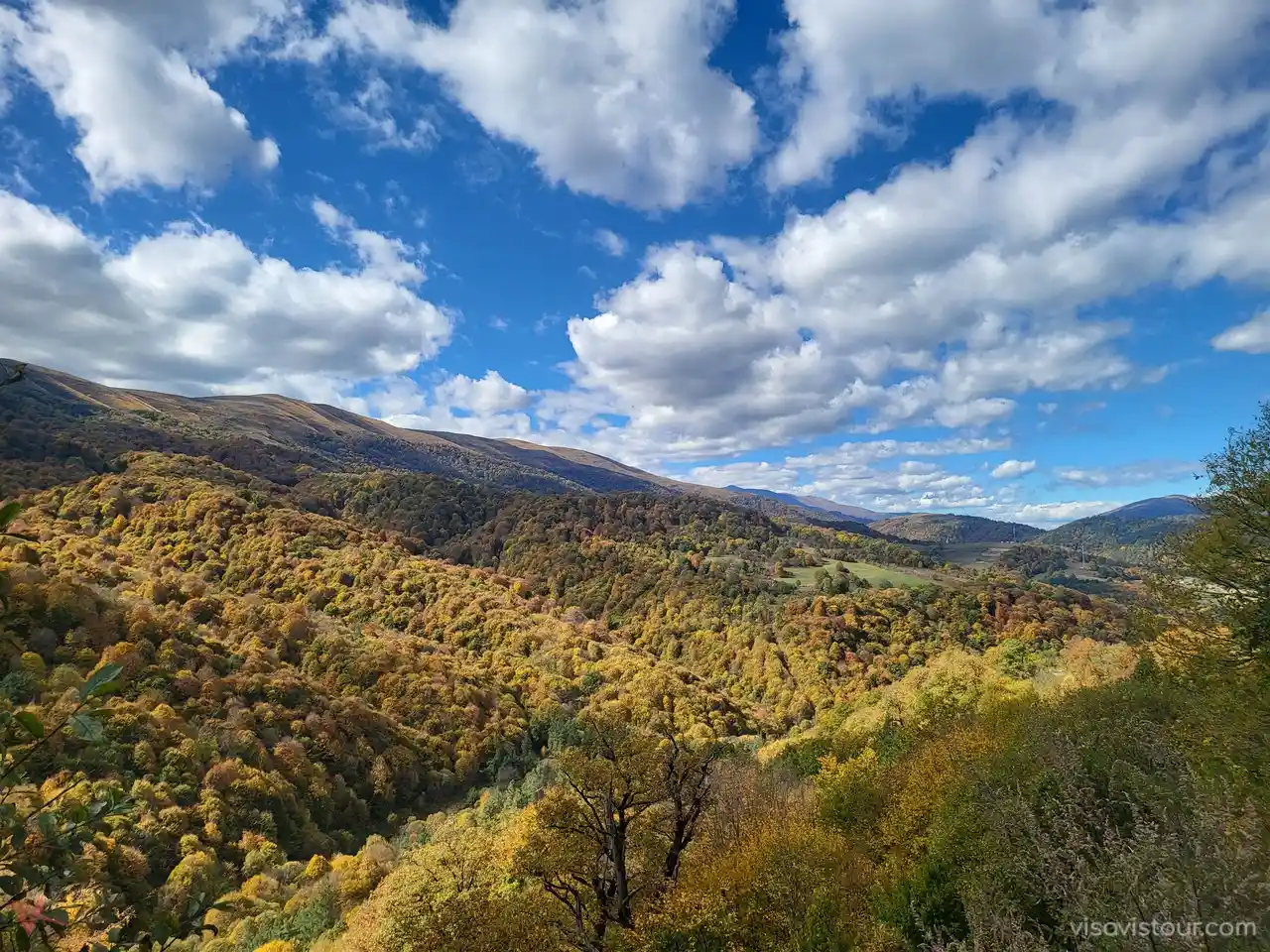
Start a captivating journey to northern Armenia, a magical region of lush forests, towering mountains, and deep canyons. This region is famous for some of the most stunning examples of medieval Armenian architecture, including the UNESCO World Heritage-listed monasteries of Sanahin and Haghpat.
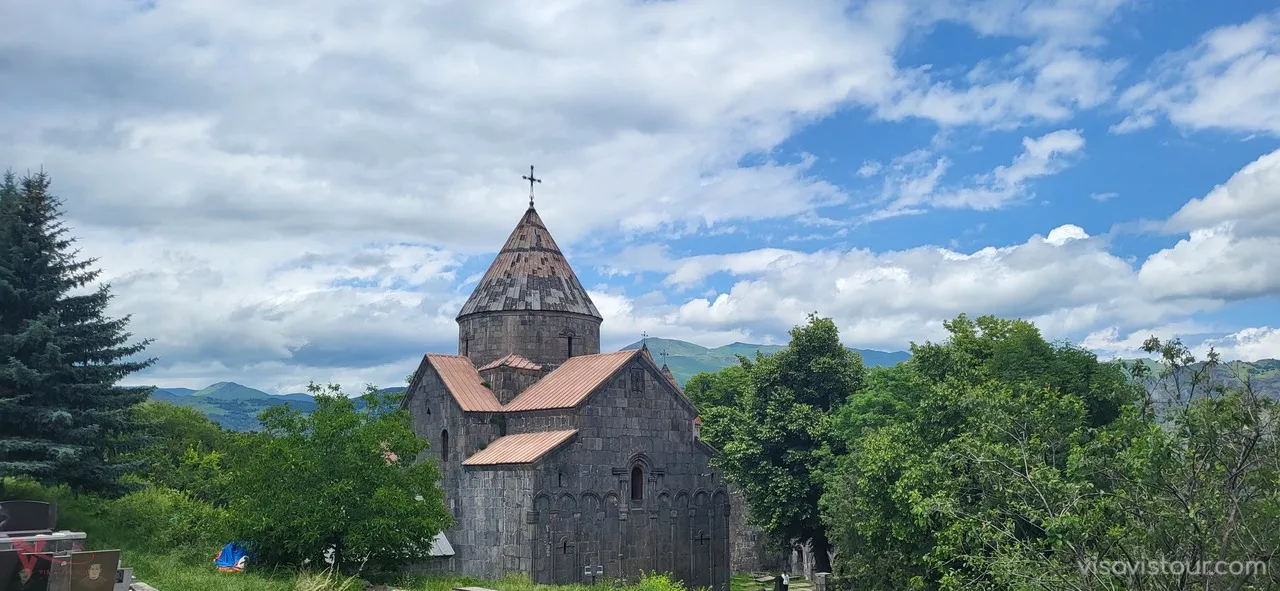
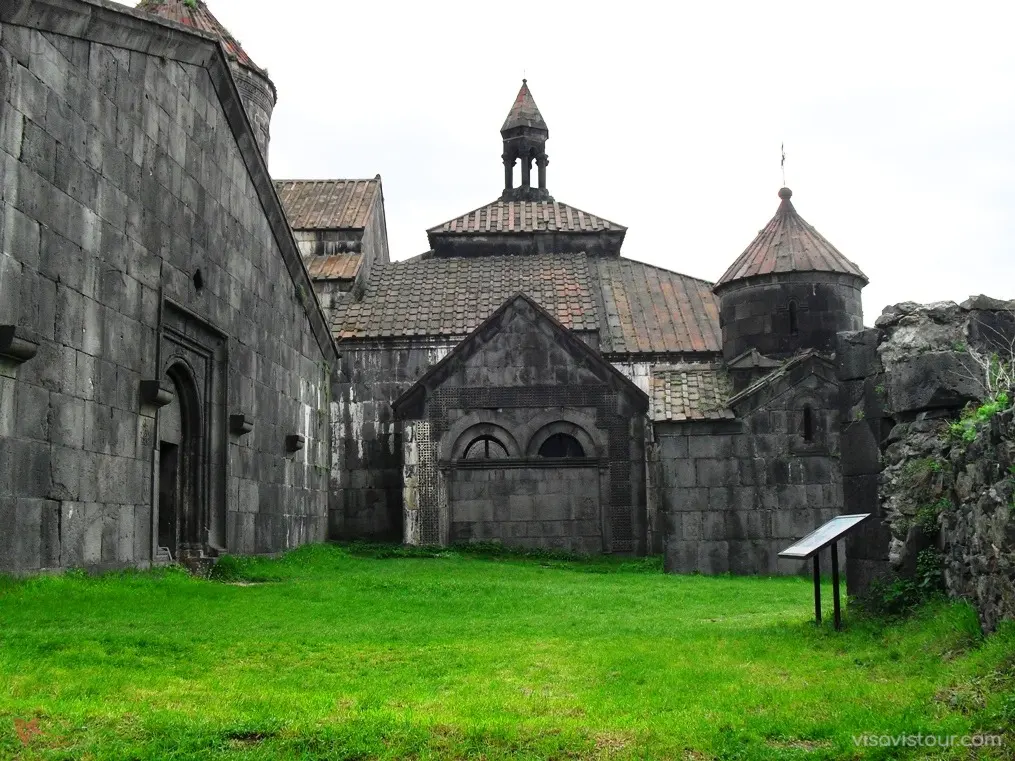
Sanahin Monastery (IX – XII centuries) is one of Armenia’s most revered monastic complexes. Located in the picturesque Lori region, Sanahin was a major religious and educational center, housing a monastic community of over 500 monks. Among its oldest structures are the Church of the Holy Mother of God, the Church of St Amenaprkich, and the Chapel of St Gregorio—dating back to the 10th century.
The Academy of Sanahin, established in the 11th century, played a crucial role in the development of Armenian culture, arts, and sciences. The monastery was renowned for its contributions to Armenian education, particularly in theology, medicine, and the arts.
Located immediately to the east of Sanahin, Haghpat Monastery is equally captivating and bears striking architectural similarities to its sister complex. Flourishing as a prominent religious and educational center between the 10th and 13th centuries, Haghpat boasts various structures built at different times—including the Church of St. Nshan, the refectory, and the churches of St. Gregorio and St. Holy Mother — which rank among the finest examples of medieval Armenian architecture. One of the most impressive structures in the complex is the bell tower, constructed in 1245. Like Sanahin, Haghpat once housed a scriptorium, depository, and medical school. Notably, the renowned national poet and musician Sayat-Nova was among the monks of Haghpat.
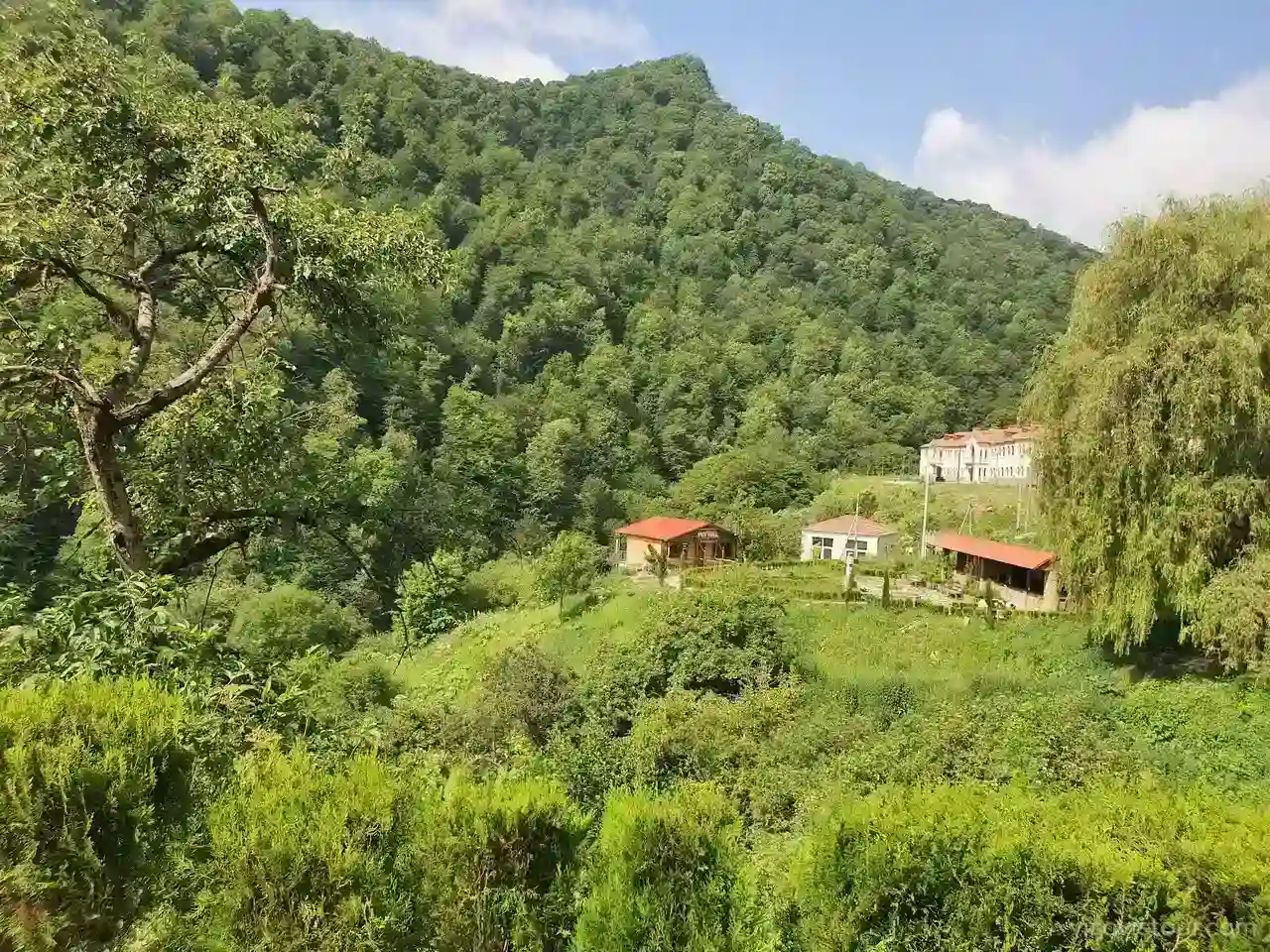
Continue to the charming town of Dilijan, often referred to as “Armenian Switzerland” for its lush forests and diverse wildlife. Stroll through Dilijan’s artisanal quarter, visiting local artisans crafting traditional souvenirs, made from wood, stone and ceramics.
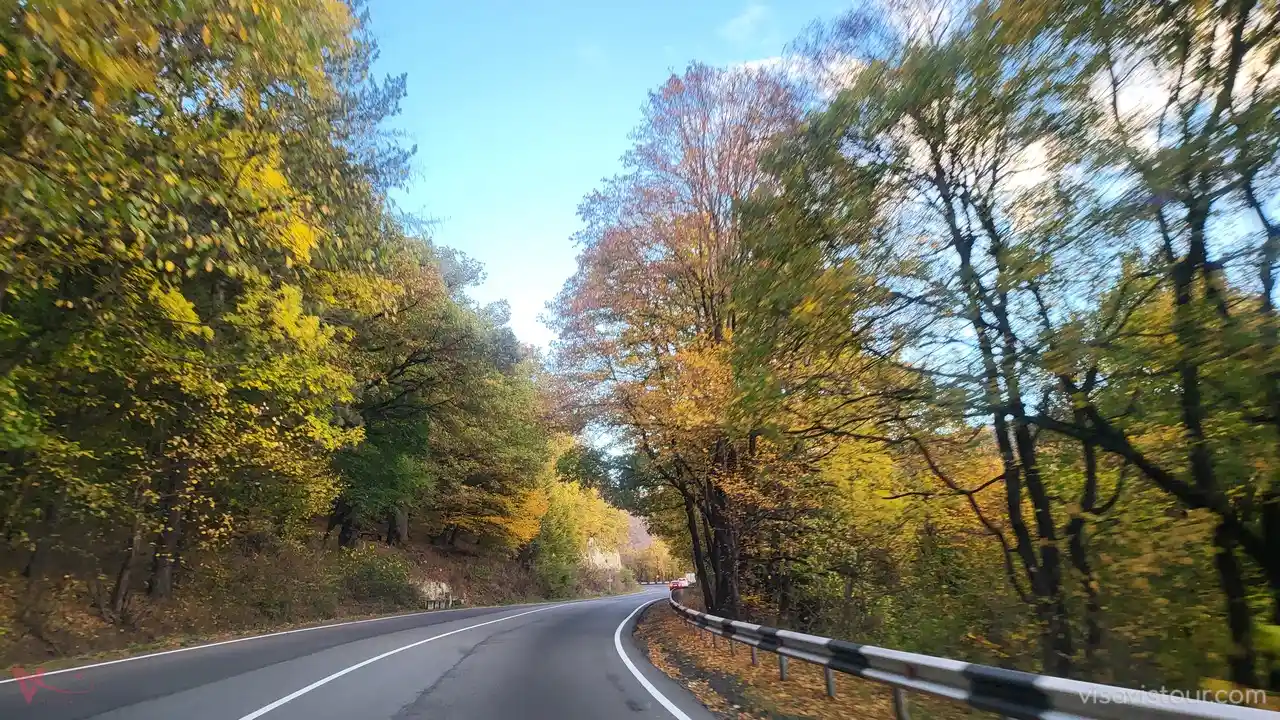
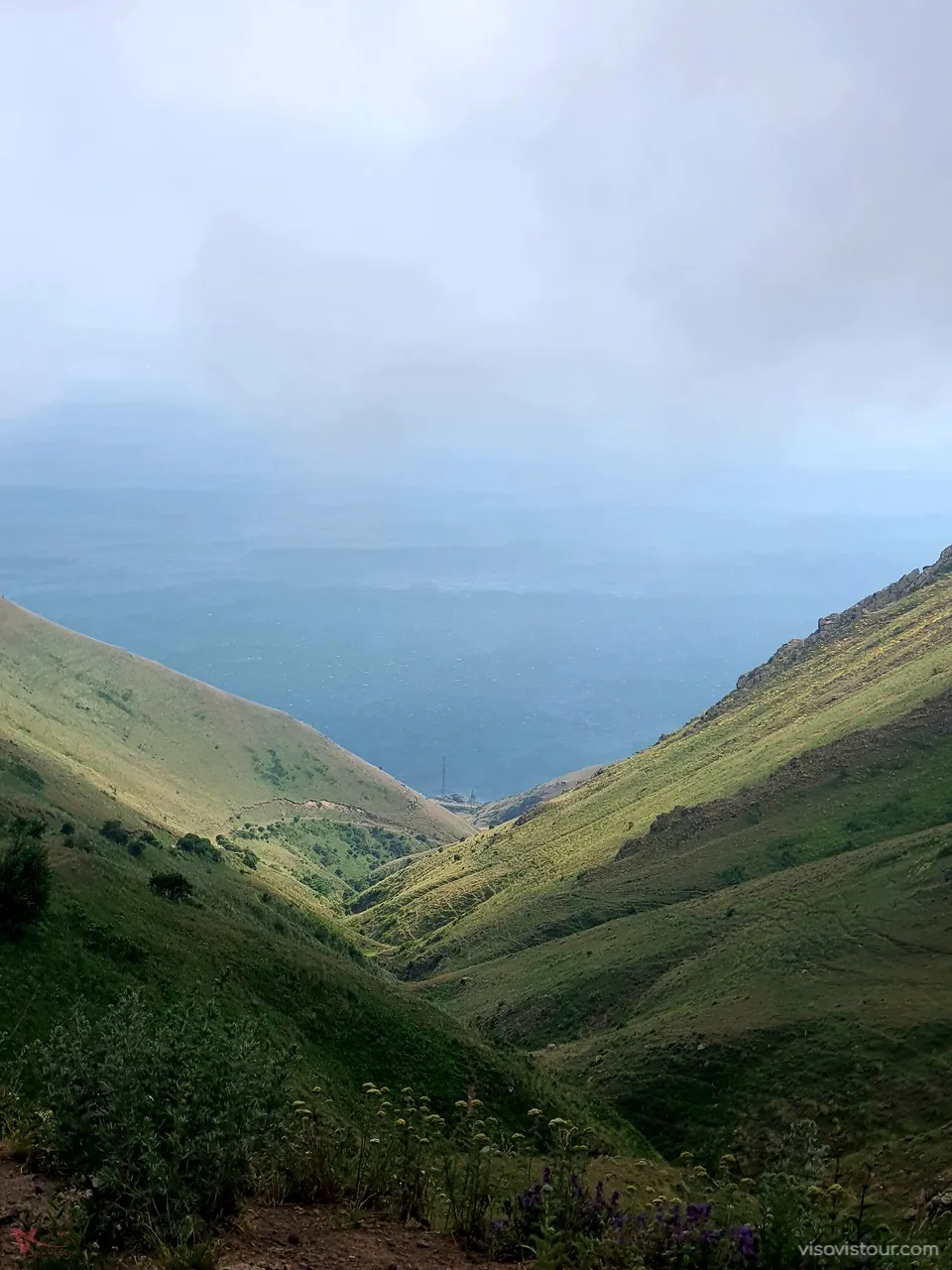
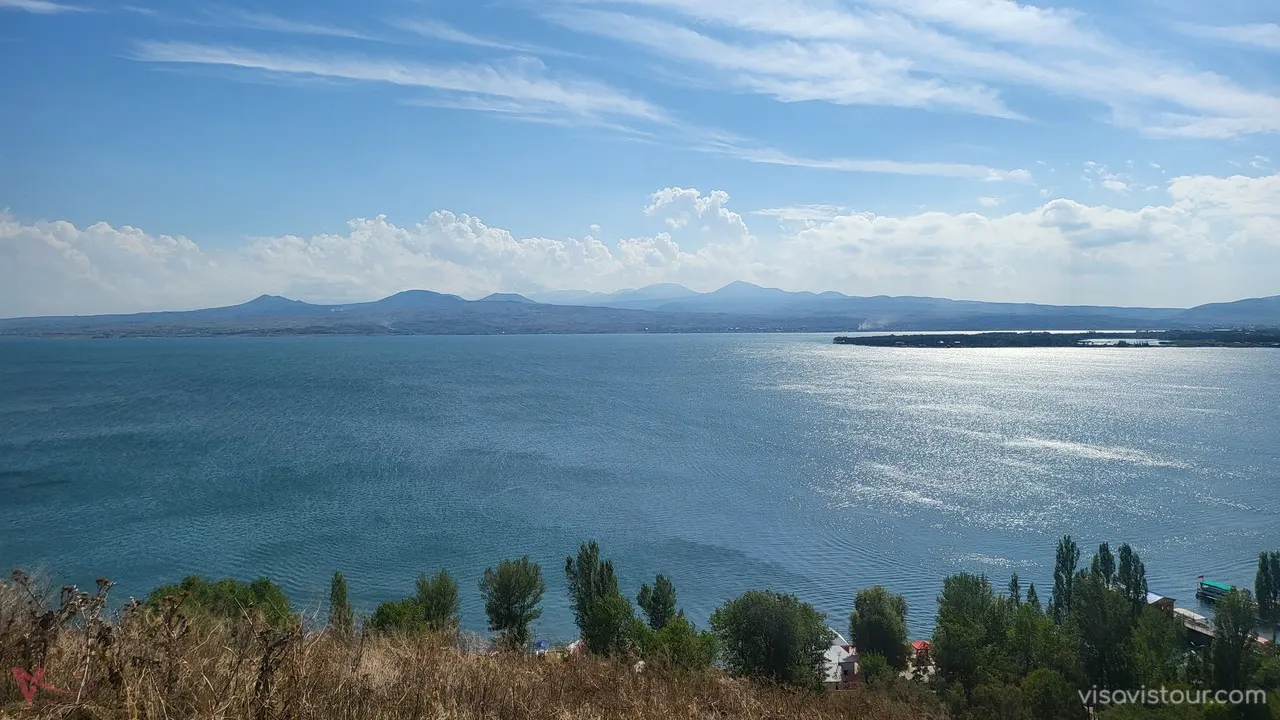
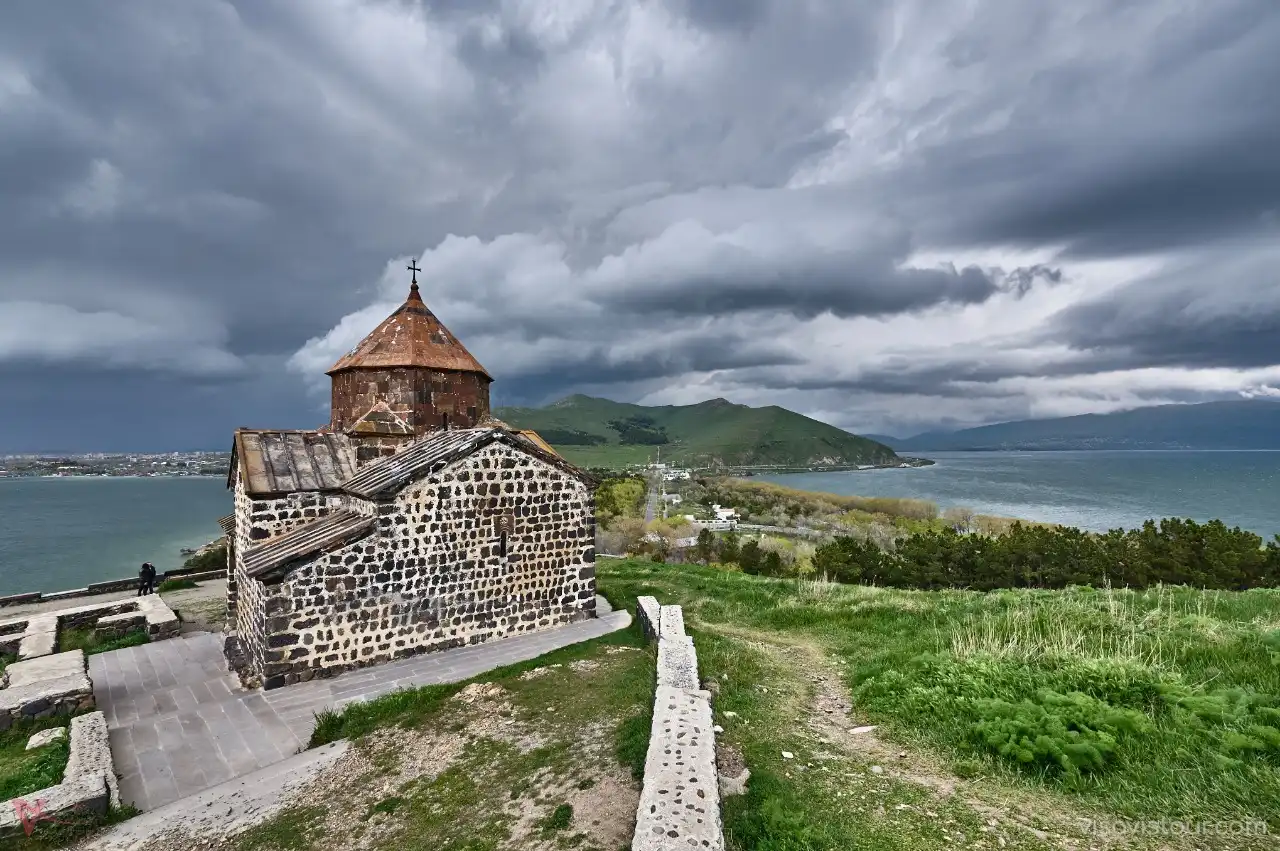
Next, journey to Lake Sevan, one of the largest high-altitude freshwater lakes, where you’ll visit Sevanavank Monastery on the peninsula, offering sweeping views over the lake. During the drive one can enjoy the unbelievable change of the surrounding environment and landscape from the green and rich forest mountains to the mountainous lake.
Continue to Yerevan. Check – in hotel.
Overnight in Yerevan.
Yerevan - City Tour - Garni Temple – Geghard Monastery (UNESCO) - Yerevan
Breakfast at the hotel.
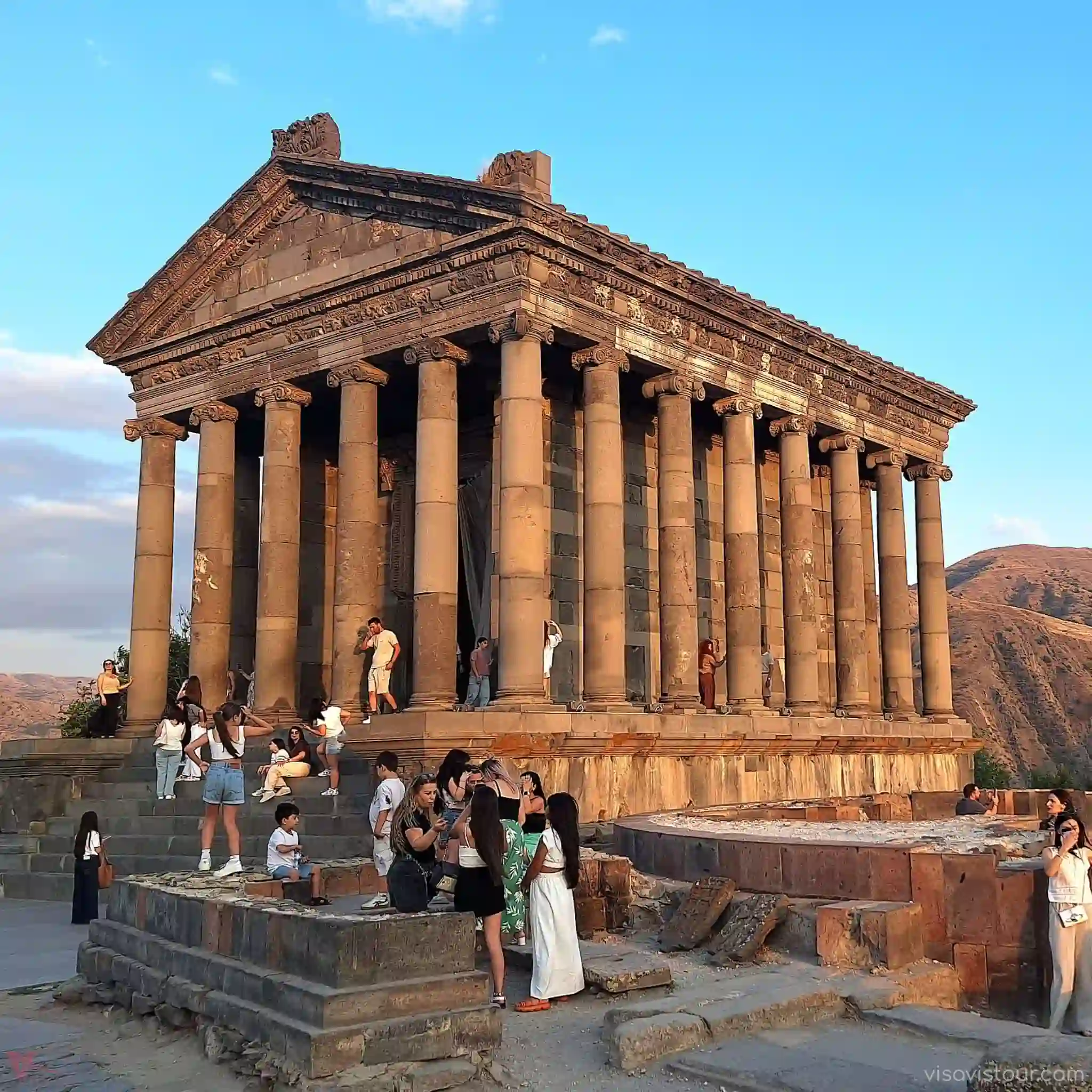
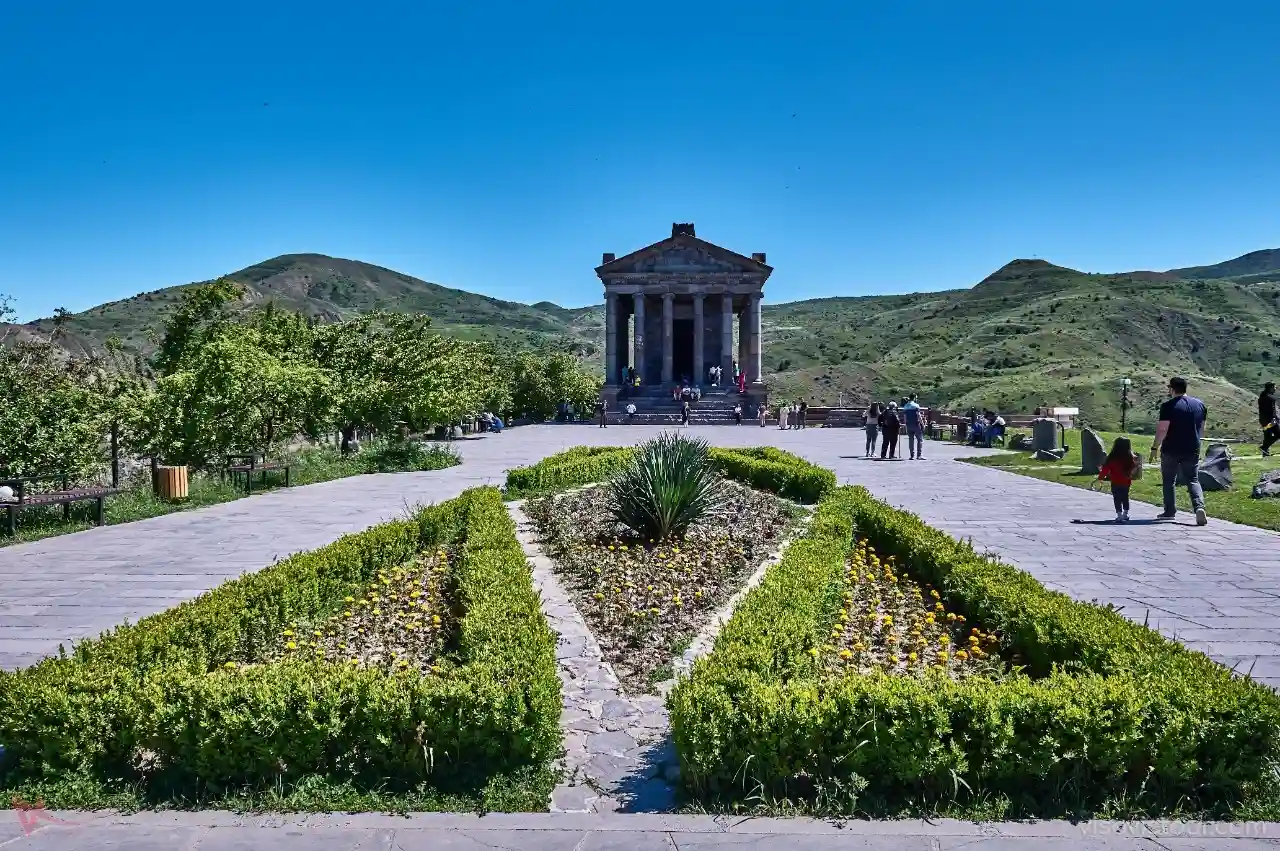
Head to Garni Temple, the only remaining pagan temple in Armenia, devoted to the God of Sun – Myrth, in Garni, built in 77 AD by King Trdat (Arshakid Dynasty). Visit to the ruins of Royal Palace and Royal bath-house next to Garni temple.
On the way enjoy a photo stop at the Charentc Arc with a nice view on Ararat Mountain.
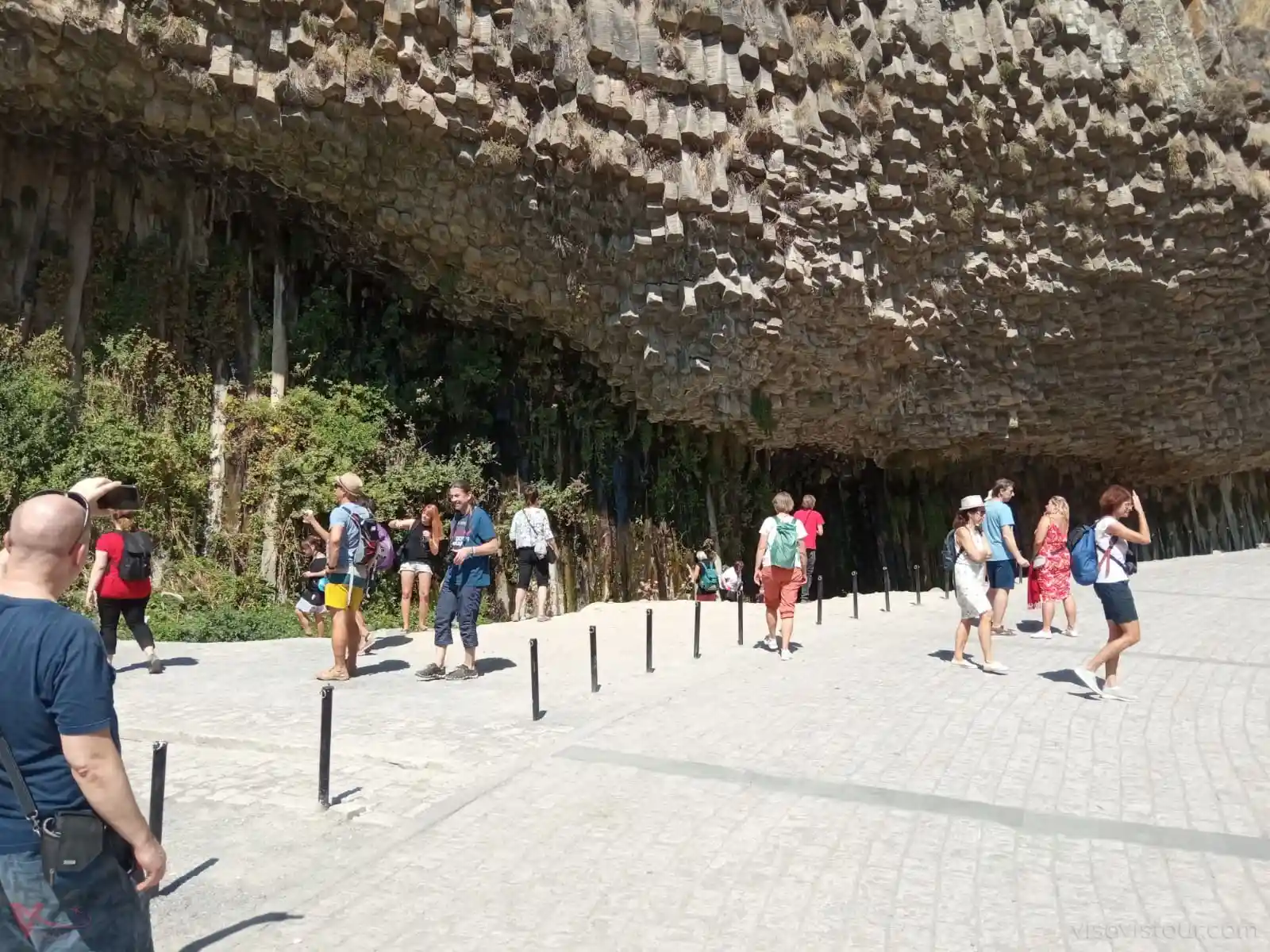
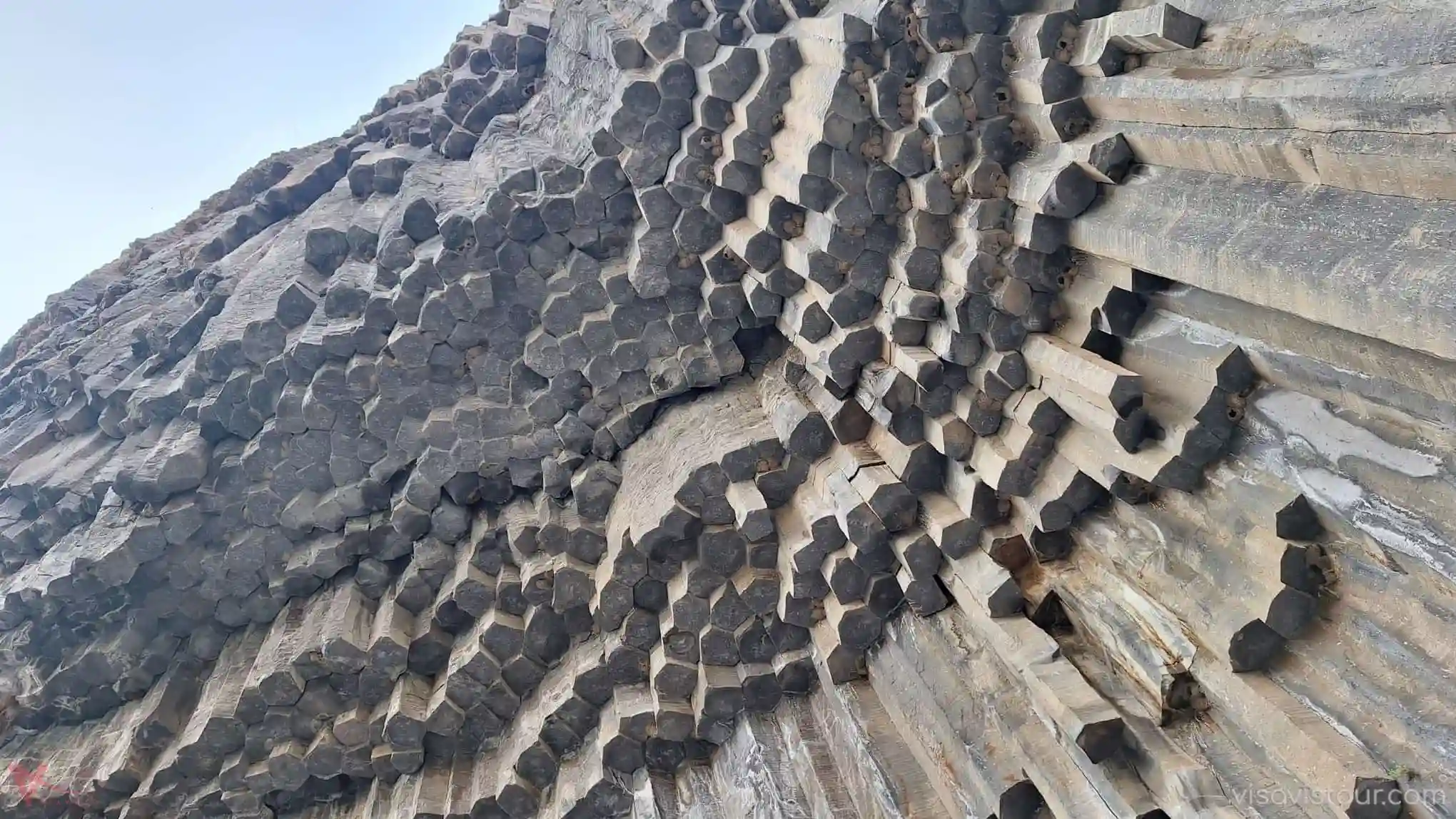
Optional: take 4×4 wheels tracks to visit the impressive Garni Canyon – magnificent and outstanding scene, which creates the image of falling crags. It obtained the name “Symphony of Stones” due to its view. The fantastic landscape of Garni canyon shakes the human imagination.
Optional: Small performance of Armenian national musical instrument ,,Duduk’’ (Tsiranapogh- means Tsiran- abricot, pogh- trumpet). After the local musician will describe the origin, nature, symbolism of Duduk and fully experience its rich and versatile music. One of the most famous performances of the duduk was featured in the movie “Gladiator”, where its soulful tones perfectly captured the film’s emotional depth and timeless appeal. Duduk and its music were inscribed in 2008 on the Representative List of the Intangible Cultural Heritage of Humanity (originally proclaimed in 2005).
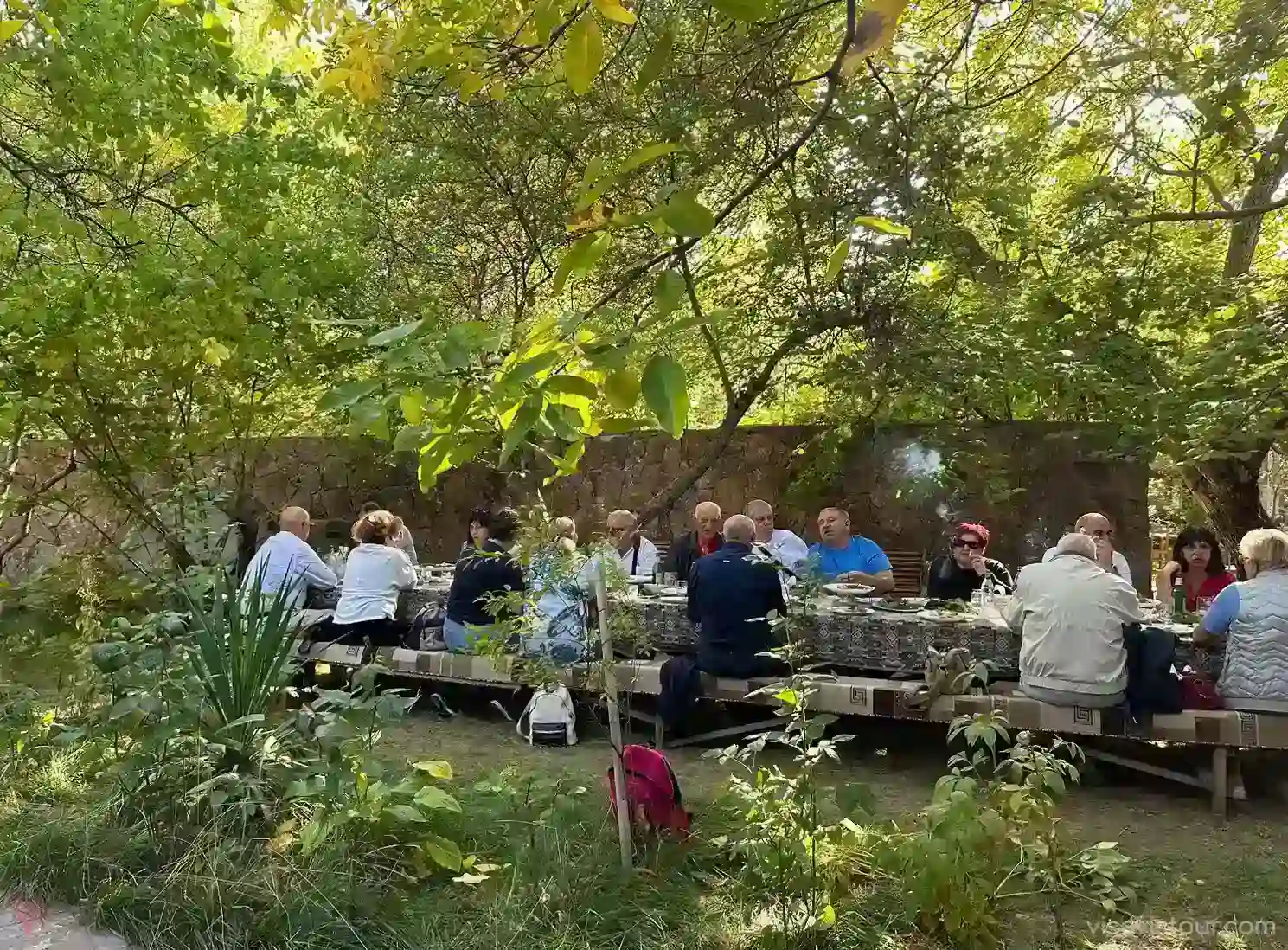
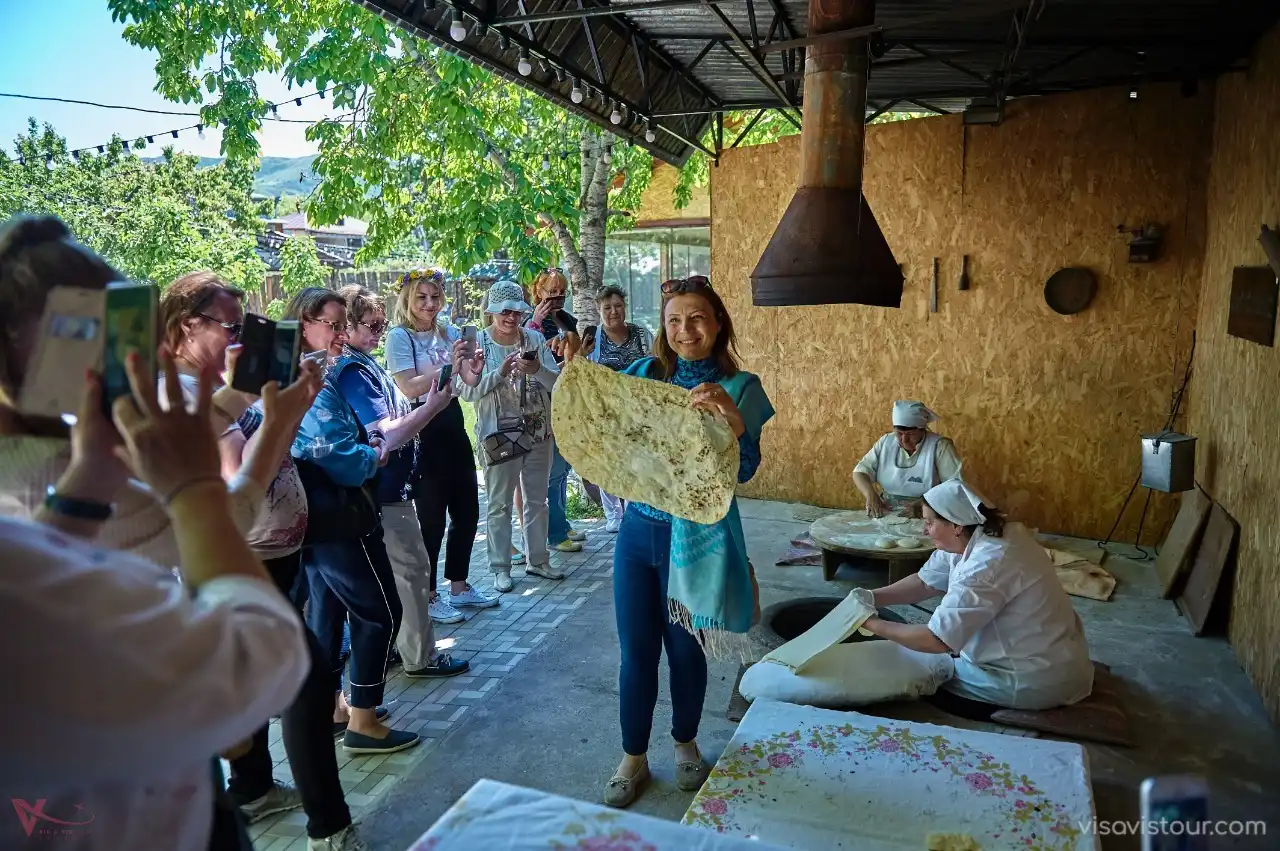
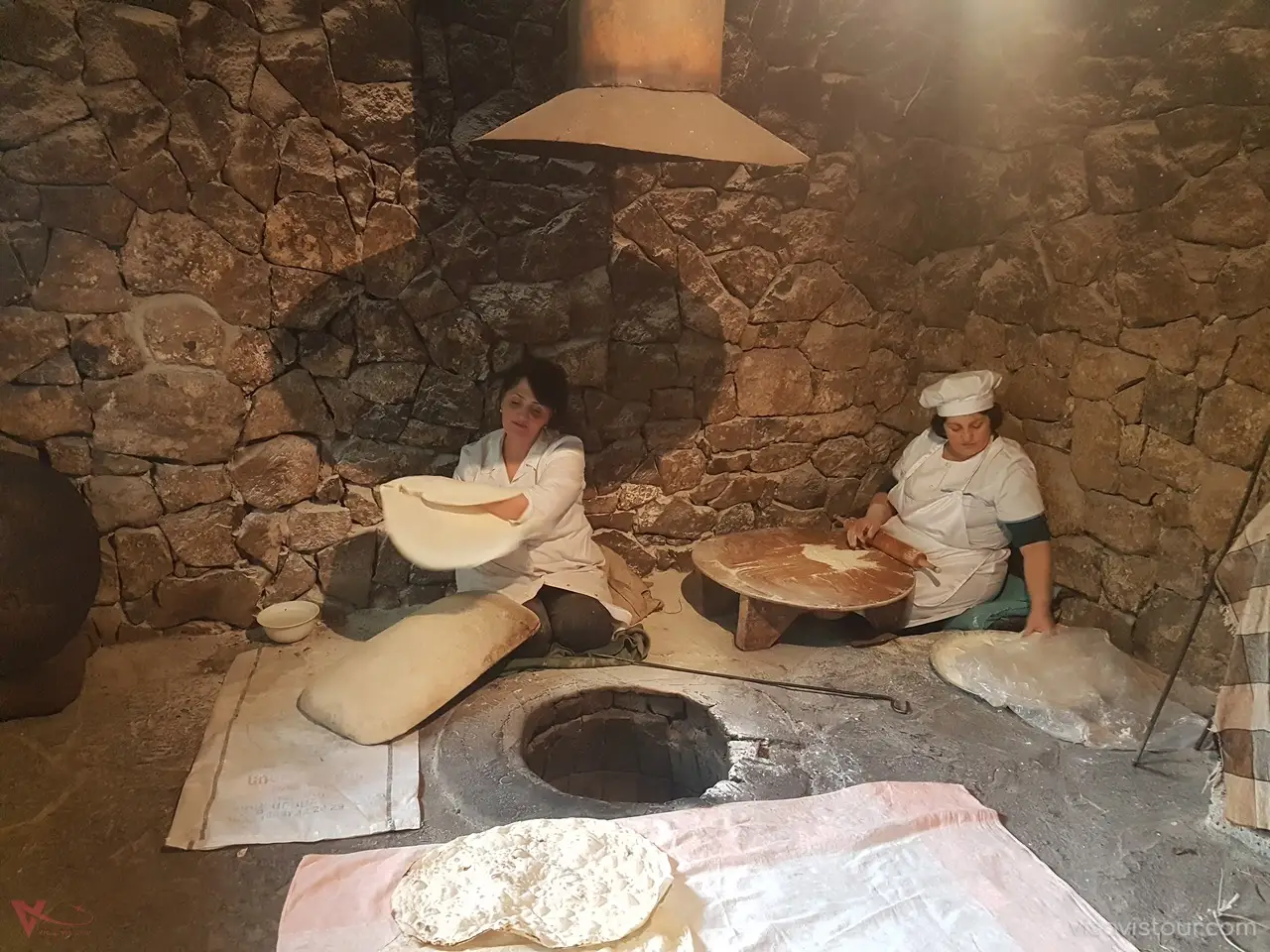
Optional: Experience a traditional flat bread – lavash baking demonstration and enjoy a family-hosted lunch. Lavash, the preparation, meaning and appearance of traditional bread as an expression of culture in Armenia was inscribed in 2014 on the List of the Intangible Cultural Heritage of Humanity
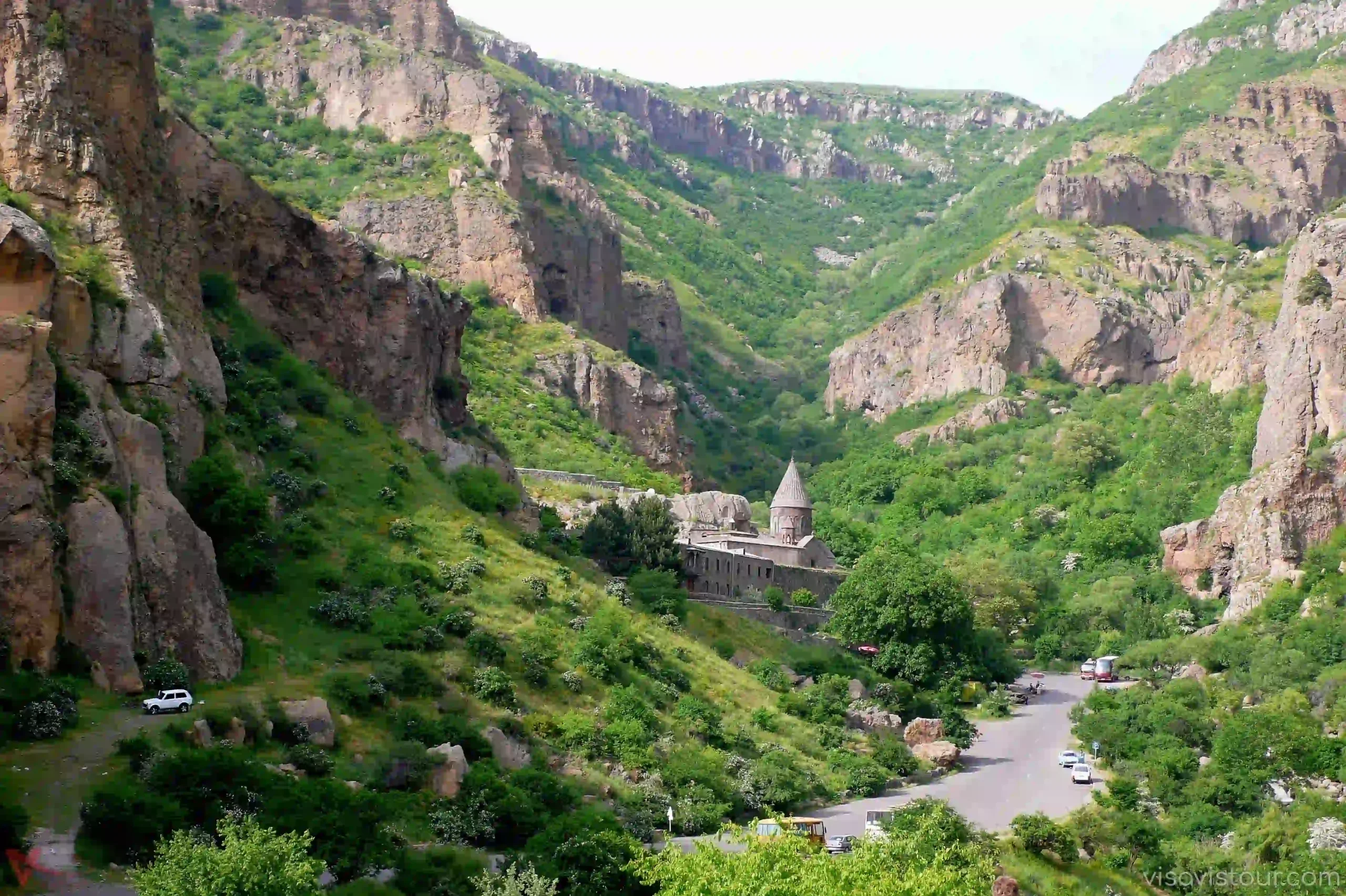
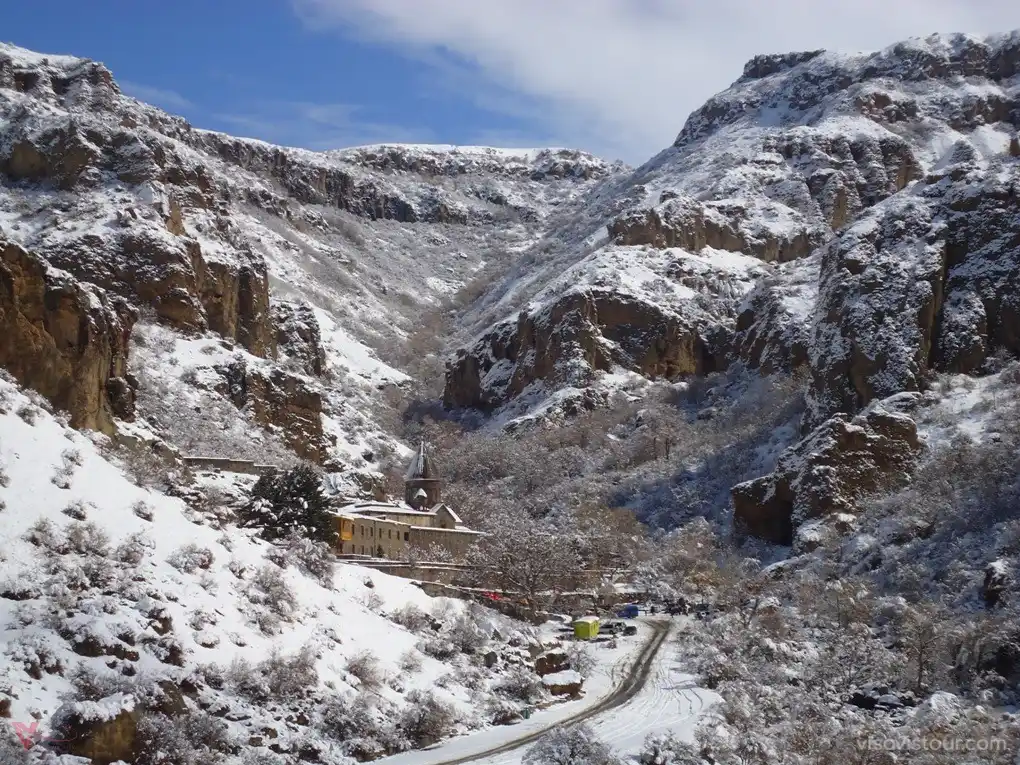
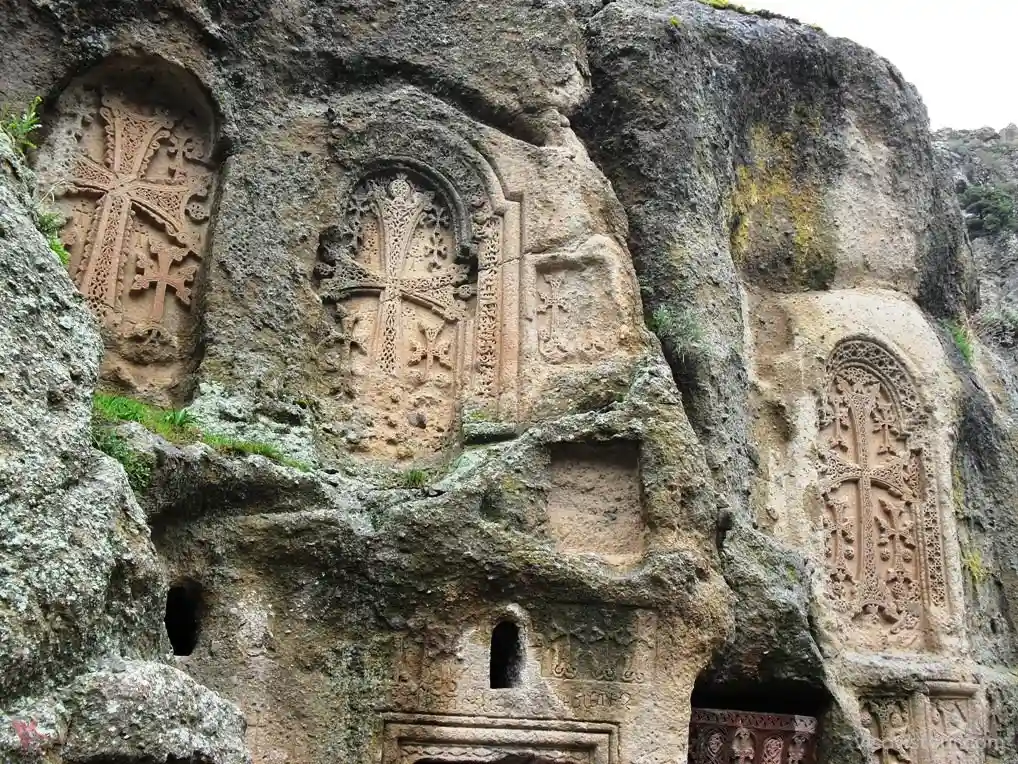
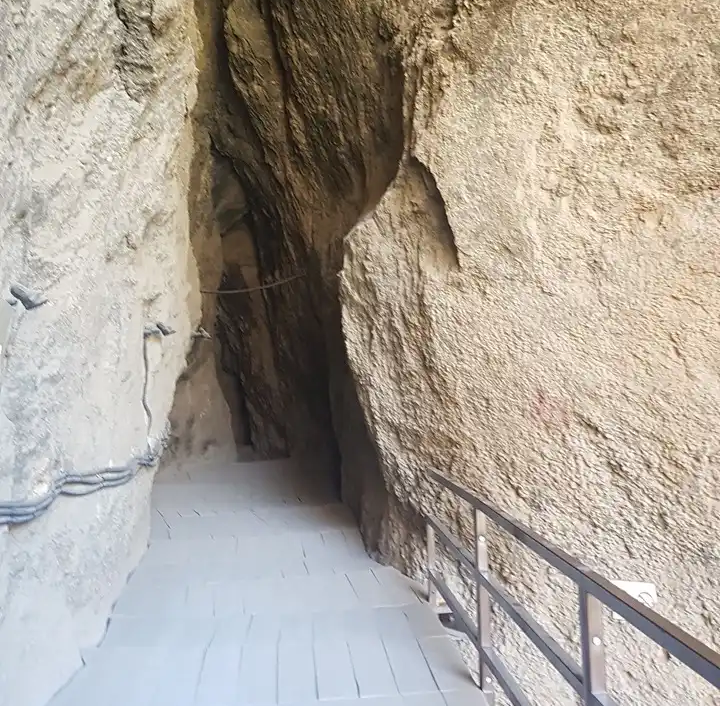
Journey to the extraordinary Geghard Monastery, a stunning XII-XIII century temple partially carved into the rock. Named “St Geghard” or “Holy Spear,” it honors the sacred relic believed to have pierced the body of Christ during the crucifixion, that was preserved here and now housed in the museum of Etchmiadzin Cathedral. Recognized as a UNESCO World Heritage Site in 2000, this architectural gem showcases Armenia’s rich spiritual and cultural heritage.
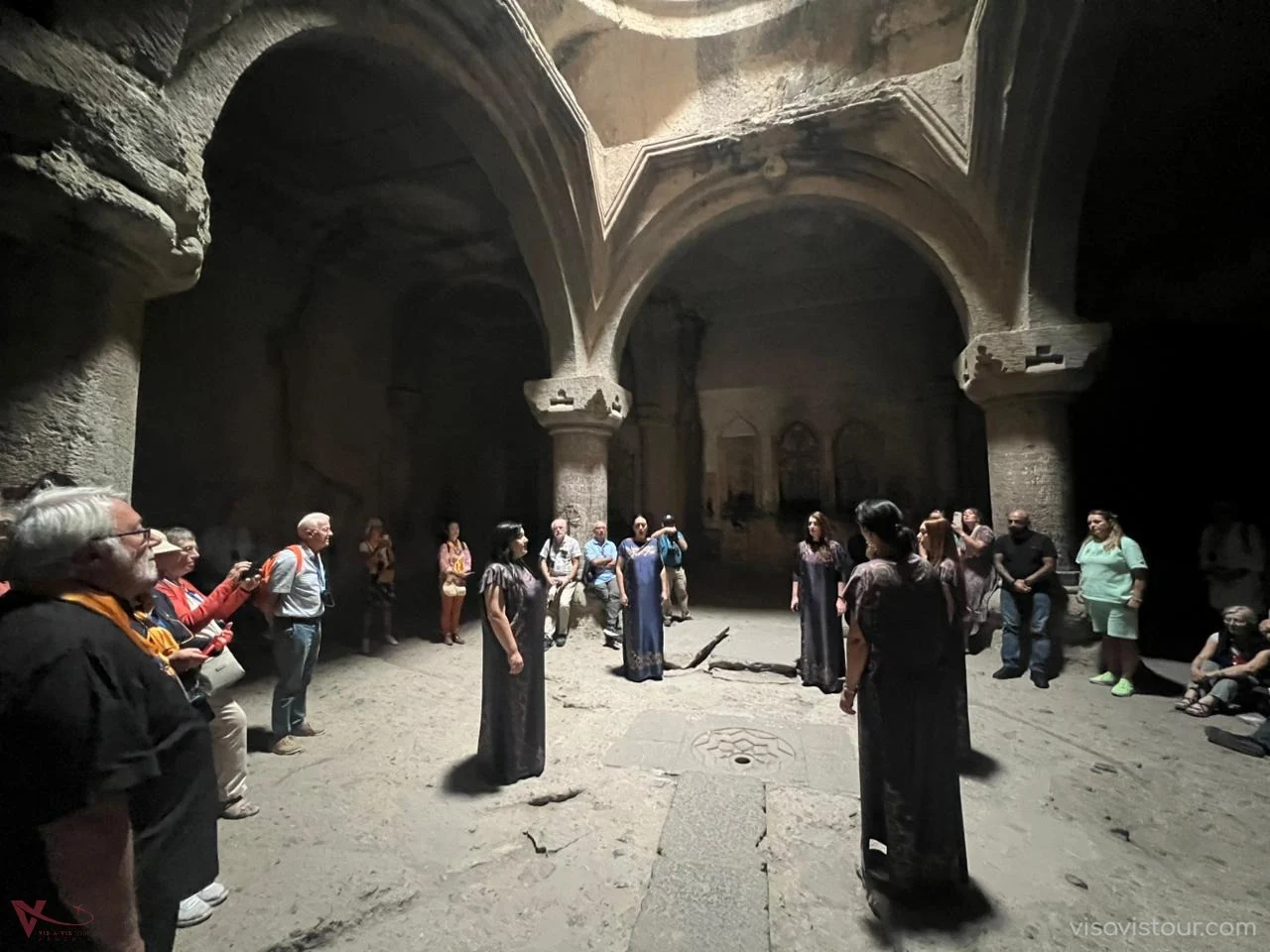
Optional: Enhance your visit with a mesmerizing concert of liturgical songs. Experience the monastery’s remarkable acoustics, where the crystal-clear harmonies resonate beautifully within the ancient stone walls.
Return to Yerevan.
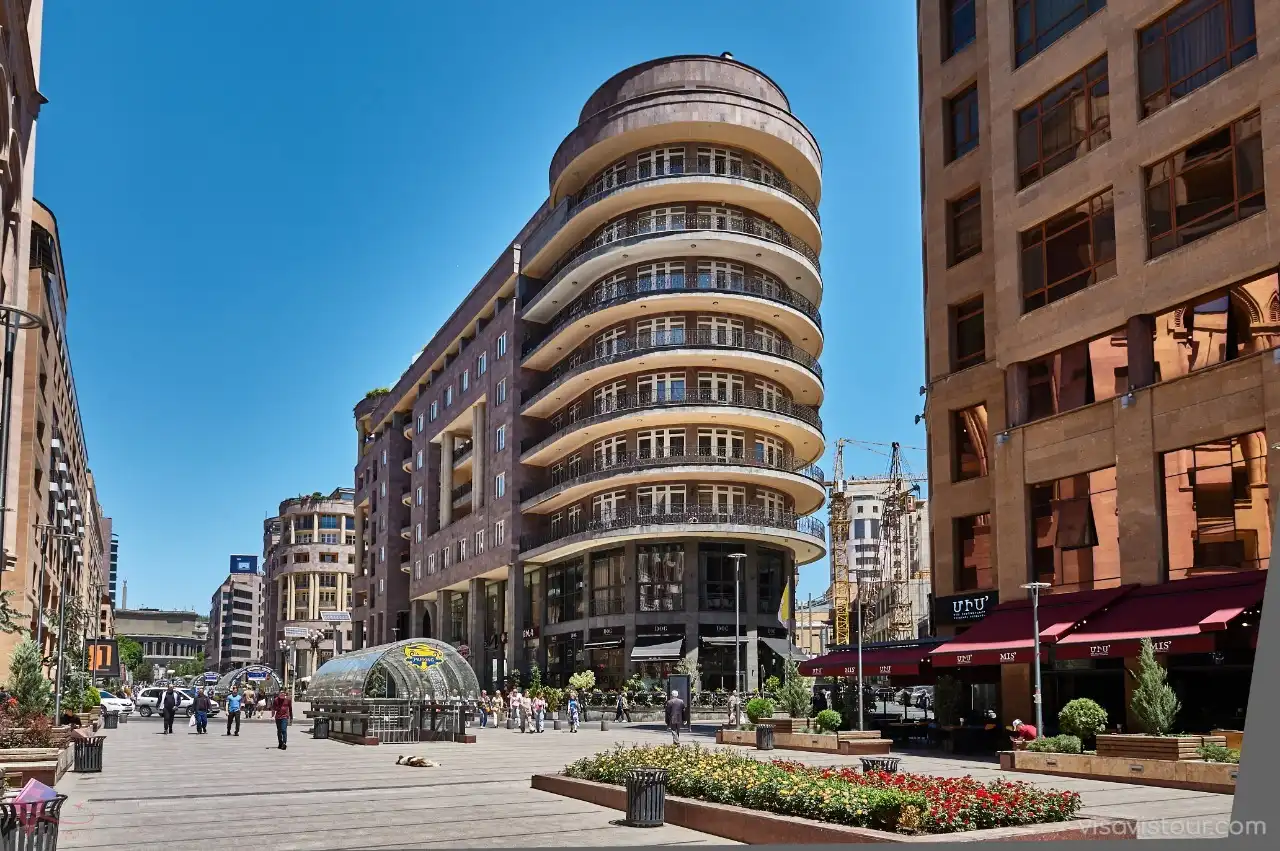
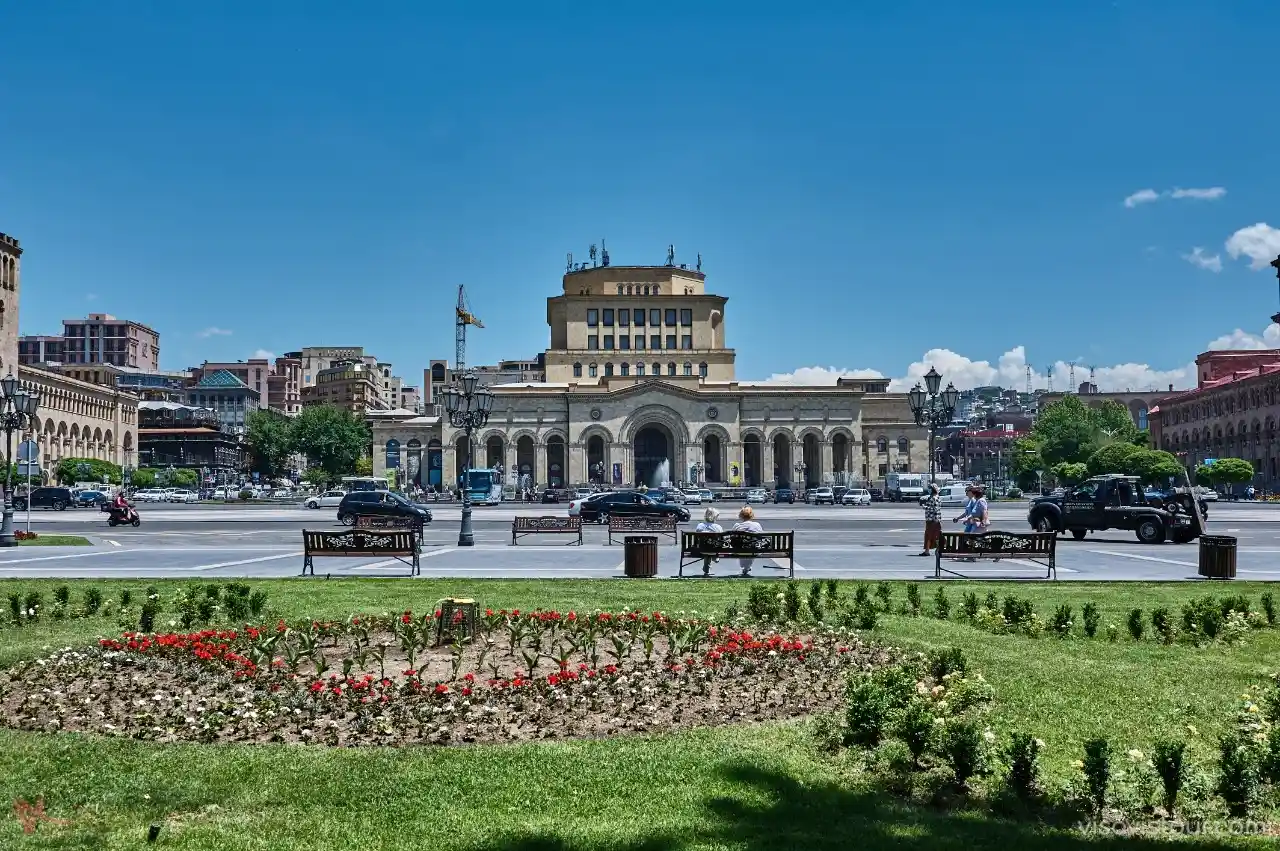
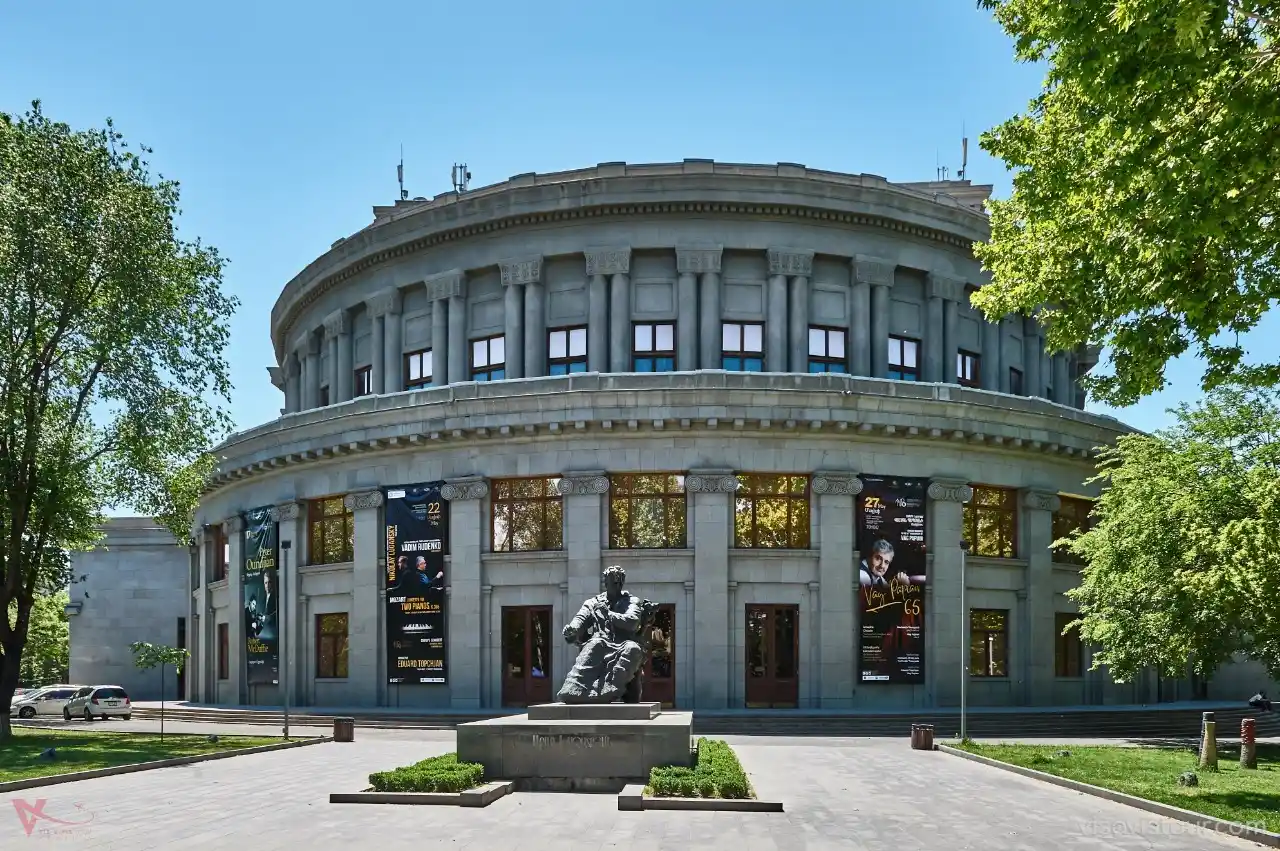
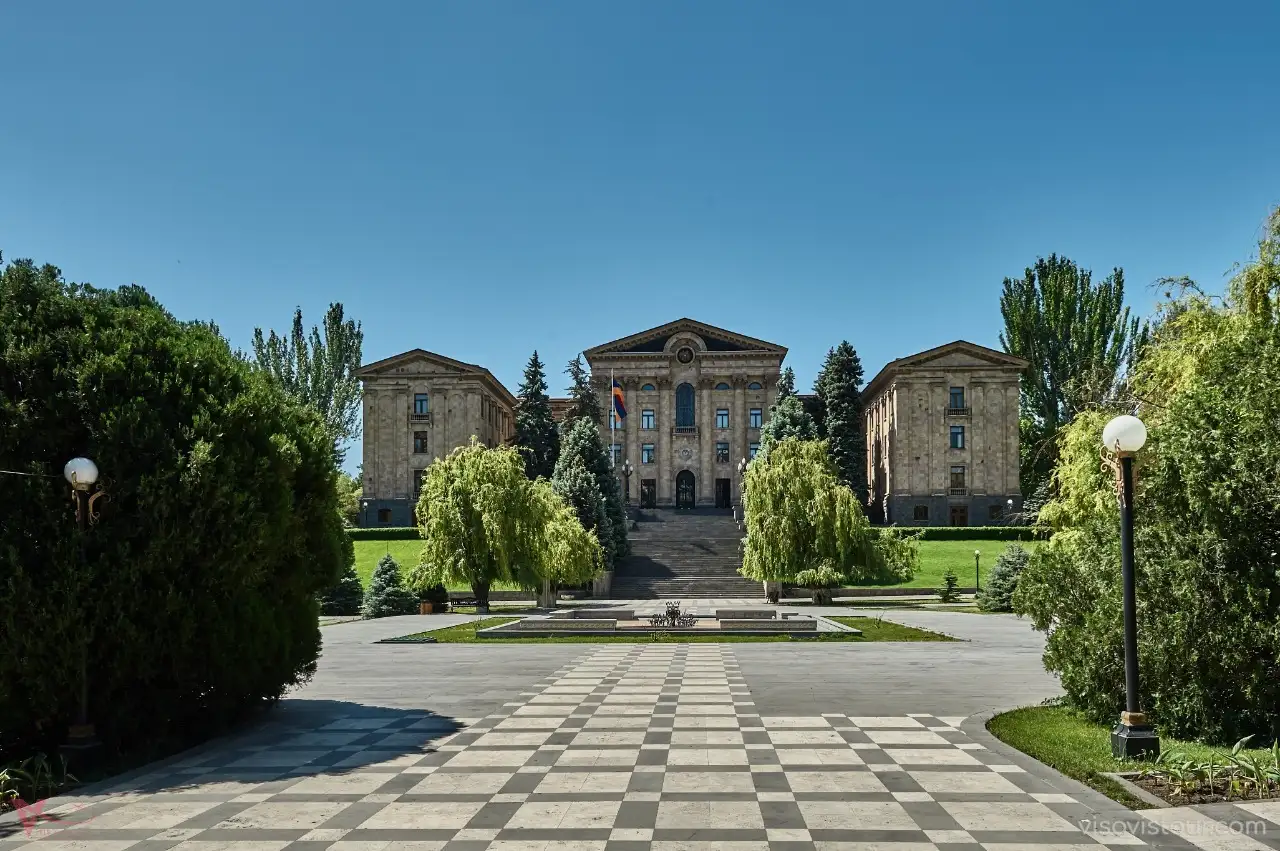
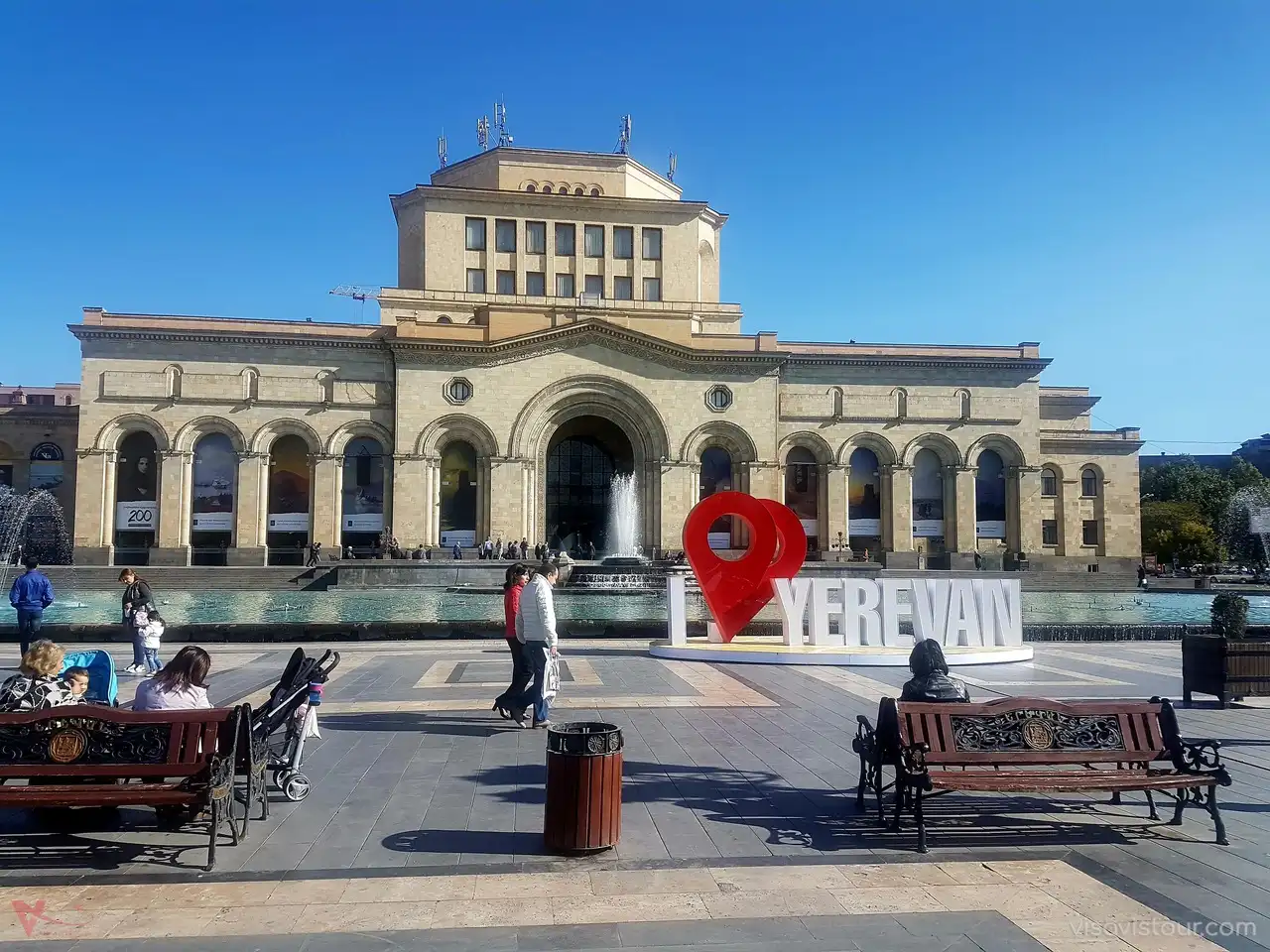
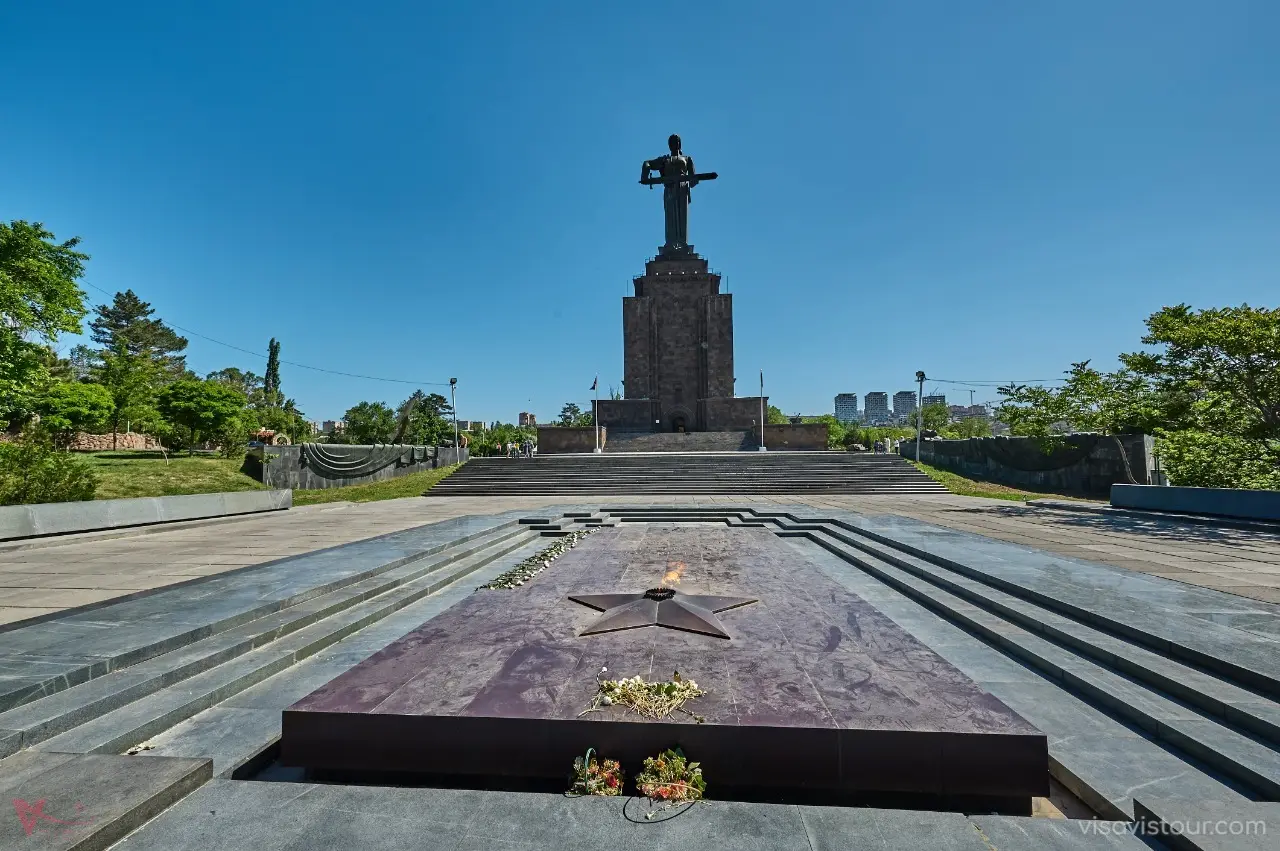
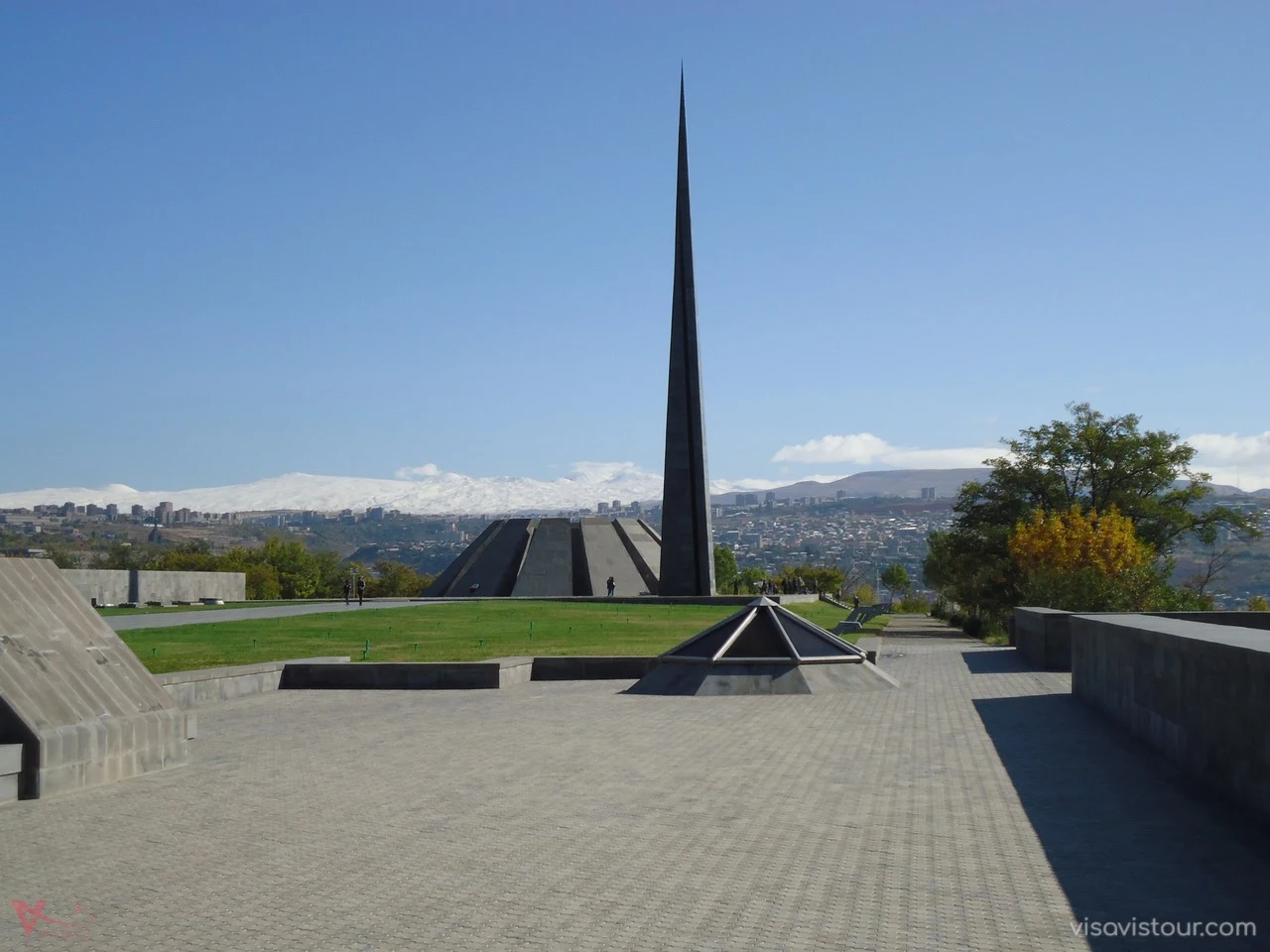
Discover Yerevan with a guided city tour, including City center, Republic Square, Northern Avenue, the Mother Armenia Monument, Parliament, President’s Palace, Opera House, Swan Lake and Genocide Memorial, dedicated to the Victims of 1915 and the Genocide Museum.
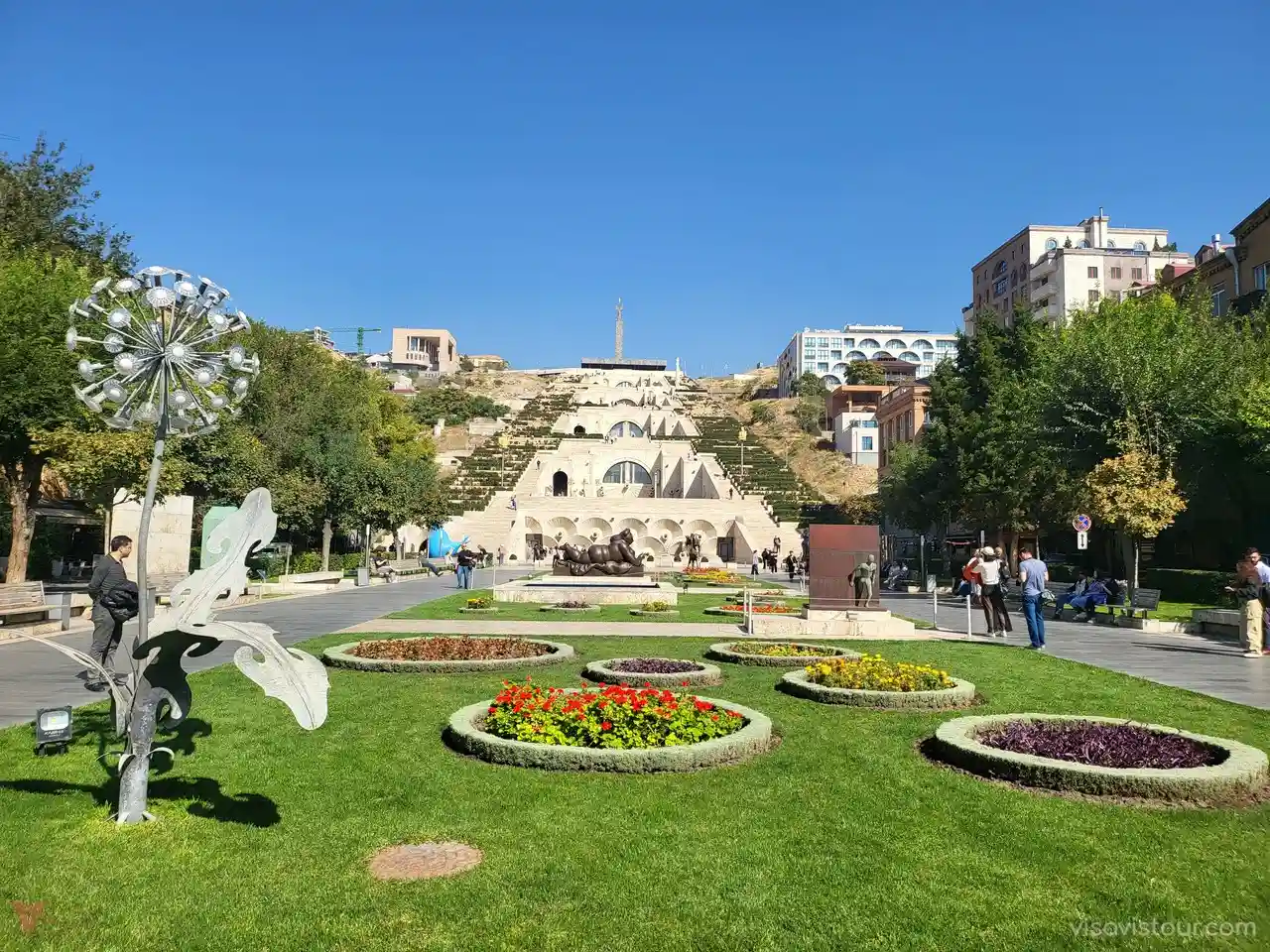
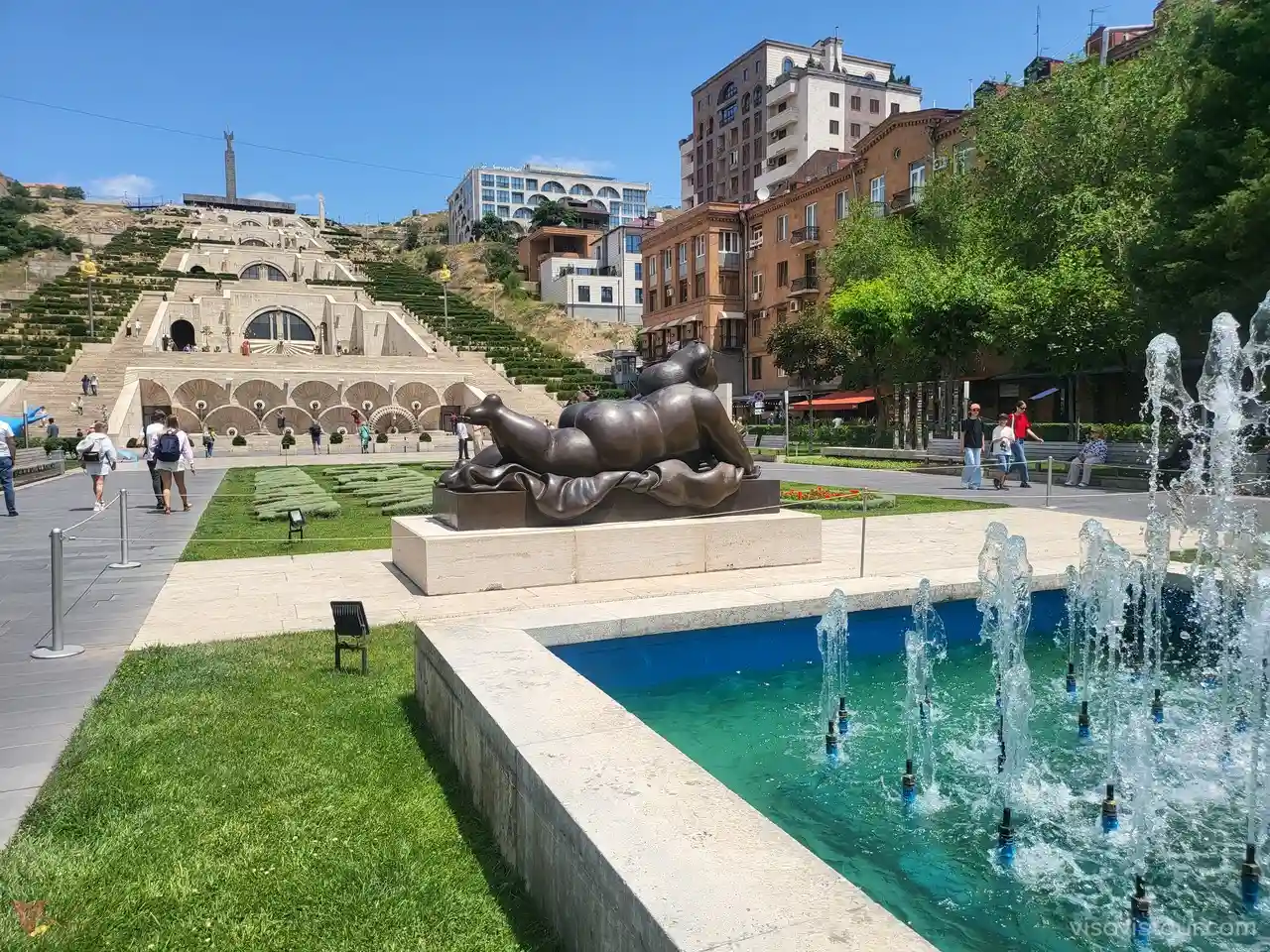
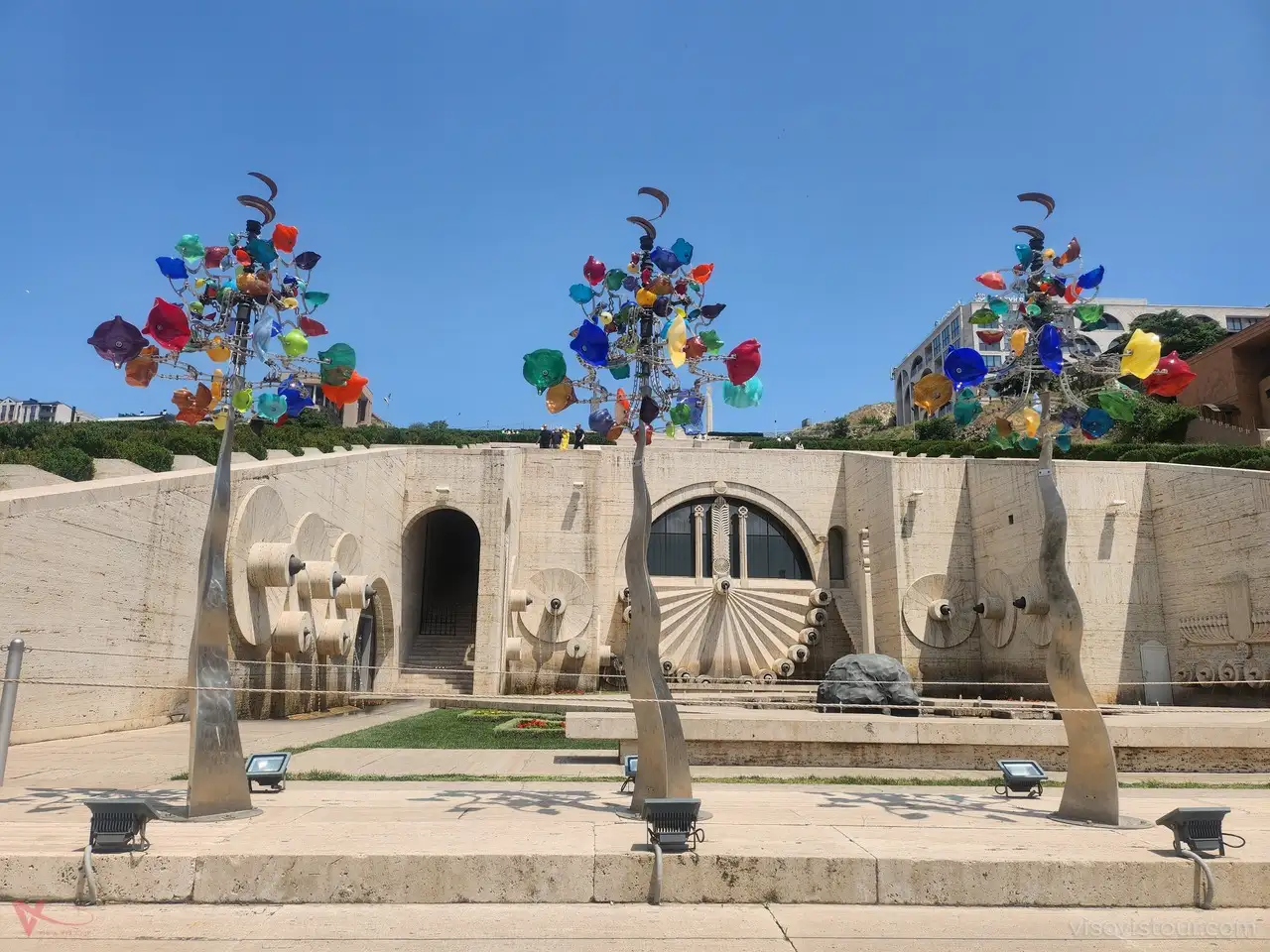
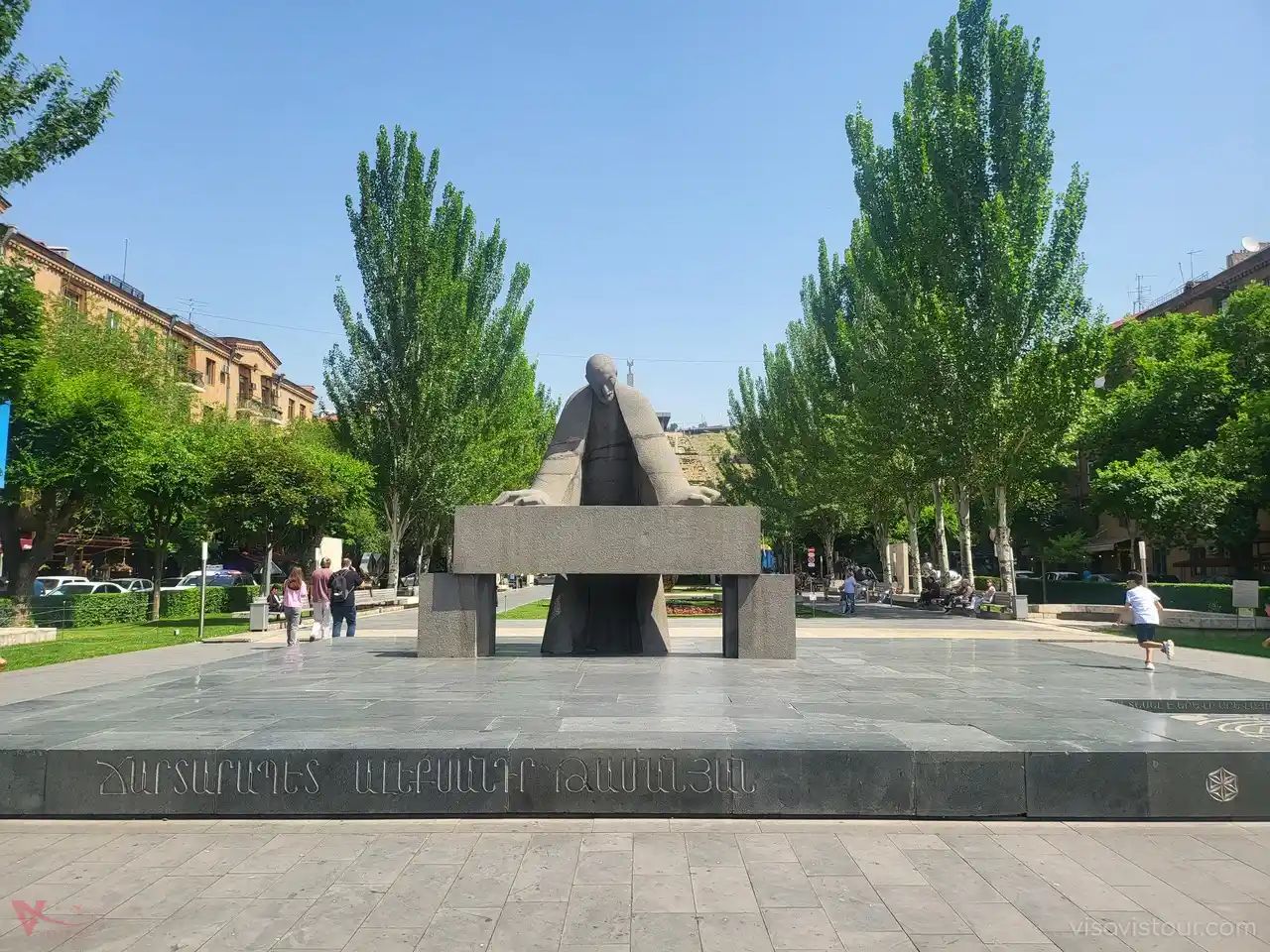
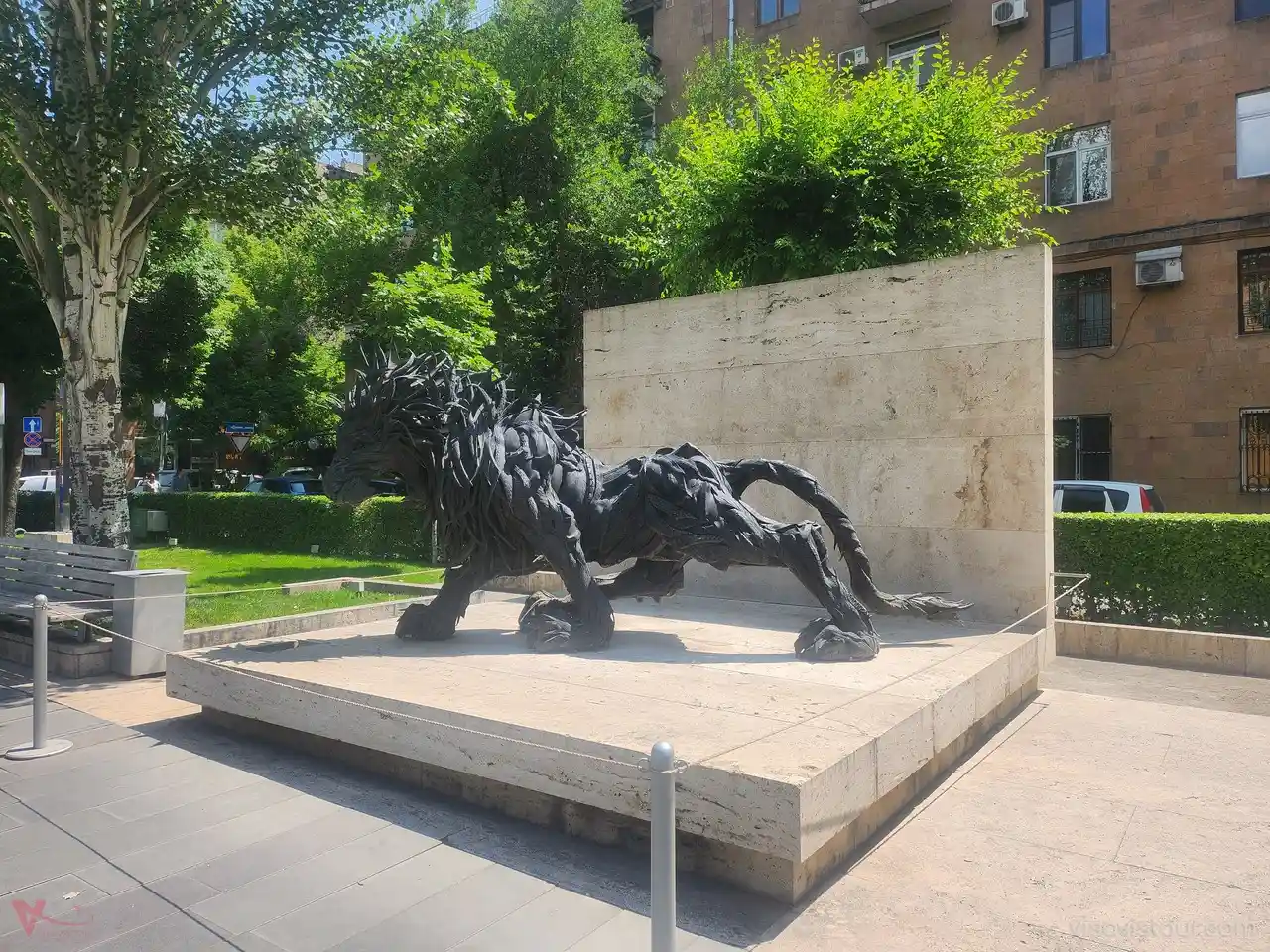
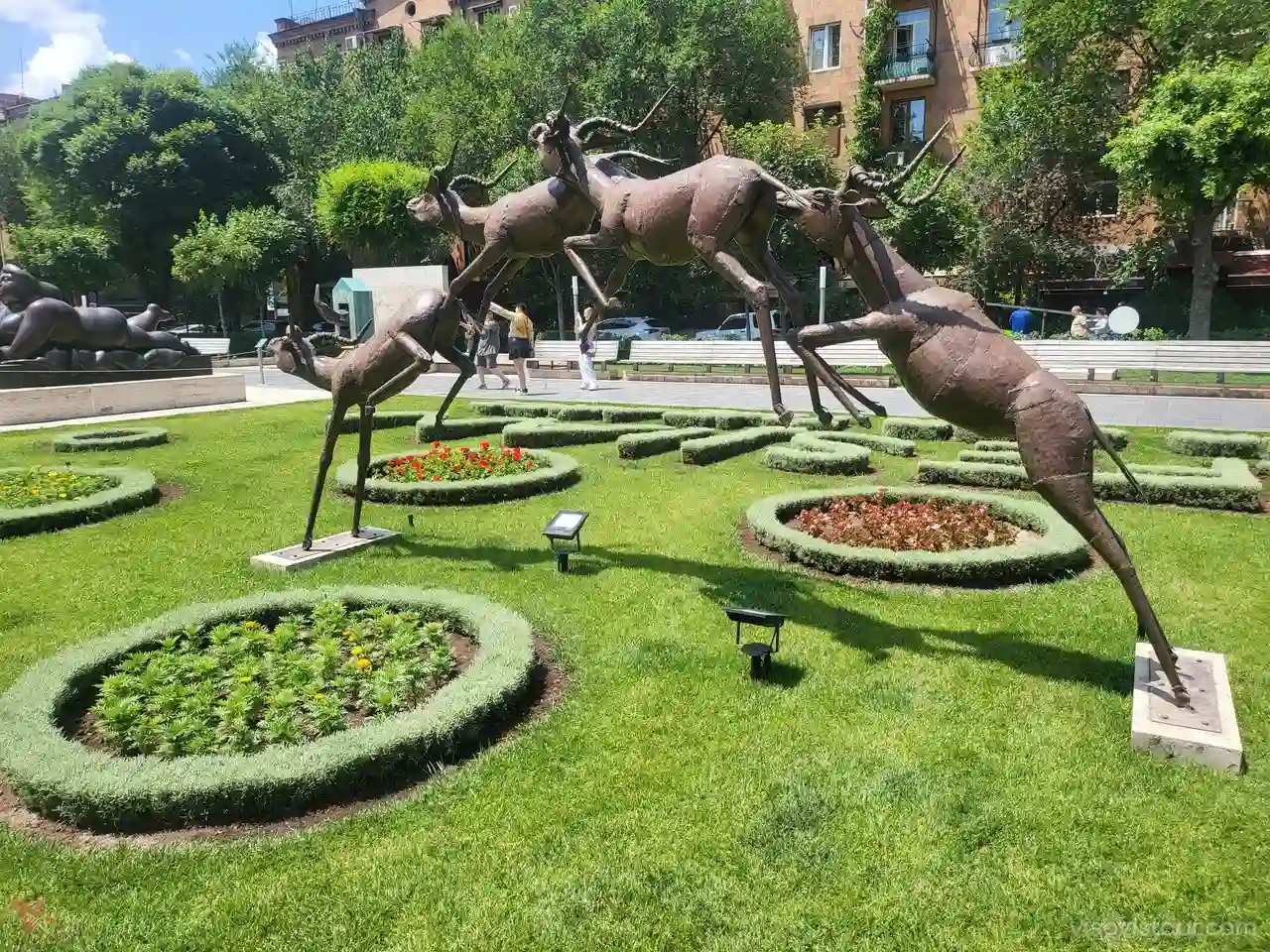
Explore Cascade Complex, the hub of contemporary art in Yerevan with art pieces displayed throughout the whole area: the boulevard and up the stairs. From top of Cascade the marvelous panoramic view on the city and Mountain Ararat is open. Cascade is home to Cafesjian modern art museum. This place becomes even more charming in the evenings, when it is full of people, both locals and tourists from all over the world, enjoying the magic and the warmth of the capital. It is also a popular place for open air concerts at summer season.
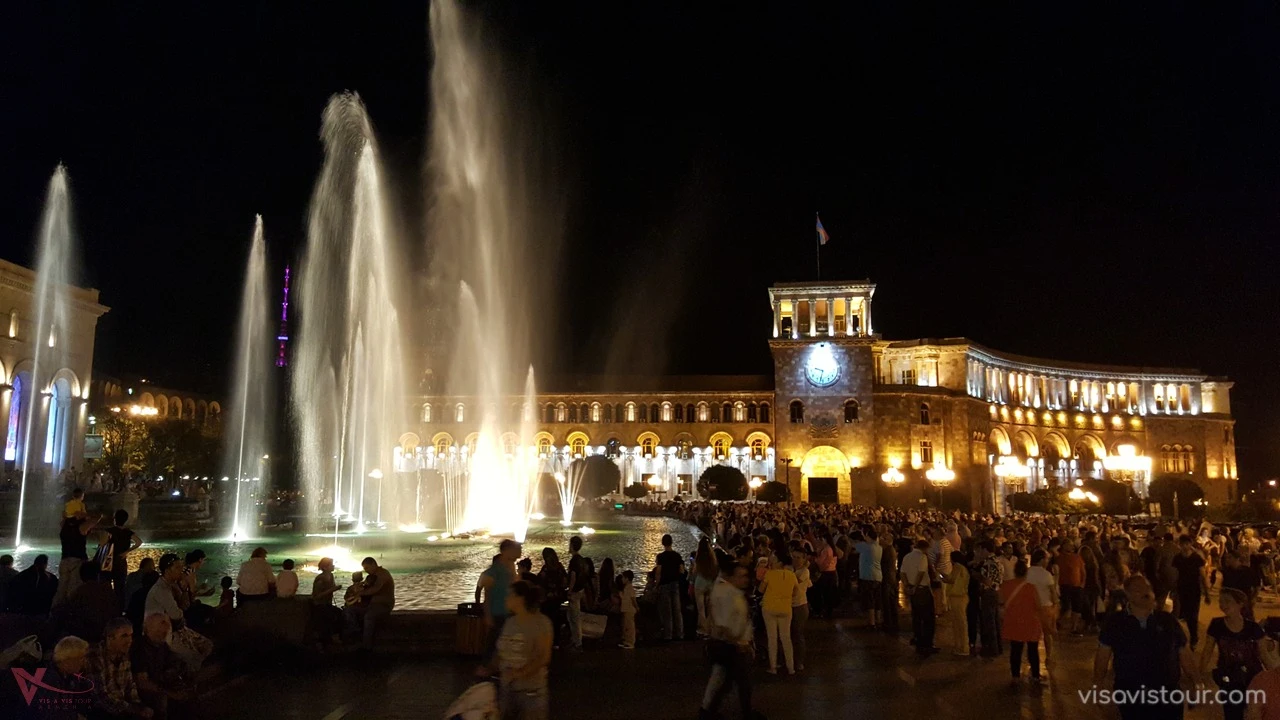
End your day at Republic Square—one of the most beautiful squares in the world—enjoying the mesmerizing performance of the singing fountains.
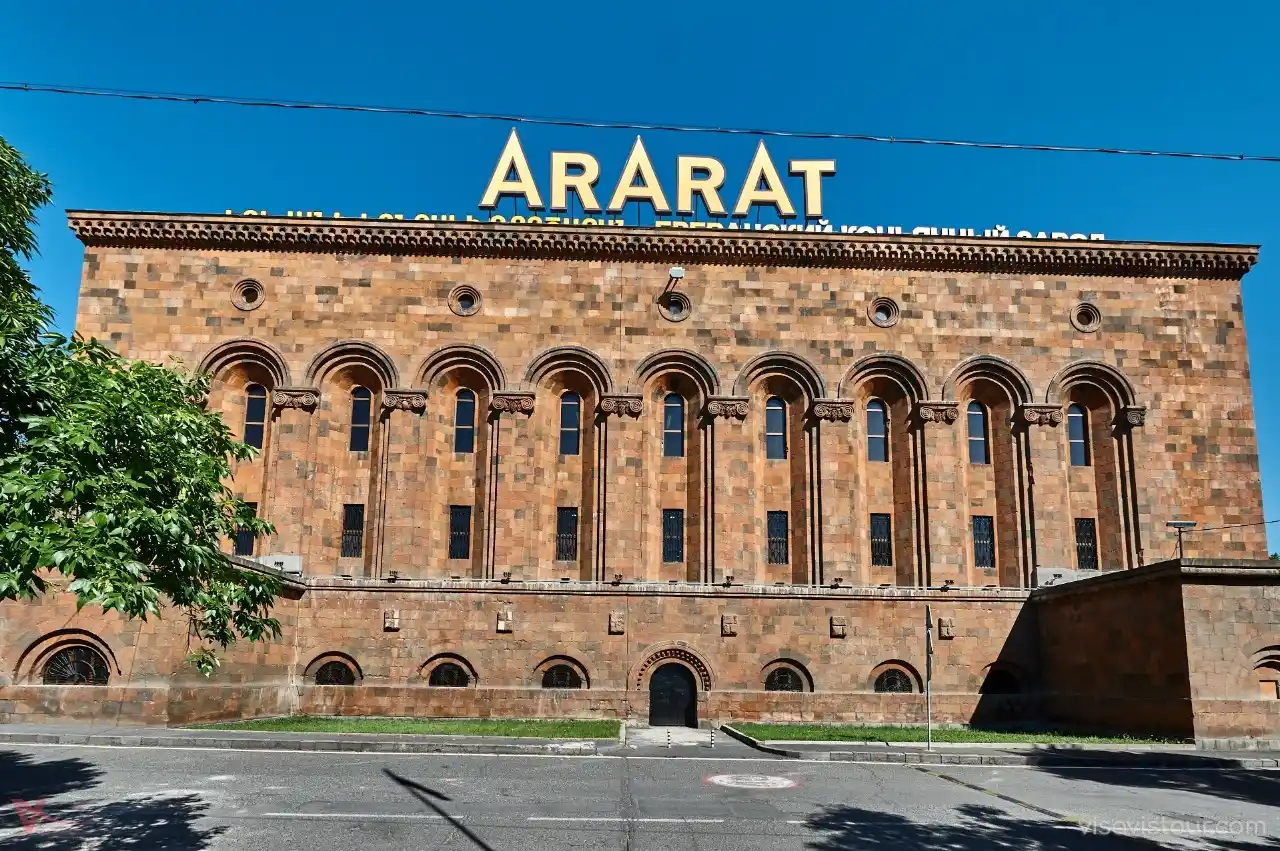
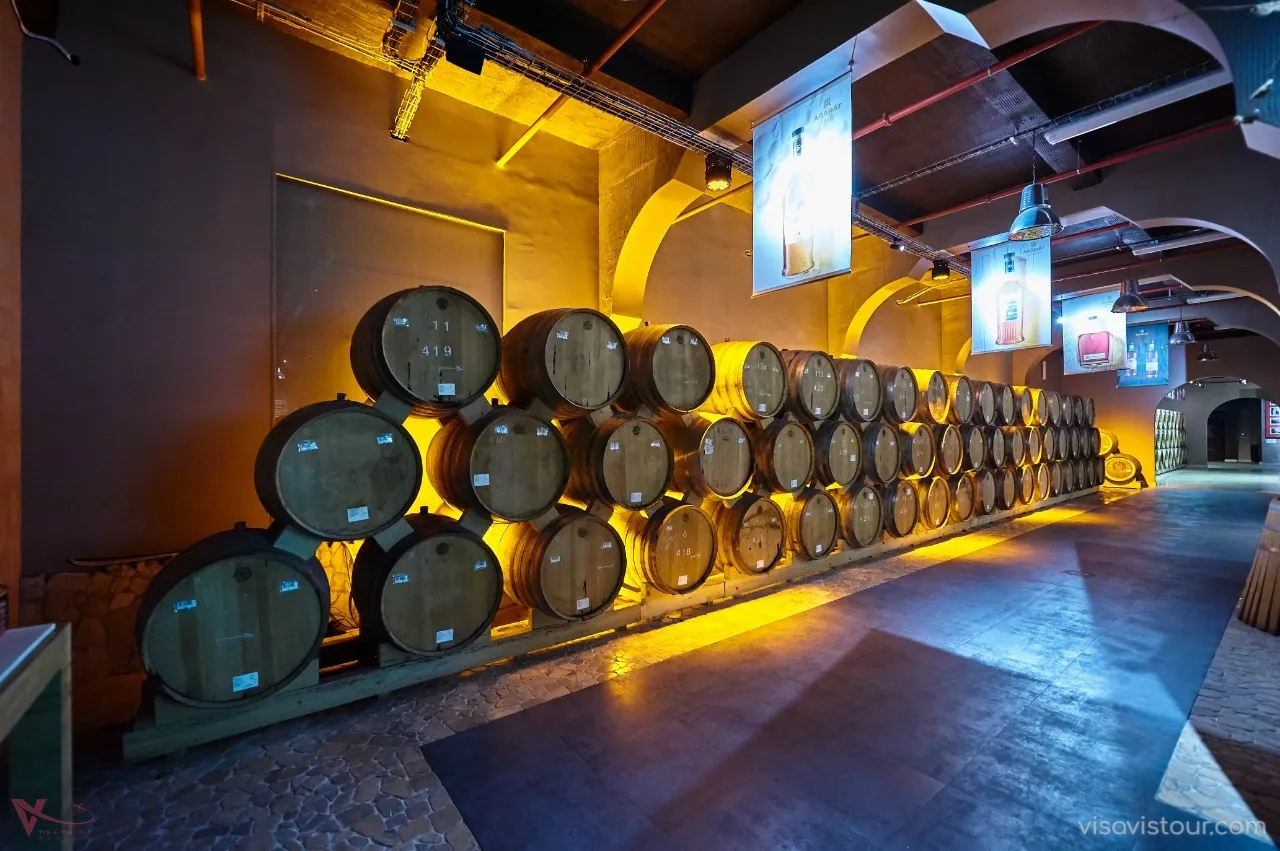
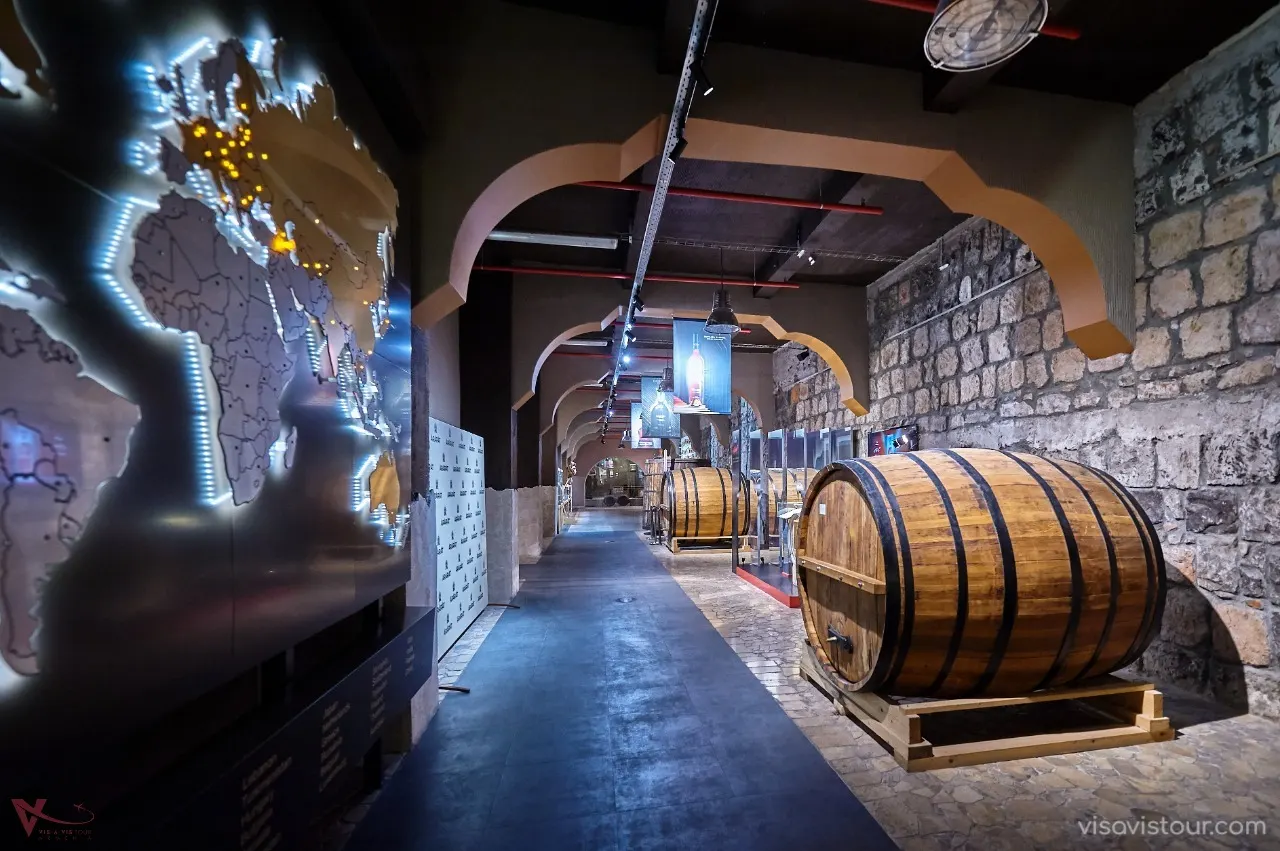
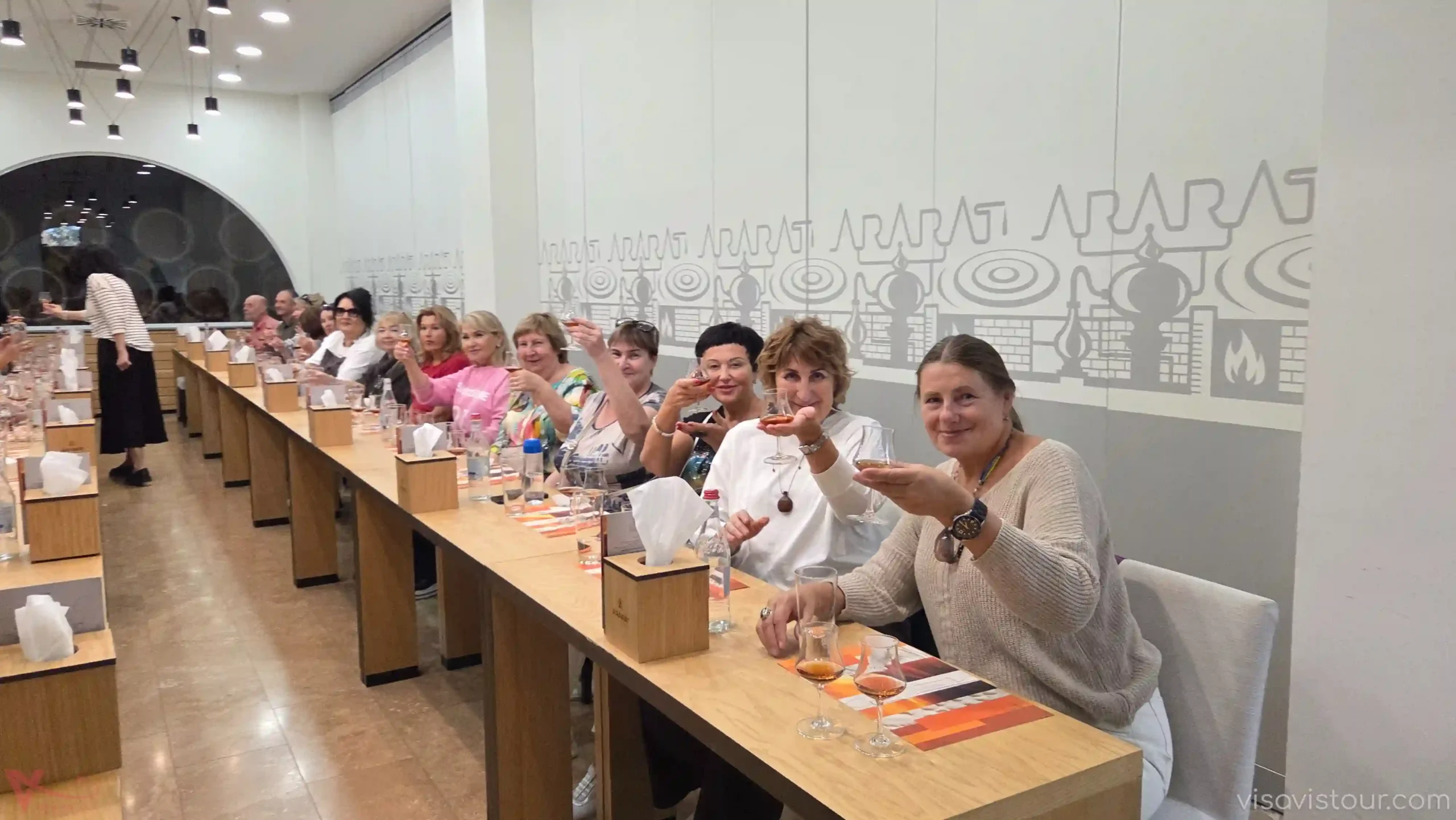
Optional: Very interesting one hour tour around Armenian brandy factory offers tourists familiarization with the history of the plant, process of brandy preparation, showrooms and halls of storages. Visitors will also have degustation of 2 types of brandy in degustation hall. Brandy shop at the factory territory will be available for purchasing of these famous Armenian brandy directly from the factory.
Drive back to Yerevan.
O/n in Yerevan. (B/-/-)
Yerevan – Echmiadzin Cathedral (UNESCO) - Ararat valley - Khor Virap Church – Gnishik red rocks Canyon - Noravank Monastery - Areni Winery - Yerevan
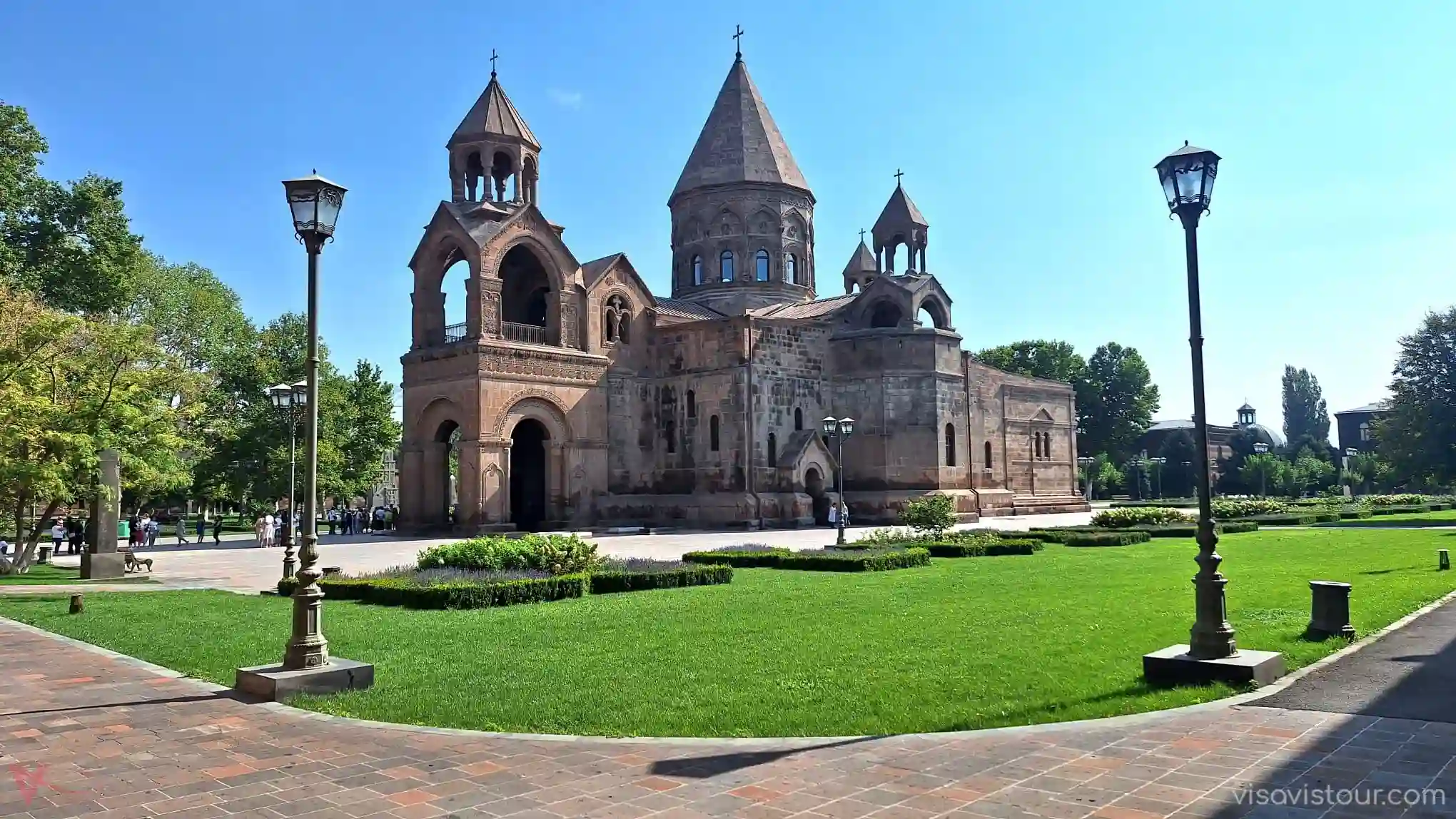
After breakfast journey to Etchmiadzin town, the ancient capital of Armenia and the spiritual center of the Armenian Apostolic Church.
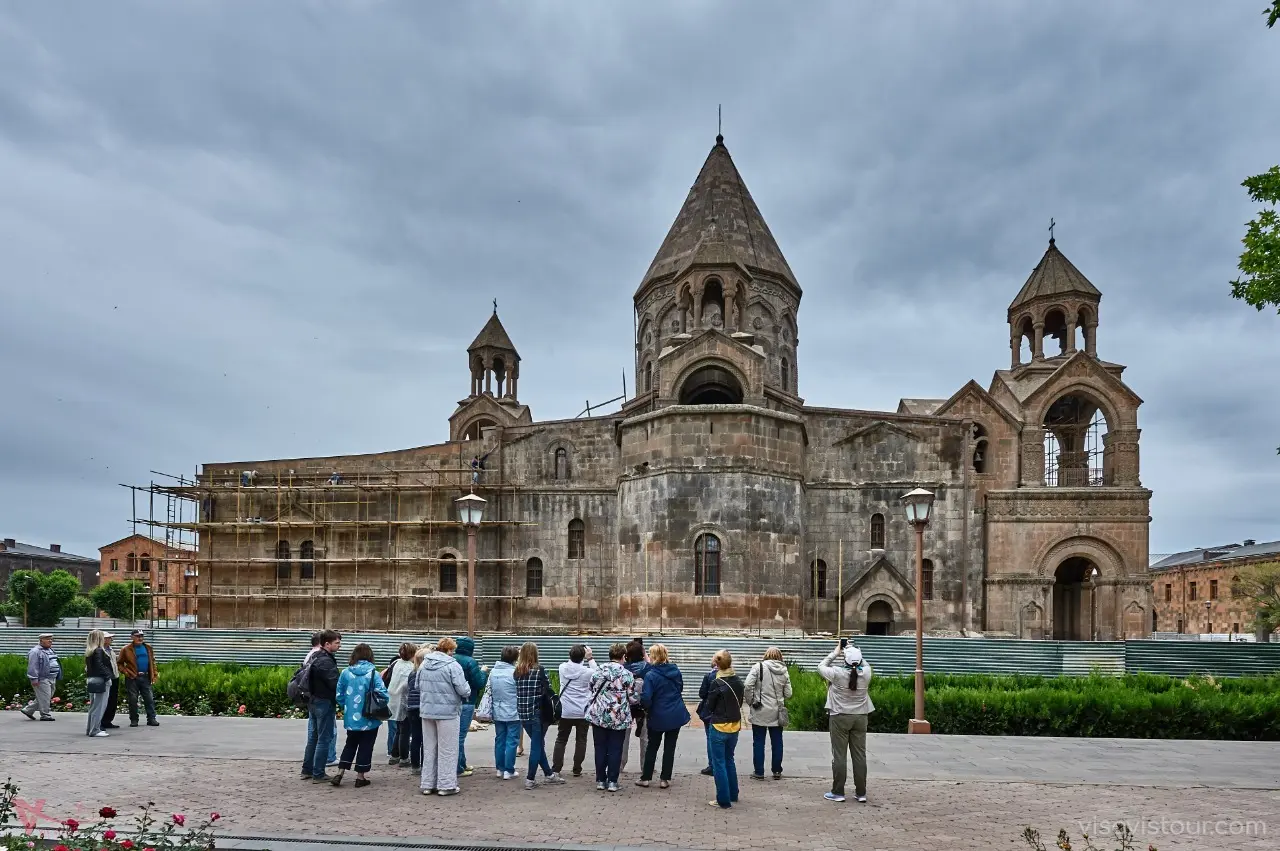
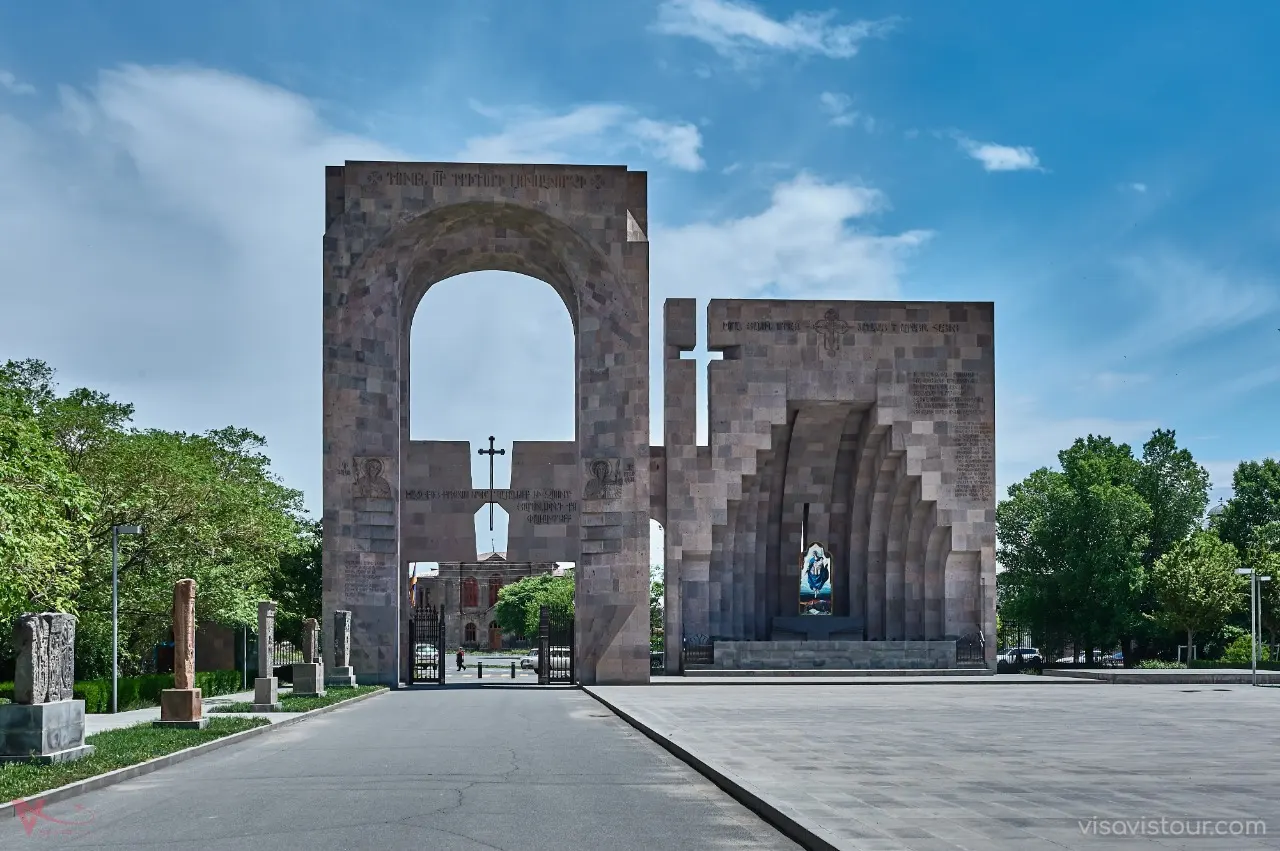
Visit the Etchmiadzin Cathedral, a UNESCO World Heritage site, founded in 301 A.D by St. Gregory the Illuminator and thus being one of the ancient churches in the Christian world. Later it was rebuilt and currently it stands as a complex including the Cathedral, Spiritual Academy, residency of the Catholicos of all Armenians, Synod of Armenian Church and a library. The museum of the Cathedral has collection of religious artifacts about Holy Mass, subjects made of gold, silver, precious stones, decorations, colossal silver boiler for making the myrrh and legendary Holy spear.
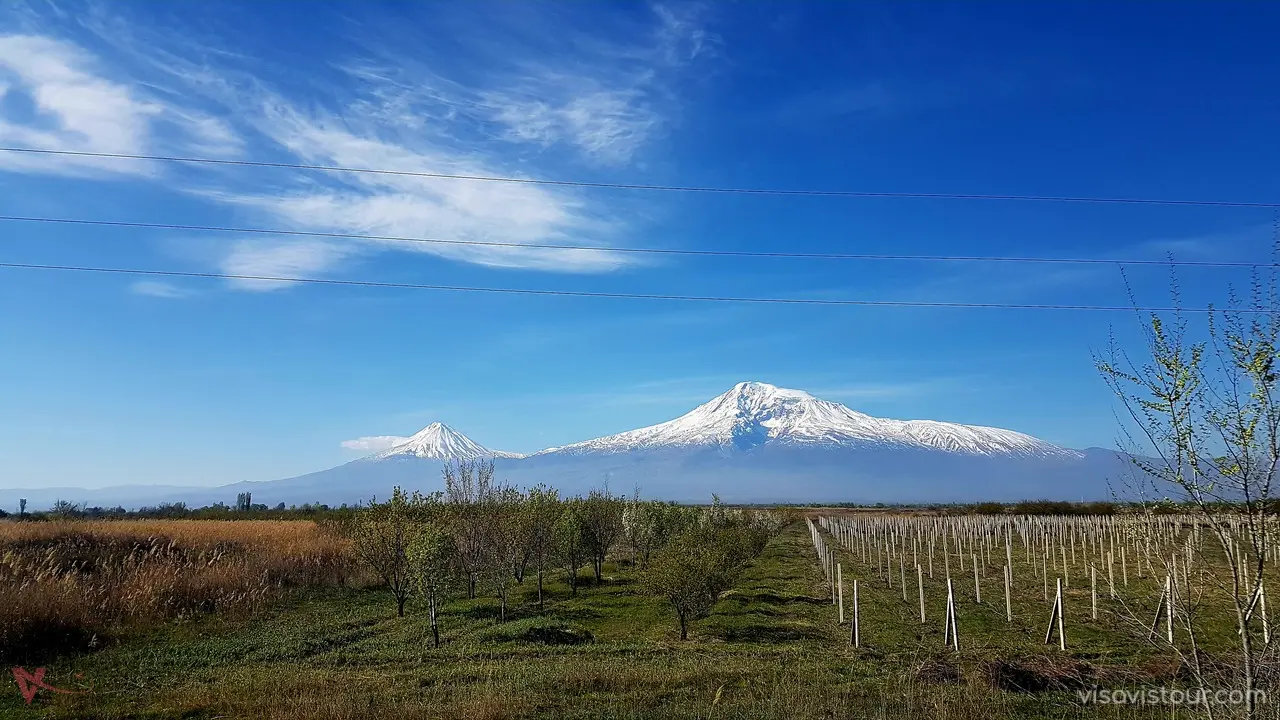
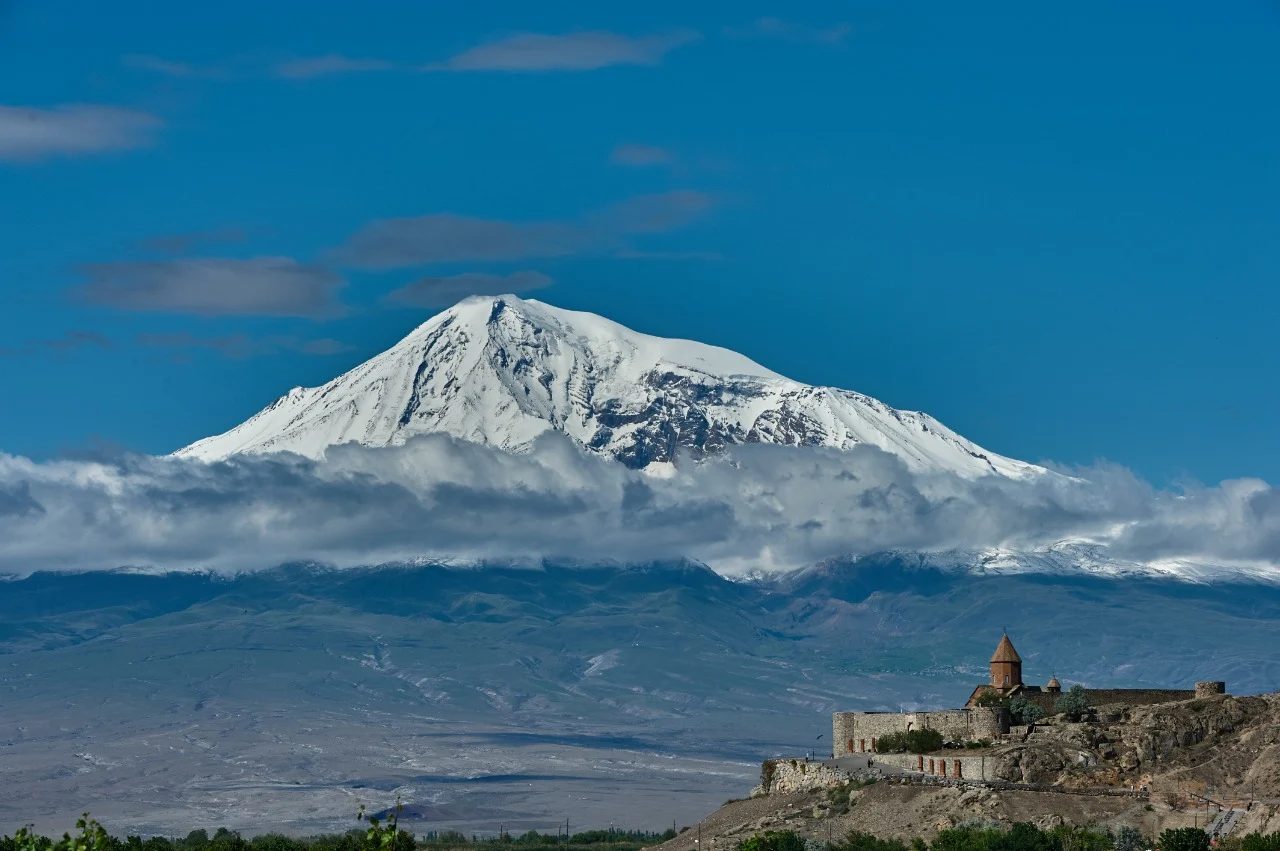
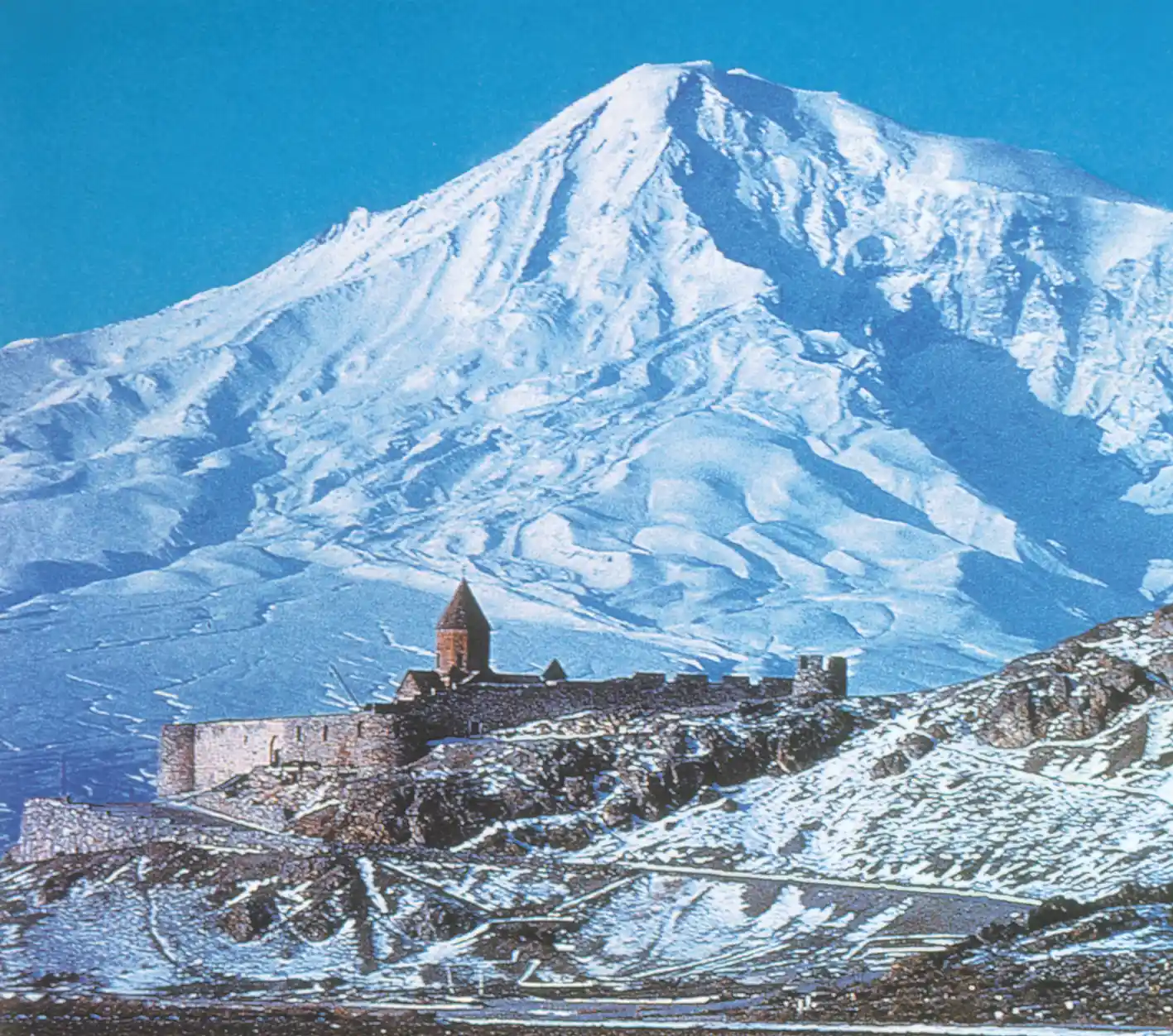
Continue to Ararat valley. Marvel the gorgeous biblical Mount Ararat shining with its two majestic white peaks.
Next, visit Khor Virap Church, an important Christian pilgrimage site located atop a small dungeon where St. Gregory the Illuminator was imprisoned for 13 years. St. Gregory’s release in 301 AD marked a pivotal moment in history, as Armenia became the first nation in the world to adopt Christianity as its state religion. Explore the dungeon where he endured captivity, and experience one of Armenia’s holiest and most significant Christian landmarks.
The hills adjoining Khor Virap were once the site of the ancient capital of Armenia, Artashat, established around 180 B.C. by King Artashes I, the founder of the Artashesid dynasty. Notably, Artashat is one of the few ancient towns designed by the special project by the renowned Carthaginian general Hannibal, who sought refuge in Armenia after his defeat in a war against Rome.
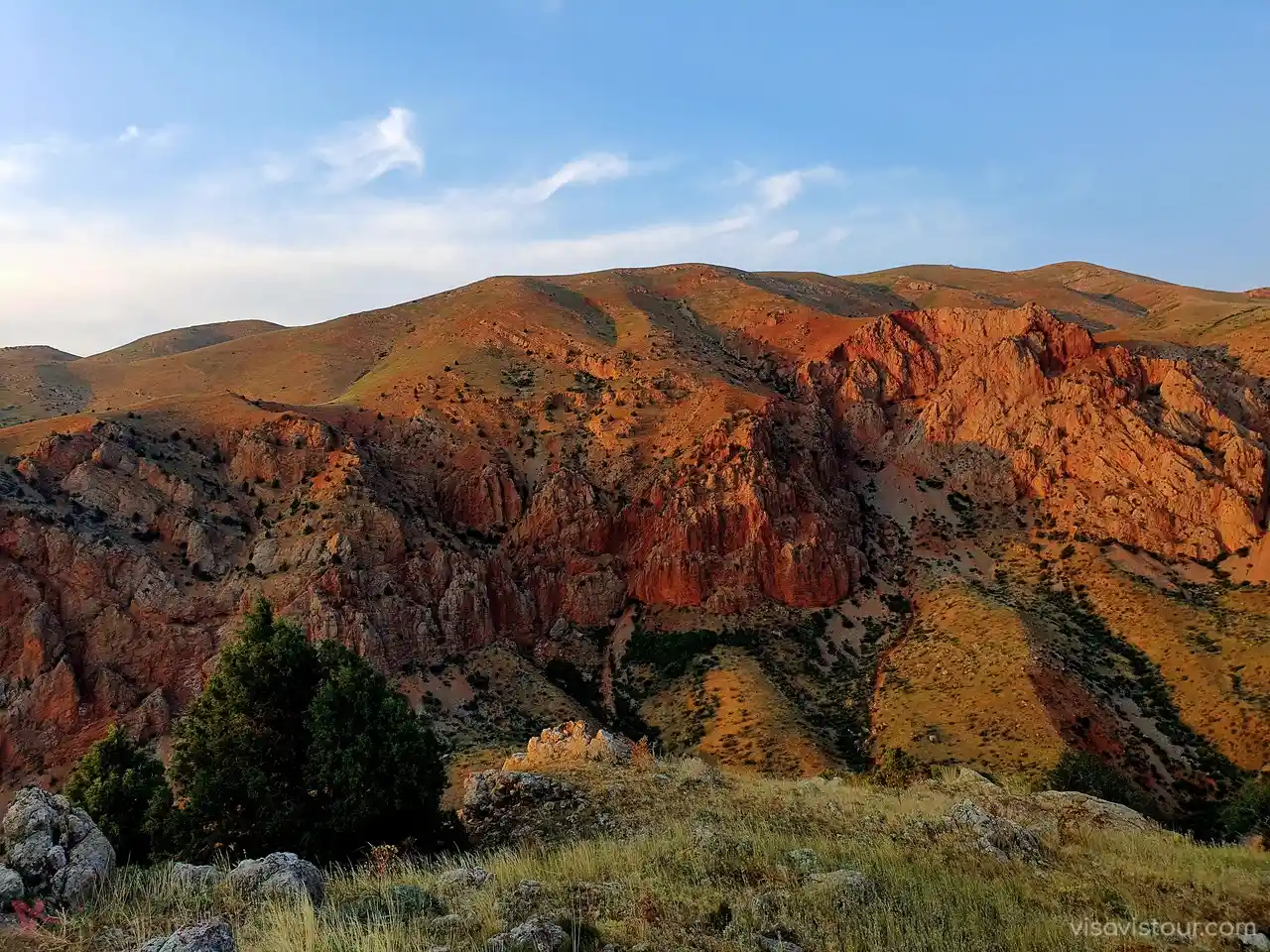
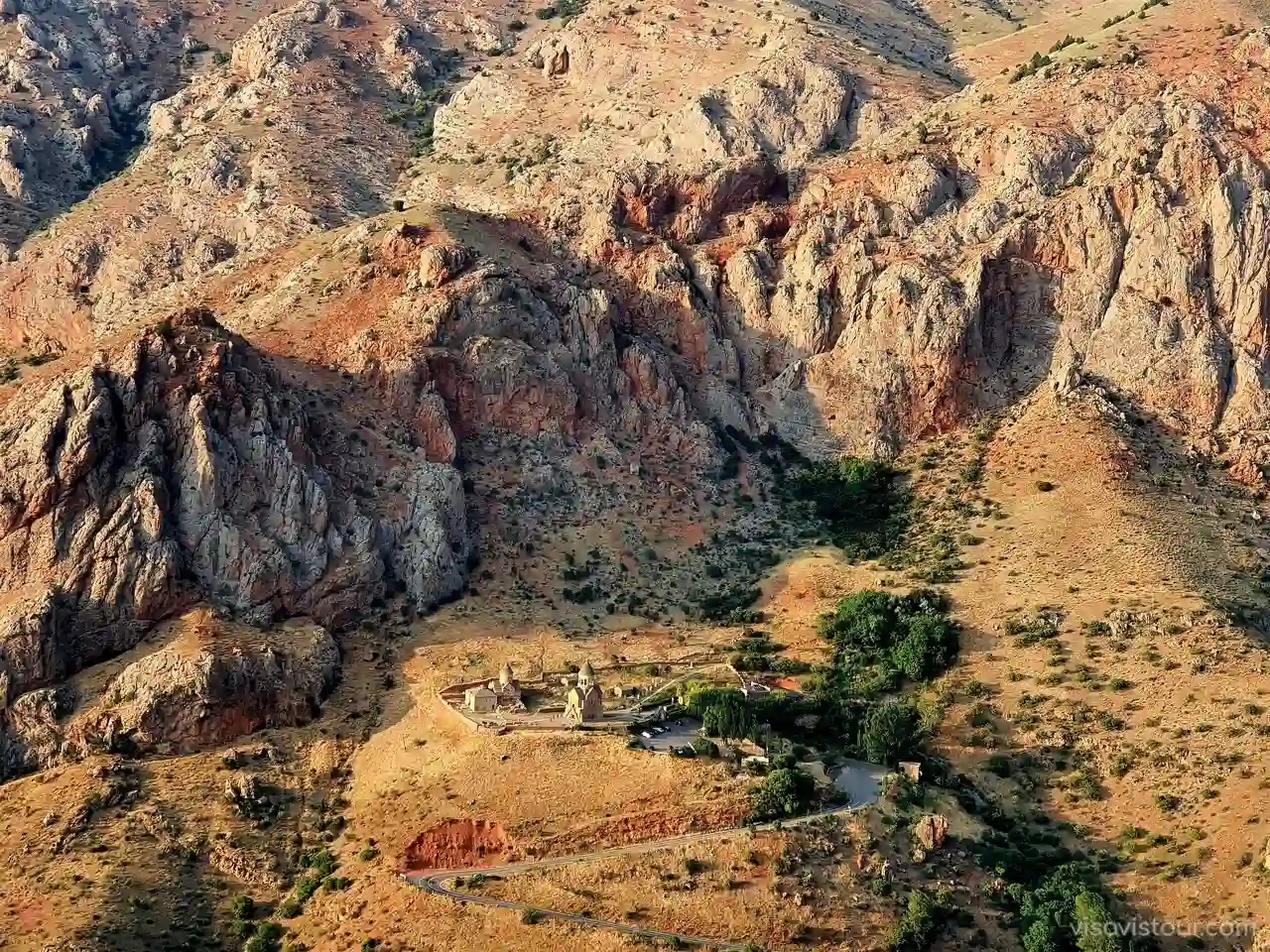
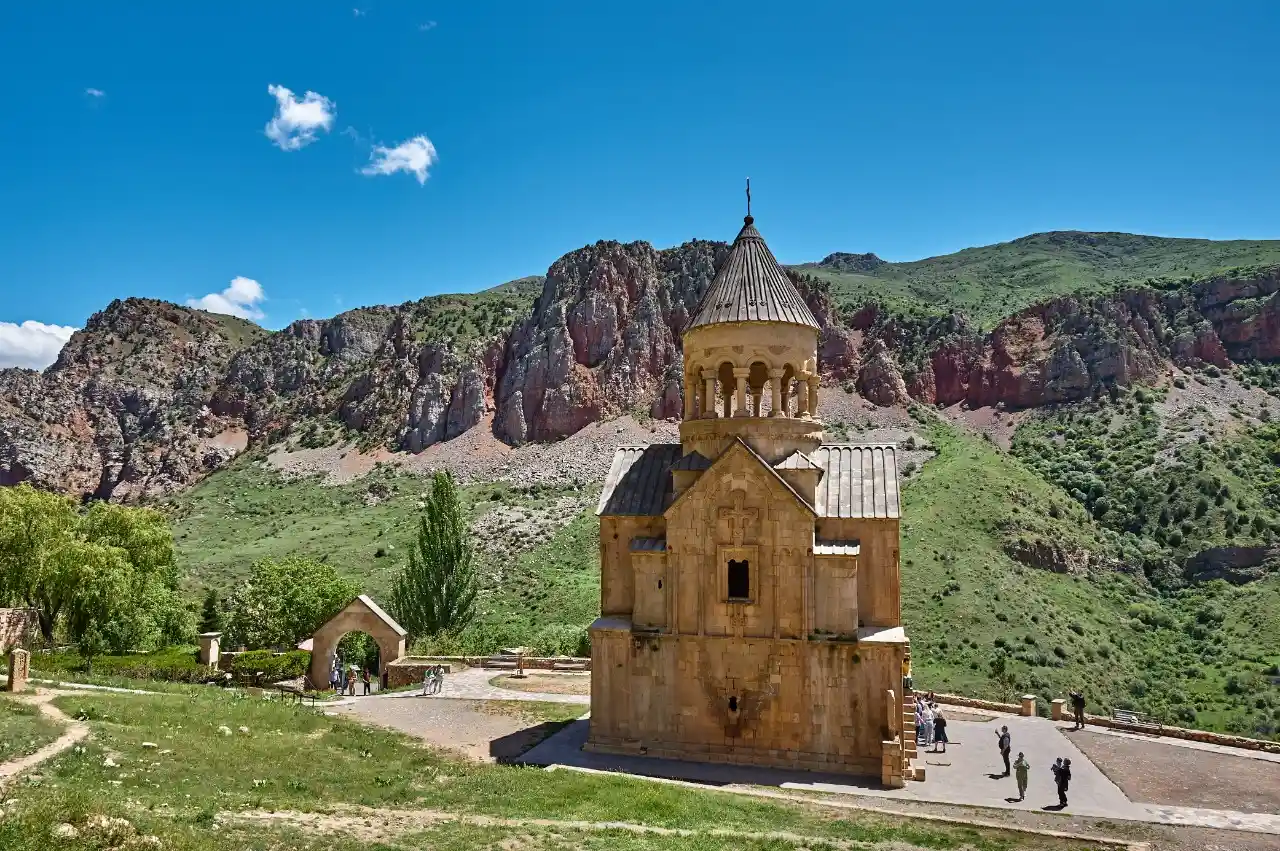
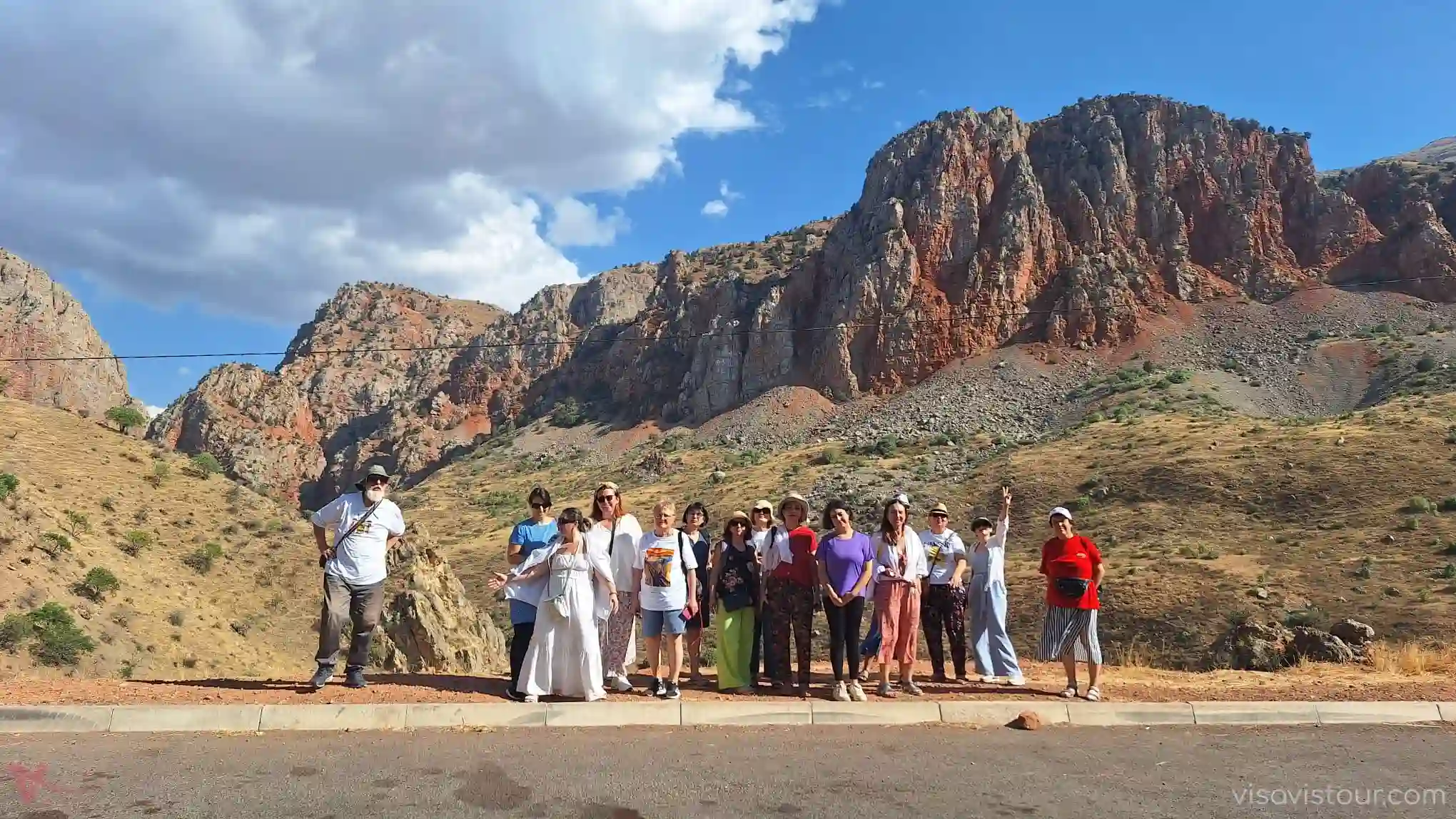
After Khor Virap, enjoy a scenic drive through stunning red rocks canyons to Noravank Monastery (XIII century), one of Armenia’s most treasured religious and cultural landmarks, known for its historical importance and architectural beauty. Noravank was also closely linked to the renowned medieval Gladzor University. Many visitors find the view so mesmerizing that they opt to walk the final stretch to the monastery, capturing the beauty of the canyon and its unique rock formations. Wander this historic monastery, surrounded by dramatic red rock cliffs. The interplay of sunlight on these rocks creates a vivid natural spectacle.
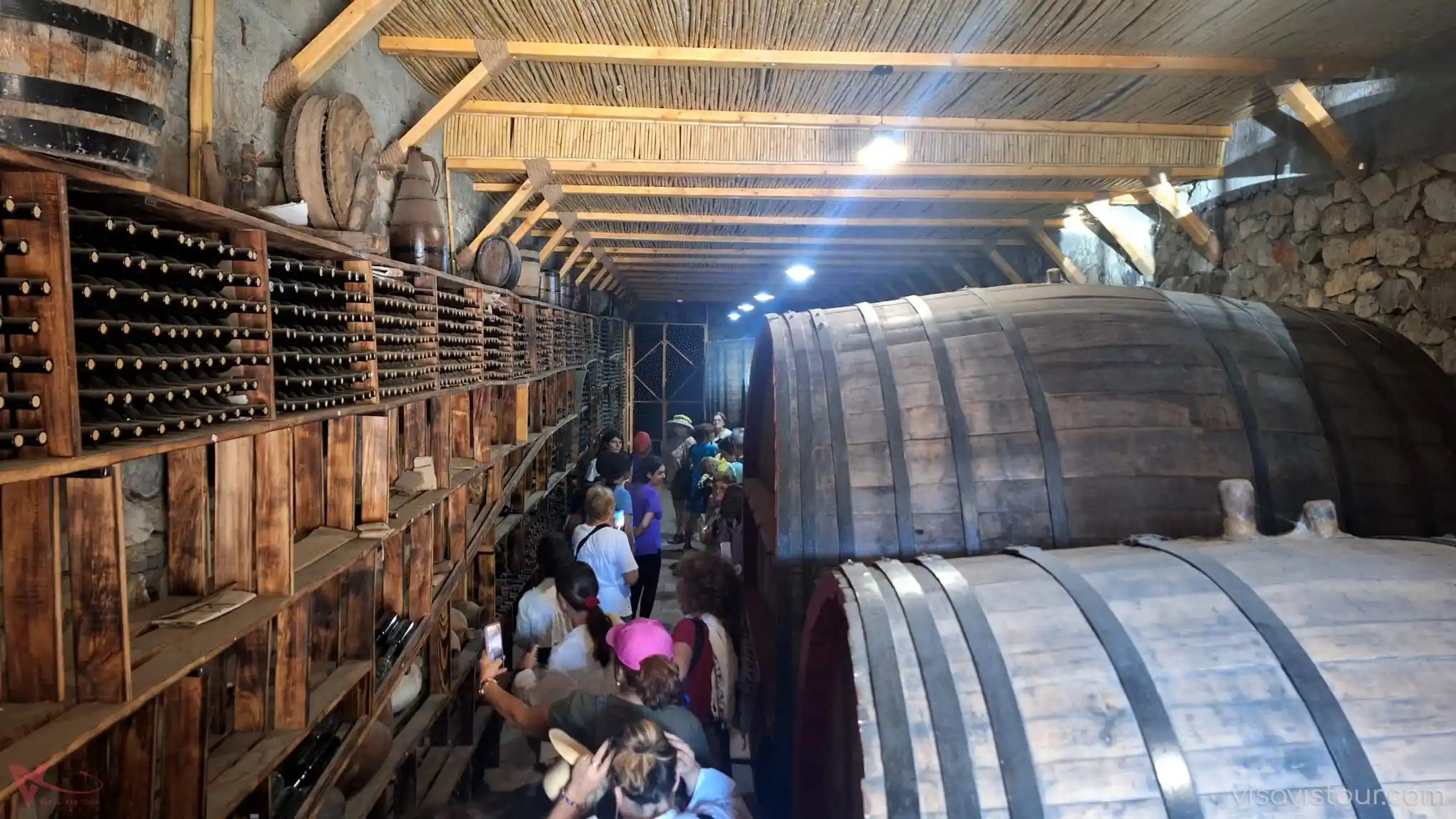
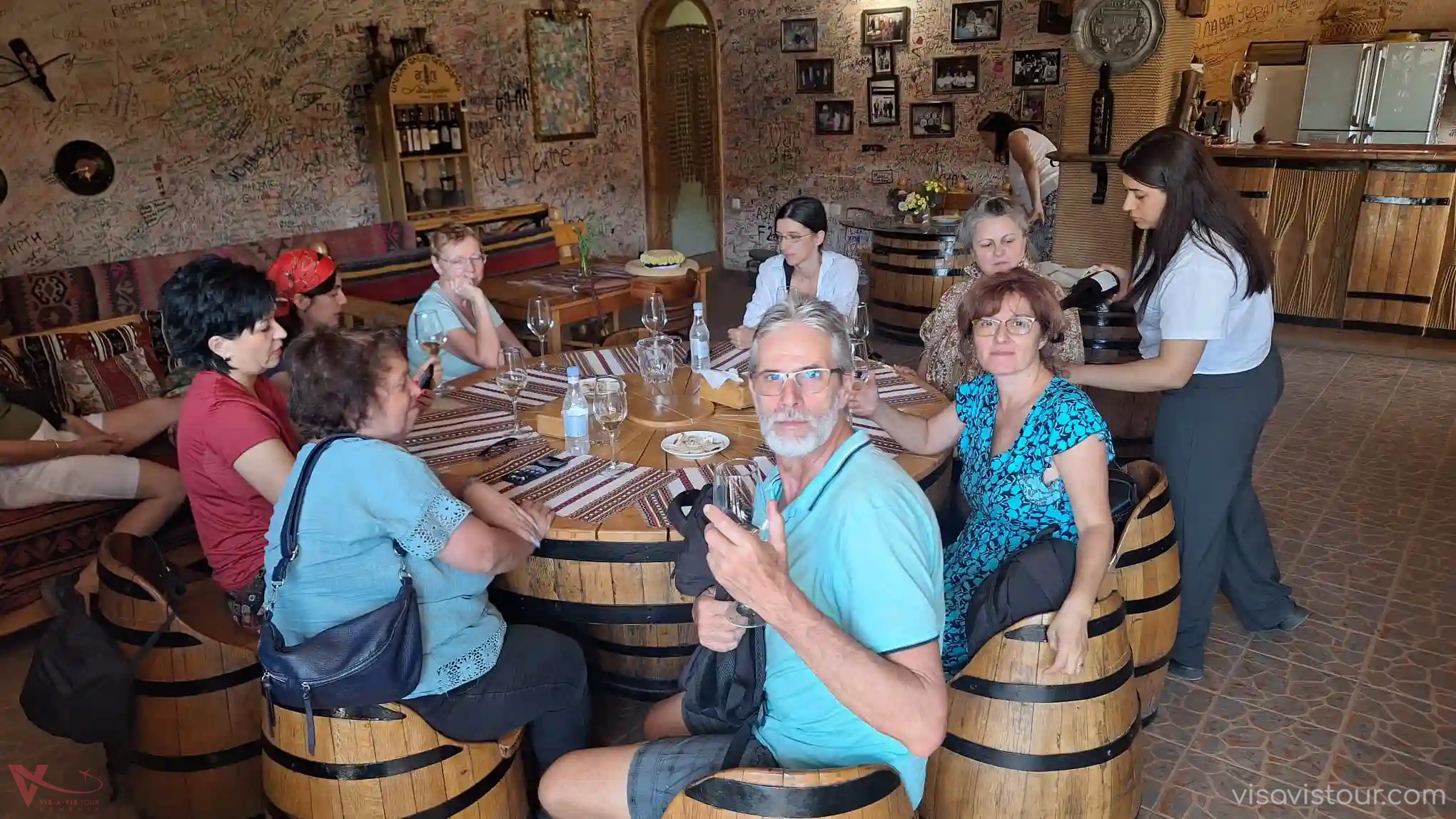
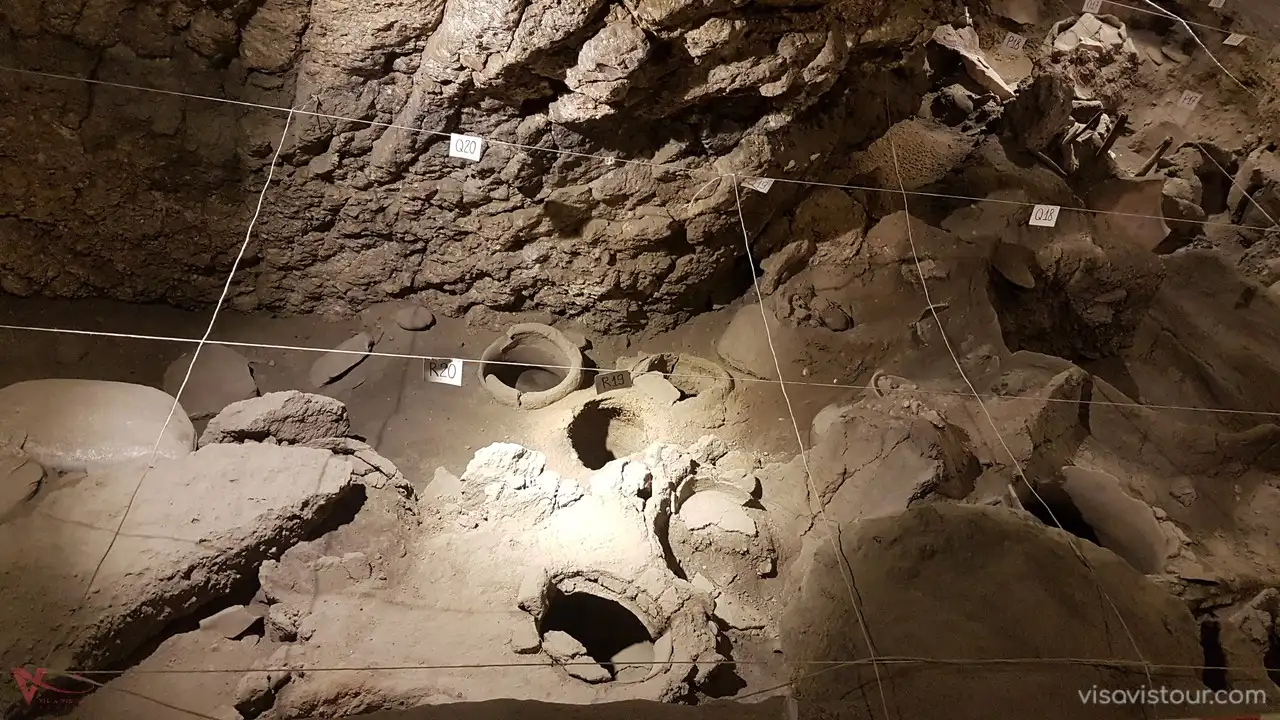
Next, stop at the Areni Winery for a wine tasting experience in one of Armenia’s historic wine regions, known for the discovery of the world’s oldest winery. Drive back to Yerevan.
O/n in Yerevan. (B/–/-)
Transfer to the airport - Departure
Tour Package Prices Per Person in Double Room (USD)